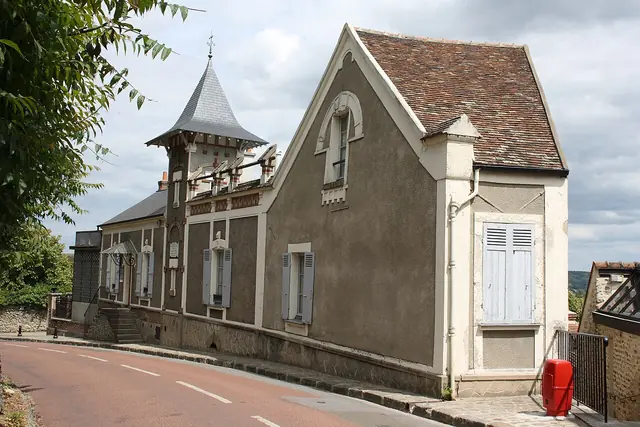
Musée Victor Aubert
Municipal museum of archaeology and folk traditions housed in the remains of a Benedictine priory, with free admission.
No sound? Check your device’s silent switch.
Have only individual sections read aloud
About the museum
The museum owes its origins to Victor Aubert (1874–1948), a self-taught historian and archaeologist born in Maule, who gathered knapped flints, everyday objects, press cuttings, photographs and drawings to pass them on to future generations. The town agreed to create the museum in 1938.
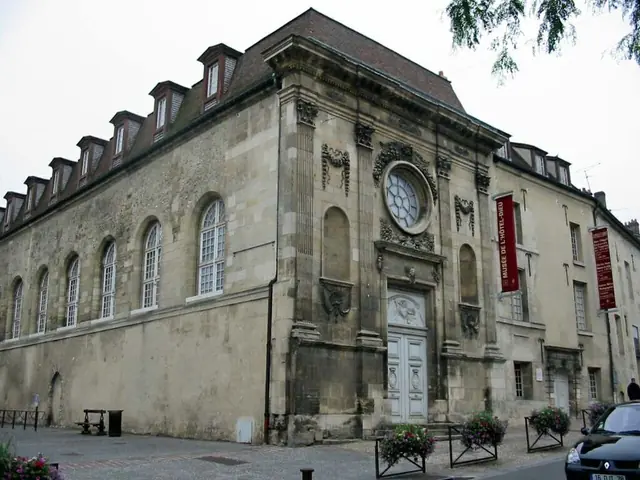
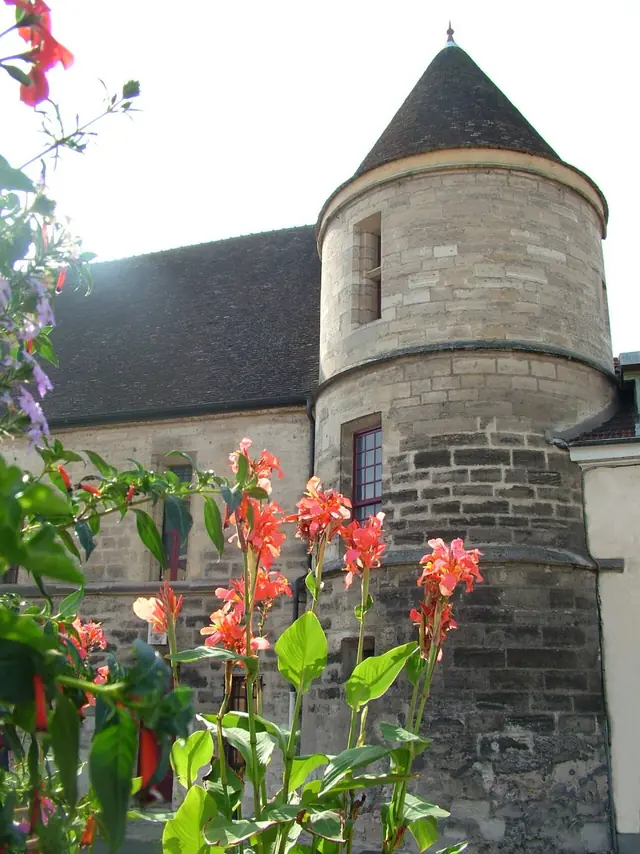
It occupies part of the remains of a priory founded in 1076 by Benedictine monks from the Norman abbey of Saint-Évroult. The site preserves a 13th-century tithe cellar, where tithes were stored, as well as a 14th-century timber roof frame.
In 1985, the town entrusted the management of the museum to Marcel Tréboit and the association ACIME, which runs it today with volunteers. The collections come from Maule and its region and cover palaeontology, prehistory, the Gallo-Roman period, the early Middle Ages, and folk traditions. The museum holds the “Musée de France” label.
Highlights
- 13th-century tithe cellar and 14th-century roof frame
- Collections on prehistory, palaeontology and the Gallo-Roman period
- Early medieval objects from Maule and its region
- Galleries devoted to folk arts and traditions
- Free admission
- Founded
- 1938
- Operated by
- Commune de Maule (gestion par l'association ACIME)
- Visitors per year
- approx. 1,532
Admission & discounts
Admission is free.
Admission is free for everyone.
Accessibility
The museum hasn’t published any information on this.
Kids & families
The museum hasn’t published any information on this.
Getting there & parking
The museum hasn’t published any information on this.
Amenities & dining
The museum hasn’t published any information on this.
Events & venue rental
The museum hasn’t published any information on this.
Plan your visit
| Good to know | Groups can be received outside opening hours by appointment. A group visit can be combined with a visit to the Saint-Nicolas church. |
|---|