Archäologisches Heimatmuseum Gablingen
Small museum in the side wing of the Gablingen school with archaeological finds from the Stone Age to the early Middle Ages, including gold grave goods from the Bell Beaker period.
Have only individual sections read aloud
About the museum
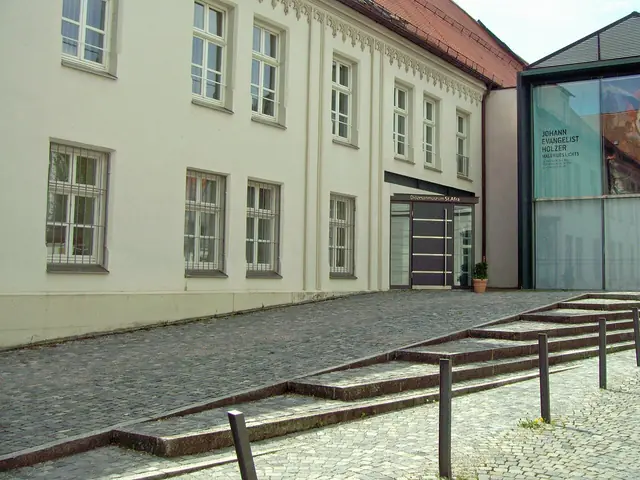
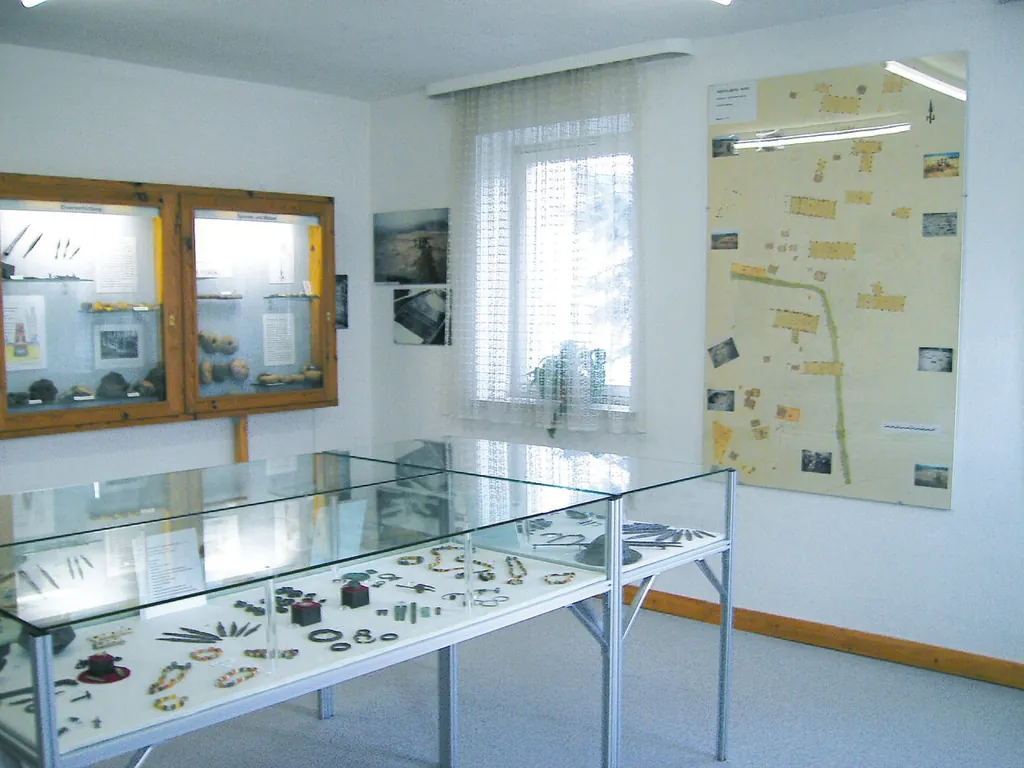
The Archaeological Local History Museum is housed in the left side wing of the school on Holzhauser Weg in Gablingen, north of Augsburg. Its collection is based on finds recovered in the municipal area by the local working group for prehistory and early history, and traces the development of settlement from the Stone Age through the Bronze and Iron Ages and the Roman period to the early Middle Ages.
A separate exhibition area displays gold and silver grave goods of a woman of the Bell Beaker culture, referred to as the “princess”. Other notable pieces are the fragment of a Bronze Age sword, Celtic gold coins, remains of the weaponry of a Germanic warrior and the remains of a Roman barrel well from the 1st century, which bear witness to the water supply in Roman times. Models of historic castles and settlements built especially for the museum illustrate how people lived in the various periods.
Highlights
- Gold and silver grave goods of the “princess” from the Bell Beaker period
- Celtic gold coins
- Remains of a Roman barrel well from the 1st century
- Models of historic castles and settlements
Permanent exhibition
- Von der Steinzeit bis ins frühe Mittelalter – Archaeological finds from Gablingen from the Mesolithic to the early Middle Ages, with a separate area for the gold and silver finds of the Bell Beaker period as well as models of castles and settlements.
- Founded
- 1999
Admission & discounts
Admission is free.
| Adults | free |
|---|
Accessibility
The museum hasn’t published any information on this.
Kids & families
The museum hasn’t published any information on this.
Getting there & parking
The museum hasn’t published any information on this.
Amenities & dining
The museum hasn’t published any information on this.
Events & venue rental
The museum hasn’t published any information on this.