October 23, 2026 – January 3, 2027
The Only Material
Cabinet exhibition with the European Centre for Press and Media Freedom about Ukrainian journalists and the stories they wanted to tell before the war.

The world's oldest book museum, housed in the German National Library in Leipzig: 5,000 years of media history from cuneiform to binary code, with free admission.
October 23, 2026 – January 3, 2027
Cabinet exhibition with the European Centre for Press and Media Freedom about Ukrainian journalists and the stories they wanted to tell before the war.
November 29, 2026 – March 14, 2027
Objects from the collection show gold in book art and design – from lavish bindings and illuminated manuscripts to brocade papers and comics.
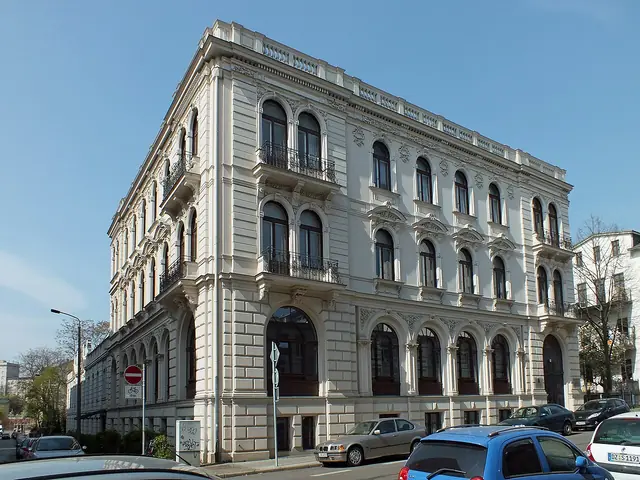
The museum was founded in Leipzig in 1884 as the Deutsches Buchgewerbe-Museum (German Museum of the Book Trade) and is considered the oldest book museum in the world. It was first housed in the Buchhändlerbörse (booksellers' exchange), later moved to the Buchhändlerhaus, and in 1900 to the Buchgewerbehaus in the Graphisches Viertel (printing district).
Much of the book collection was lost in an air raid in December 1943. Treasures that had been moved to safety, including a Gutenberg Bible, were taken to the Soviet Union after the war and are now in Moscow. In 1950 the museum became a department of the Deutsche Bücherei, and since 2006 it has been part of the German National Library (Deutsche Nationalbibliothek).
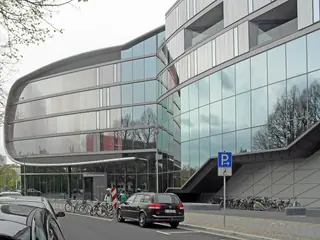
In 2011 the museum moved into new spaces in the library's fourth extension on Deutscher Platz, designed by Gabriele Glöckler. Since 2012 it has presented the permanent exhibition “Zeichen – Bücher – Netze” (Signs – Books – Networks) there, which received the Antiquaria Prize for Book Culture in 2013.
With around one million objects, the collection is among the most extensive on media history worldwide. It includes manuscripts, early printed works, modern book art, graphic art, decorated papers, writing implements, machines for making books and paper, archives and personal papers, as well as the world's largest watermark collection. Temporary exhibitions, guided tours and an open workshop round out the program.
Admission is free.
| Groups | –Group tours (4–20 people) during opening hours, booked at least three weeks in advance; free admission. |
|---|
Free admission to the permanent and temporary exhibitions.
The exhibition is accessible. Accessible parking spaces directly in front of the building and a designated entrance; reading rooms and cafeteria reachable by elevator. The website offers information in sign language and Easy Language (Leichte Sprache).
Great for kids & families
Monthly family Sunday (11:00–12:30) with printing, paper and writing activities, a creative workshop for children aged 7 and up, school-holiday programs and an open workshop; hands-on activities are free.
Deutsche Nationalbibliothek
Tram 16 from the main station (Hauptbahnhof) to Deutsche Nationalbibliothek (approx. 11 min.); S-Bahn S1–S5 to Leipzig MDR, then approx. 800 m on foot.
Accessible parking spaces directly in front of the building; the library does not list any other visitor parking.
By car via the B2 to the intersection of Prager Straße/Semmelweisstraße, signposted from there.
Get directionsCafeteria in the German National Library. Covered bike racks at the museum entrance.
The museum hasn’t published any information on this.
| Guided tours | yes |
|---|---|
| School programs | yes |
| Good to know | Regular public and themed guided tours according to the events calendar; group tours and educational programs via dbsm-info@dnb.de or +49 341 2271-324. The library also hosts the German Music Archive's exhibition “Von der Edison-Walze zur Blu-ray” (From the Edison Cylinder to Blu-ray) and the Goethe VR experience. Museum reading room for using the collection (+49 341 2271-318). |
Loading experiences …