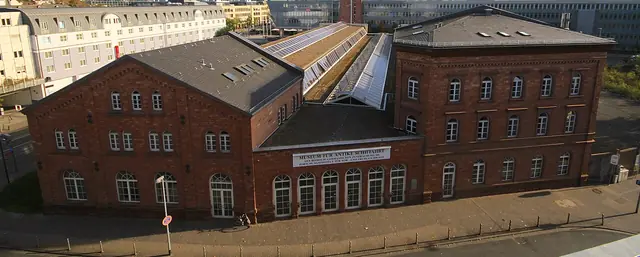
Specialist museum in Oppenheim on 2,000 years of winegrowing in Germany – with wine presses, corkscrews, vintage tractors, and a famous mousetrap collection.
7th label exhibition of the Deutscher Freundeskreis Weinetiketten-Sammler (German wine label collectors' circle): twelve panels with labels on which animals and flowers represent the vineyard site or the character of the wine. Run dates not given on the website.
About the museum
The idea for a central museum of German winegrowing arose in Oppenheim itself in the late 1970s. To this day the museum is run by a friends' association, the Verein der Freunde und Förderer des Deutschen Weinbaumuseums; it opened in June 1980. Its first director was co-founder Oskar Foltyn.
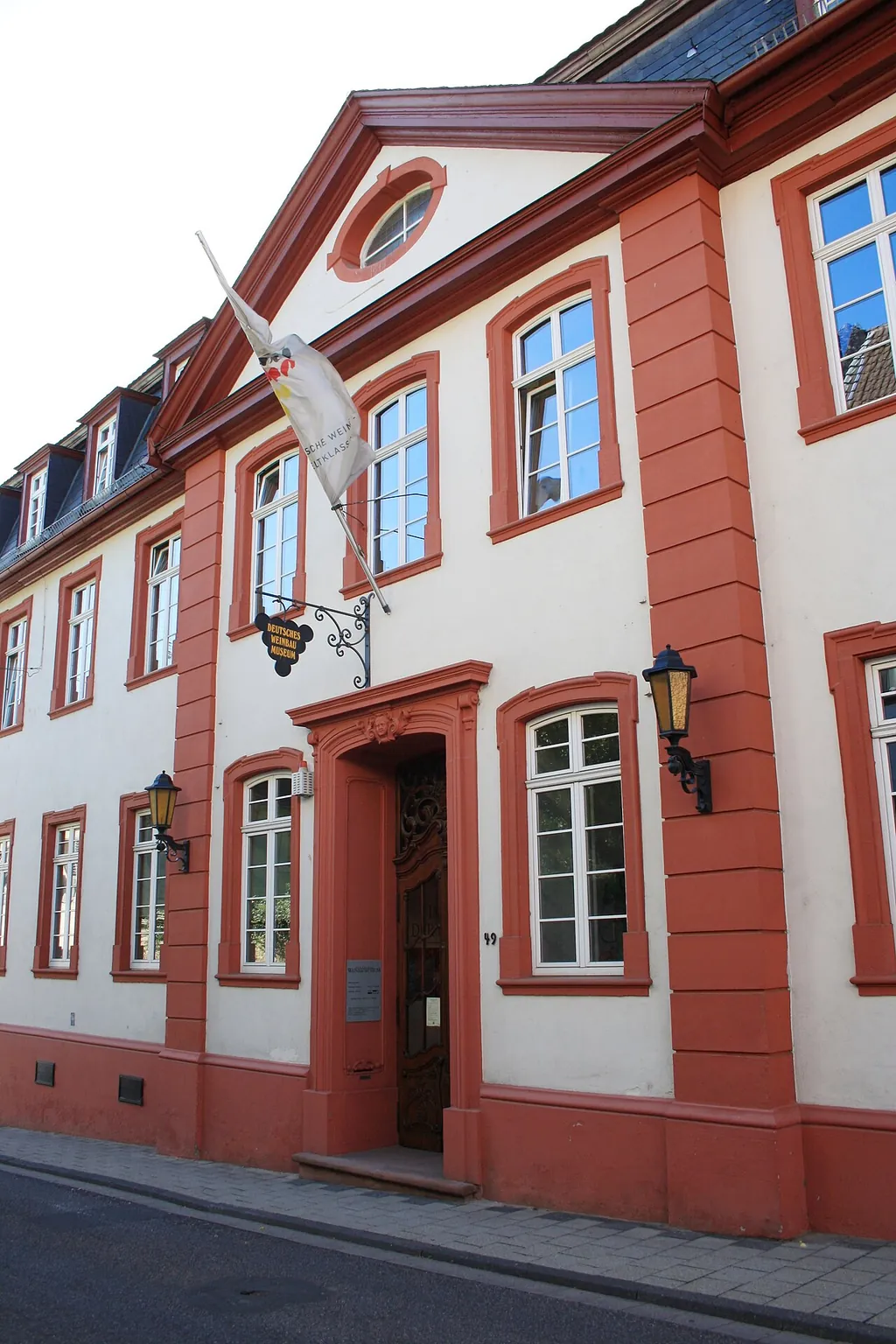
The museum is housed in the former Deutschherrenhaus (Teutonic Order house) on the edge of the old town, an eleven-bay building from 1746 with a mansard hipped roof that later served as a civilian hospital and adult education center. Together with an annex, a machinery hall, and two open-air areas, the site covers about 5,000 square meters.
On three floors, some 30 sections with about 4,000 objects trace the history of the vine and wine: on the first floor, the press house, wooden barrel cellar, cooper's workshop, distillery, and the history of the bottle; on the second floor, work in the vineyard, from soil cultivation through vine grafting and plant protection to climate change; on the third floor, wine regions, glasses, wine tasting, wine law, labels, and wine in art. The museum is also known for curiosities such as one of the largest mousetrap collections and around 2,000 corkscrews.
The courtyard holds historic wine presses and a giant barrel from 1860, and the machinery hall displays more than 50 old tractors and winegrowing implements. Because the association cannot cover heating costs in winter, the museum is open only from April into the fall; special exhibitions and lectures round out the program.
Highlights
Around 4,000 exhibits in some 30 sections in the Baroque Deutschherrenhaus
Giant barrel from 1860 holding more than 11,800 liters in the outdoor area
Collection of around 2,000 corkscrews
Some of the oldest still-filled white wine bottles, from the 17th and 18th centuries
Machinery hall with over 50 historic tractors
One of the world's largest mousetrap collections
Permanent exhibitions
Weinbereitung in alter Zeit – First floor with model wine presses, wooden barrel cellar, distillery, an originally furnished cooper's workshop, and over 100 historic wine bottles dating back to the 17th century.
Rebe und Weinberg – Second floor on the winegrower's work: soils, vine grafting and breeding, plant protection with old sprayers, and winegrowing and climate change.
Weinkultur und Weingenuss – Third floor with Germany's wine regions, drinking vessels, wine tasting, labels, an art cabinet, and the mousetrap collection.
Founded
1980
Operated by
Verein der Freunde und Förderer des Deutschen Weinbaumuseums e.V.
Director
Werner Lucas
Admission & discounts
Adults
€4
Reduced
€3Those eligible for concessions, school students, university students, and people with disabilities
Children & teens
€1Children €1; no age limit is given.
Visitors with disabilities
€3
Students & apprentices
€3Applies to school and university students.
Groups
–Special group rates on request.
The museum website does not list admission prices; the information comes from the Rhineland-Palatinate museum portal (Museumsportal Rheinland-Pfalz).
Accessibility
Wheelchair accessible: not available
Elevator: no information
Accessible restroom: no information
Accessible parking: no information
Service dogs welcome: no information
Tactile models & exhibits: no information
Sign language tours: no information
Easy-to-read materials: no information
Audio description: no information
According to the Museumsportal Rheinland-Pfalz, the museum is not accessible; the exhibition is spread across three floors of the Baroque building.
Kids & families
The museum hasn’t published any information on this – please ask the museum directly.
Getting there & parking
By public transit
Bahnhof Oppenheim · 1.1 km
Oppenheim station (regional trains), about 1.1 km on foot.
Cafeteria with museum shop (souvenirs, the museum's own wine); Museumsschenke (wine tavern) on site.
Events & venue rental
Spaces for rent
The Museumsschenke and seminar rooms are available for all kinds of events by advance booking, as is the inner courtyard.
Plan your visit
Guided tours
yes
Audio guide
yes
School programs
yes
Good to know
Group tours (approx. 1.5 hours) year-round, also outside opening hours; book at least 10 days in advance. Programs for kindergartens and schools as well as an audio guide, according to the Museumsportal Rheinland-Pfalz. The website offers a virtual 360° tour.