May 21, 2026 – October 25, 2026
Forced to Work – Willing to Survive
International traveling exhibition that uses life stories to compare forced labor in occupied Poland, annexed Austria and Italy, and draws connections to labor exploitation today.
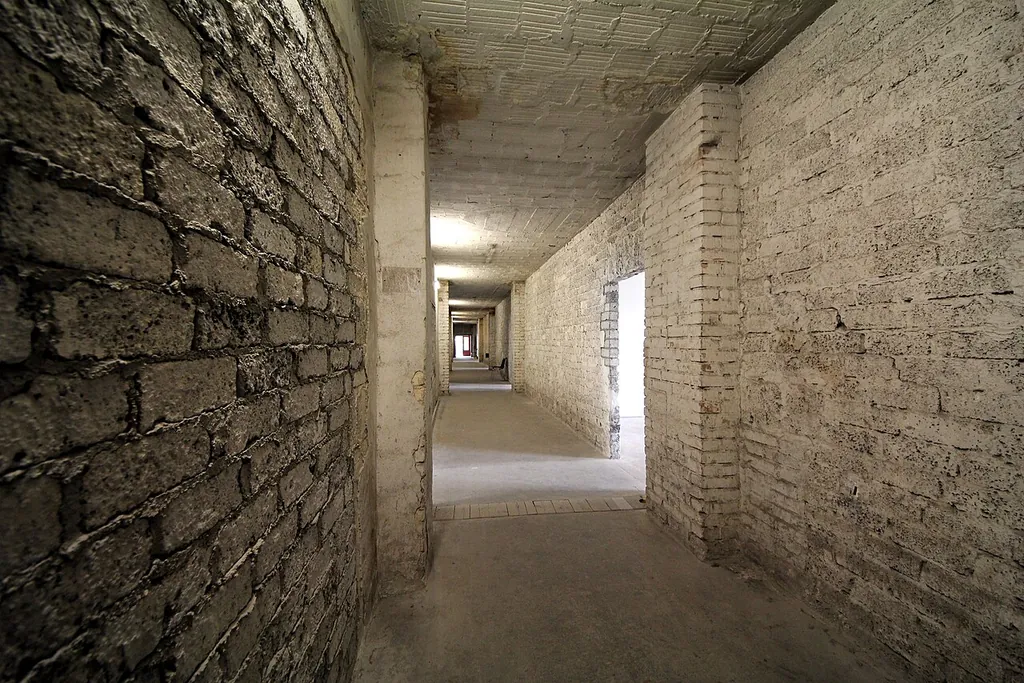
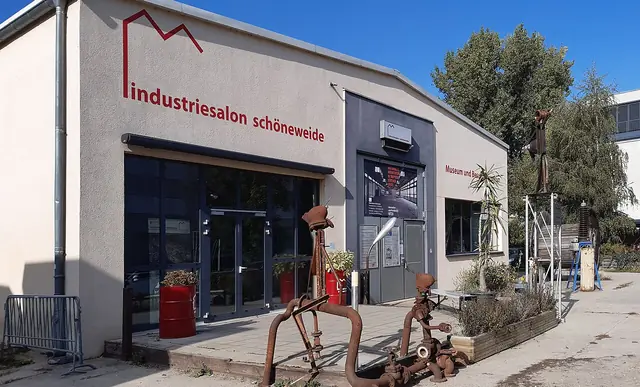
Memorial and learning site on an almost completely preserved Nazi forced labor camp in Berlin-Schöneweide – with permanent exhibitions and free admission.
May 21, 2026 – October 25, 2026
International traveling exhibition that uses life stories to compare forced labor in occupied Poland, annexed Austria and Italy, and draws connections to labor exploitation today.
September 29, 2026 – May 9, 2027
Hands-on exhibition about personal, family and social remembrance of Nazi forced labor, developed together with school students and young people from several countries.
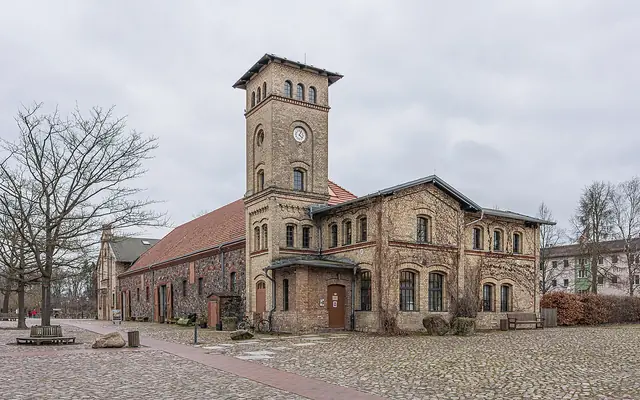
The camp on Britzer Straße was built from late 1943 on behalf of Albert Speer as Generalbauinspektor (General Building Inspector). It was planned as a double camp of 13 accommodation barracks and one stone service barrack for more than 2,000 foreign workers; those who actually lived here included Italian military internees as well as civilian forced laborers, men and women, from various European countries.
After the war the Soviet army initially used the site, and from 1946 a vaccine institute moved in. Other barracks served for decades as a daycare center, medical practice or clubhouse, among other things, so the history of the place long remained barely visible. Since 1995 the roughly 3.3-hectare site has been a protected monument as the last largely preserved one of what were once some 3,000 forced labor camps in Berlin.
Following civic campaigning, the Berlin Senate decided in 2004 to set up a documentation center in the empty barracks; it opened on August 24, 2006, as a department of the Stiftung Topographie des Terrors. In 2010 the carefully restored Barrack 13, with surviving inscriptions by internees, was opened to the public. Today the center presents two permanent exhibitions – on the everyday reality of forced labor and on the history of the Italian military internees – along with temporary exhibitions, a public specialist library, online databases of camp locations and an extensive educational program.
Admission is free.
| Children & teens | –Free admission for everyone. |
|---|---|
| Groups | –Guided tours and workshops for school classes and groups of 8 or more are free but must be booked in advance (bildung_ns-zwangsarbeit@topographie.de). |
Free admission, including public guided tours. Exhibition catalog (272 pages, four language editions) for €15.
Exhibitions including Barrack 13 are wheelchair-accessible. Media guide in 13 language versions, including German Sign Language, Easy Language and audio description; visitors are welcome to bring their own headphones. Also available as an app for iOS and Android.
Only partly suitable for kids
Memorial and documentation site on Nazi forced labor; most group tours are aimed at teens from grade 9, the exhibition tour "Forced to Work" from age 14. There is a dedicated child-friendly tour for grades 5 and 6.
Dokumentationszentrum NS-Zwangsarbeit (Bus 165)
Schöneweide S-Bahn station, from there about an 8-minute walk; bus 165 to the Dokumentationszentrum NS-Zwangsarbeit stop.
Public academic reference library (some 6,000 items) on site.
The museum hasn’t published any information on this – please ask the museum directly.
| Guided tours | yes · approx. 2 hrs |
|---|---|
| Audio guide | yes |
| School programs | yes |
| Good to know | Public guided tours free of charge, no registration needed: Saturdays at 15:00 permanent exhibition and Barrack 13 (German, 2 hrs.), Sundays at 15:00 grounds and Barrack 13 (German, 1 hr.), Sundays at 16:00 in English. Group tours in nine languages, workshops and international youth exchanges by registration (tel. +49-30-6390288-27 or -21). |
Cookies help you use this website. We only load the map and statistics with your consent.