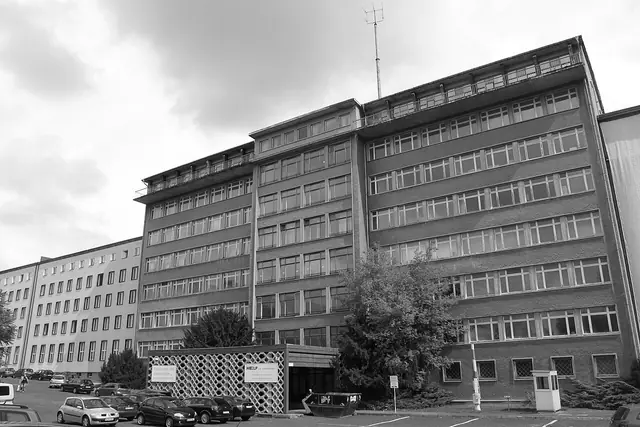
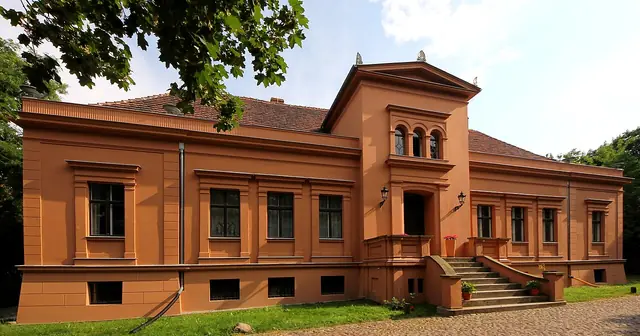
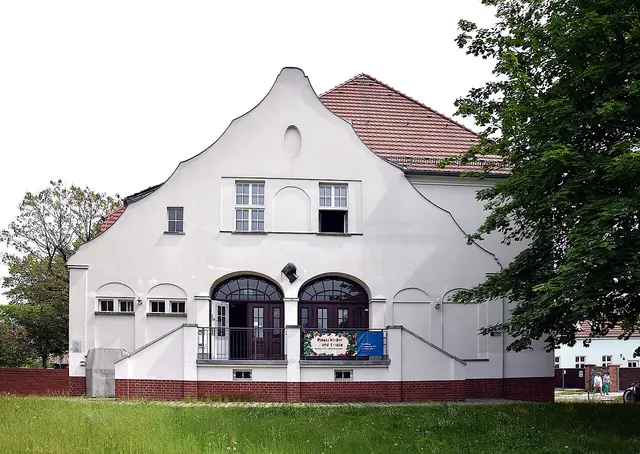
At the site of the surrender of May 8, 1945, the museum presents Germany's war of annihilation against the Soviet Union from several perspectives. Free admission.
Never-delivered letters from the Ukrainian city of Kamianets-Podilskyi from the first days of the German invasion in 1941, newly presented for the 85th anniversary and supplemented with the city's history.
Open-air exhibition in the museum garden on the signing of the unconditional surrender in Karlshorst; on view until further notice.
About the museum
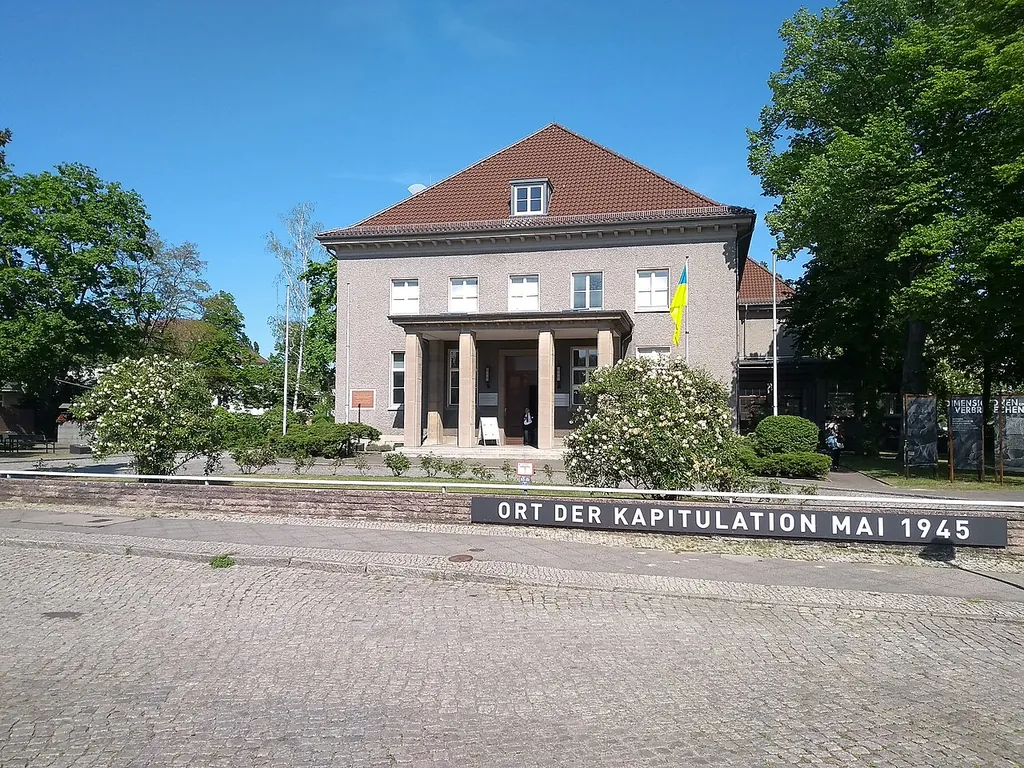
The building was constructed in the late 1930s as the officers' mess of a Wehrmacht engineering school. During the night of May 8 to 9, 1945, the commanders-in-chief of the Wehrmacht signed the unconditional surrender here before representatives of the Soviet Union, the USA, Great Britain and France, ending World War II in Europe. Until 1949, the head of the Soviet Military Administration resided in the building.
In 1967, the Soviet armed forces set up a surrender museum here, which served the political education of soldiers and the GDR population until the troops withdrew. The heavy weapons and tanks in the museum garden date from this period, among other things.
After the collapse of the Soviet Union, Germany and Russia agreed to preserve the site. In 1994, today's museum was re-established as a German-Russian association and opened in May 1995, 50 years after the end of the war. In 1997/98, museums from Ukraine and Belarus joined the sponsoring association. The current permanent exhibition, "Deutschland und die Sowjetunion im Zweiten Weltkrieg" (Germany and the Soviet Union in World War II), opened in 2013.
Since Russia's attack on Ukraine in 2022, the museum has dropped its former epithet "Deutsch-Russisches Museum" (German-Russian Museum) and flies only the Ukrainian flag. Fully funded by the federal government, the museum commemorates all Soviet victims of the war of annihilation and also covers the postwar period and the Cold War.
Highlights
Original surrender hall from May 8, 1945
Permanent exhibition on the German-Soviet war of 1941–1945 from both perspectives
Soviet tanks and heavy weapons in the museum garden
Open-air exhibition on the surrender in the garden
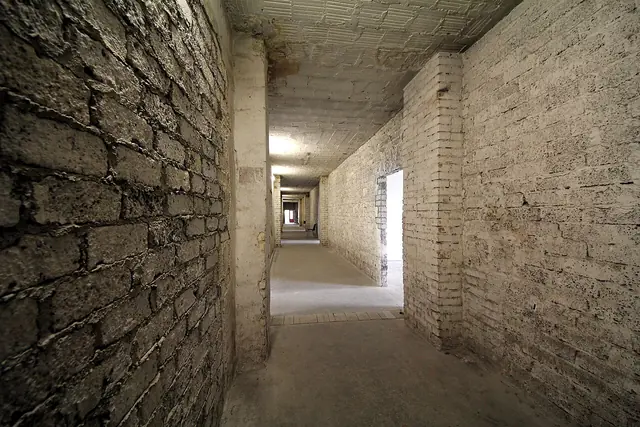
Traces of the Soviet surrender museum in the building
Permanent exhibitions
Deutschland und die Sowjetunion im Zweiten Weltkrieg 1941–1945 – The permanent exhibition on the upper floor describes the war of annihilation, occupation rule and Soviet wartime society through photos, documents, objects and individual stories.
Founded
1994
Operated by
Museum Berlin-Karlshorst e.V.
Director
Jörg Morré
Admission & discounts
Admission is free.
Groups
–Group tour of the permanent exhibition and the historic site (60–90 minutes, max. 15 people) €100, reduced €50; by advance booking.
Audio guide
€3Reduced €1
Neighborhood walk "Geheimes Karlshorst" (Secret Karlshorst)
€8Reduced €2, under 18 free; registration requested
Free admission to the permanent and special exhibitions.
Accessibility
Wheelchair accessible
Elevator
Accessible restroom: no information
Accessible parking: no information
Service dogs welcome: no information
Tactile models & exhibits: no information
Sign language tours: no information
Easy-to-read materials
Audio description: no information
All levels accessible via elevator and ramps; loan wheelchair on site. Assistance can be requested in advance by email to empfang@museum-karlshorst.de or by phone at 030 50150810. Website with information in Leichte Sprache (Easy German) and German Sign Language; tours also available in plain language.
Kids & families
Only partly suitable for kidsRecommended for ages 14+
Family tours & workshops: not available
The educational programs are aimed at young people from 9th grade; tours are recommended from age 14. The museum does not list any dedicated programs for children or families.
Getting there & parking
By public transit
Museum Karlshorst (Bus 296)
S3 to Karlshorst or U5 to Tierpark, then bus 296 to the Museum Karlshorst stop
According to the museum, the journey takes about 32 minutes from Friedrichstraße S-Bahn station or about 28 minutes from Alexanderplatz U-Bahn station.
The museum hasn’t published any information on this – please ask the museum directly.
Events & venue rental
The museum hasn’t published any information on this – please ask the museum directly.
Plan your visit
Guided tours
yes · approx. 60 min
Audio guide
yes (DE, EN, RU, UK, BE, FR, PL)
School programs
yes
Good to know
Exhibition texts in German, English and Russian, booklet in Ukrainian and Belarusian. Public guided tour every 1st Sunday of the month at 15:00; neighborhood walk through the former Soviet restricted zone every 2nd Sunday (April–October) at 15:00. Group tours in German, English, Russian, Italian, French, Spanish, Ukrainian and plain language, also available as a virtual tour. Group tours last 60 to 90 minutes.