Ebersdorfer Schulmuseum
School museum in the old town hall of Chemnitz-Ebersdorf with a historic classroom, teaching technology and school history.
Have only individual sections read aloud
About the museum
Former teachers and pupils of the Ebersdorf school founded the association Ebersdorfer Schulmuseum on 24 October 1991 to collect evidence of German school history and show it to the public. At first the collection was housed in the old Ebersdorf school, which however fell increasingly into disrepair; it was able to stay there until 1994, after which the association worked mainly off-site at schools and in museums.
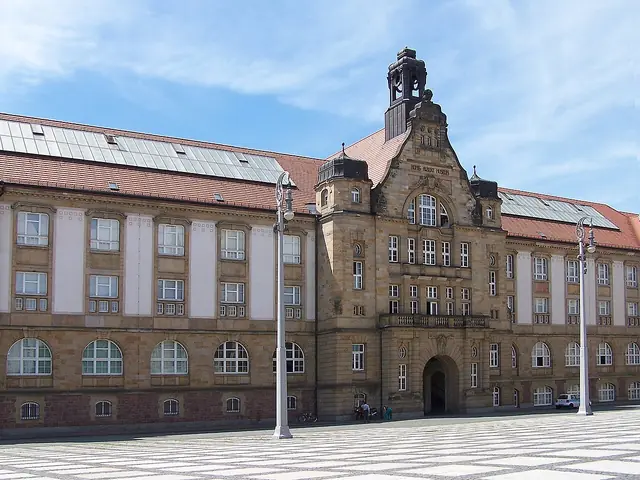
On 4 February 2000 the museum moved into its own rooms in the former Ebersdorf town hall, built in 1913. In the same year it took part for the first time in the Chemnitz Museum Night, which has since been a fixed part of its annual programme. The collection and the library were inventoried according to museum standards; the association receives funding from the Kulturraum Stadt Chemnitz.
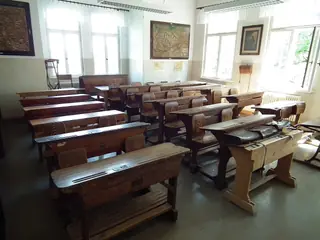
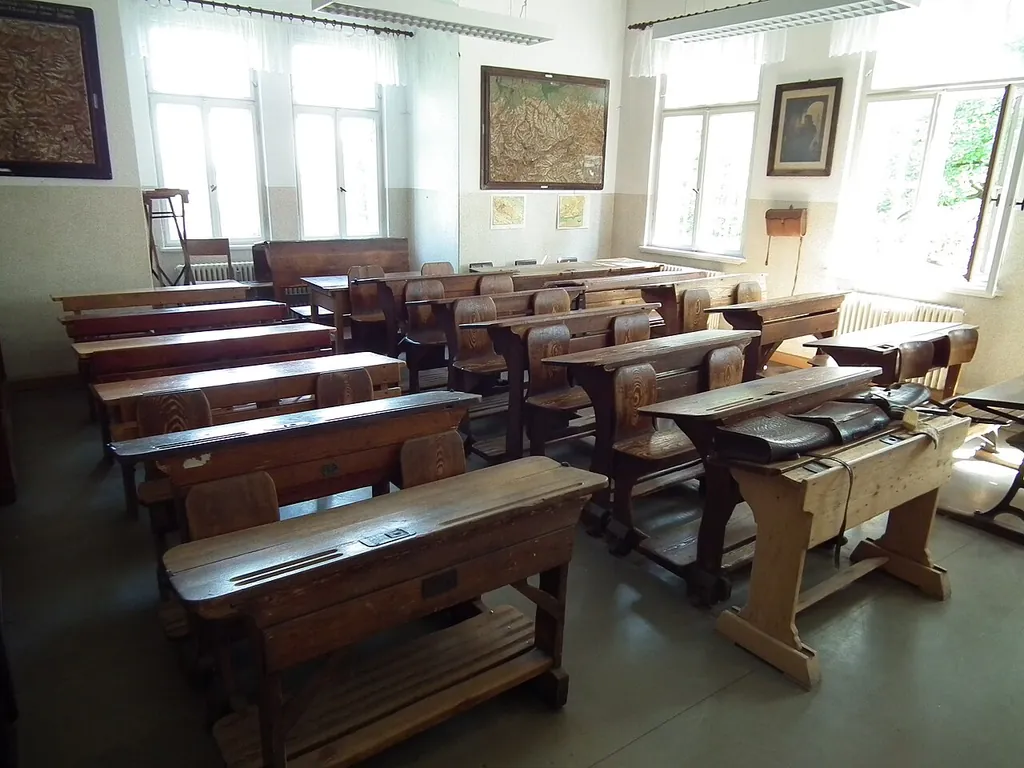
The museum sees itself as a place to join in: in the historic classroom, visitors experience lessons as they were a hundred years ago, write on slate tablets with a slate pencil and practise the old German script. Further rooms show technical teaching aids from the gramophone to the Polylux, materials for the individual school subjects and photos from Ebersdorf's school history. Its audience includes school classes from Chemnitz and the Ore Mountains as well as class reunions and family celebrations. In 2026 the museum celebrates its 35th anniversary.
Highlights
- Historic classroom with slate tablet, slate pencil and harmonium
- Technology room with teaching equipment up to 1989, from the gramophone to the Polylux
- Teaching materials for the individual school subjects
- Photo exhibition on Ebersdorf's school history
- Writing exercises in the old German script
Permanent exhibitions
- Historische Schulstube – Old classroom with school desks, maps, slate tablets and slate pencils, in which lessons are re-enacted as they used to be.
- Technikraum – Teaching equipment from the pre-war period to 1989, such as a gramophone, a 1956 television, an overhead projector (Polylux) and film projectors – mostly still in working order.
- Die Schulfächer – Teaching aids and pupils' work from the individual subjects show how people used to learn and teach.
- Founded
- 1991
- Operated by
- Ebersdorfer Schulmuseum e.V.
Admission & discounts
| Adults | €10 |
|---|---|
| Children & teens | €1For children, the City of Chemnitz funds admission and the guided tour; only a contribution of €1 towards costs is charged (not for private events). |
| Groups (10+ people) | €10 per personVisitor groups of 10 or more people incl. guided tour, children under 6 years €5; groups of fewer than 10 people €100 flat rate. School classes: class teacher free, children €1, additional accompanying adults €10. |
| Photography permit | €1 |
Prices valid from 1 June 2026, each including a guided tour.
Accessibility
- Wheelchair accessible: not available
- Elevator: no information
- Accessible restroom: no information
- Accessible parking: no information
- Service dogs welcome: no information
- Tactile models & exhibits: no information
- Sign language tours: no information
- Easy-to-read materials: no information
- Audio description: no information
The museum does not have barrier-free access.
Kids & families
Great for kids & families
- Family tours & workshops
- Hands-on stations
Children experience a school lesson as it was 100 years ago and write on slate tablets; holiday programmes and museum festivals.
Getting there & parking
The museum hasn’t published any information on this.
Amenities & dining
The museum hasn’t published any information on this.
Events & venue rental
- Spaces for rent
- Private parties
Class reunions, family celebrations and other private events in a historic school setting, including a guided tour.
Inquiries & detailsPlan your visit
| Guided tours | yes |
|---|---|
| School programs | yes |
| Photography | Only with a photography permit (€1). |
| Good to know | Visits are usually with a guided tour; thematic programmes for local history and general studies, history and project days. |