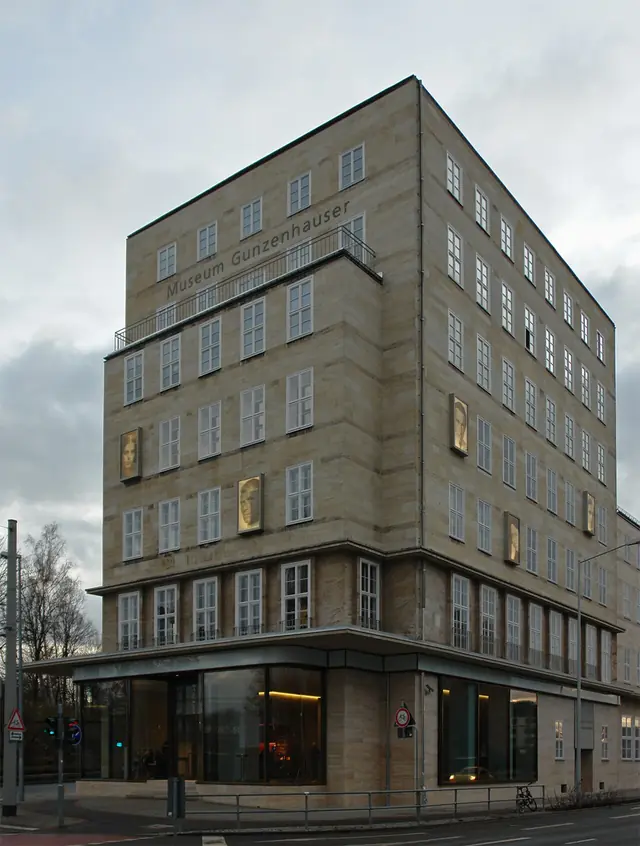
Parts of the estate of figure skating coach Jutta Müller are on show, with photographs, sports memorabilia and personal belongings, as well as a replica of the “blue salon” of her family’s living room.
Around 80 exhibits trace the history of the Chemnitz fire service from the Middle Ages to the end of the First World War, with a focus on the imperial era. The occasion is 160 years of the professional fire brigade and 120 years of the main fire station.
About the museum
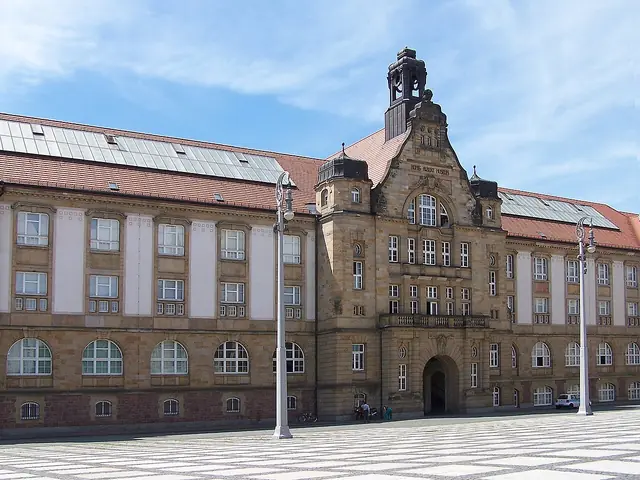
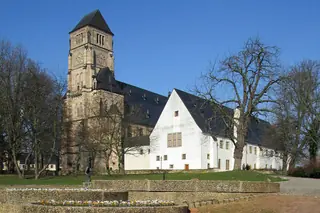
Around 1136, a Benedictine monastery was founded on a hill north of what would later become the city of Chemnitz, endowed by Emperor Lothar III. St. Mary's Monastery lasted nearly four centuries; the complex owes its present form mainly to the late Gothic expansion around 1500. Surviving elements include a Romanesque apse and parts of the early Gothic east wing.
With the Reformation, the monastery was dissolved and passed to the Saxon sovereign. Around 1548/49, the buildings were converted into a Renaissance palace that served as an administrative seat and hunting lodge. In the 18th century the complex passed into private ownership and became a popular destination for excursions from Chemnitz.
At the end of the 1920s, the city handed the palace over to the Verein für Chemnitzer Geschichte (Chemnitz history society) for use as a museum; the municipal museum opened here in 1931. After war damage and a lengthy renovation, the museum was redesigned and reopened in 1995. Today it is part of the Kunstsammlungen Chemnitz.
The exhibitions combine the city's history from the Middle Ages to the 20th century with a significant collection of late Gothic sacred sculpture in Saxony, including the Holy Sepulchre from Chemnitz's St. James' Church. A lapidarium displays stone architectural elements and tombs.
Highlights
Former Benedictine monastery with late Gothic and Renaissance rooms
Gothic sculpture in Saxony, including the Holy Sepulchre from St. James' Church
Picture hall on Chemnitz's city history in the former dormitory
Lapidarium with portals and tombs
Tactile city models showing the development of Chemnitz
Permanent exhibitions
Bildersaal Chemnitzer Geschichte – Paintings, textiles, jewelry, and everyday objects from the 12th to the 20th century tell the story of the city in the monks' former dormitory.
Gotische Skulptur in Sachsen – Late medieval sacred sculptures in the monastery rooms, including the Chemnitz Holy Sepulchre.
Lapidarium – Stone architectural elements, portals, and tombs from the Middle Ages, Renaissance, and Baroque in a separate single-story building.
Founded
1931
Operated by
Stadt Chemnitz / Kunstsammlungen Chemnitz
Director
Thomas Schuler
Admission & discounts
Adults
€8
Reduced
€5Persons entitled to concessions under the fee schedule of the Kunstsammlungen Chemnitz (including students and people with disabilities)
Children & teens
freefree up to age 17 · Children and young people up to the age of 18 as well as school students free.
Seniors
–No senior concession listed.
Visitors with disabilities
€5companion free · Reduced admission; companions of visitors with a severe disability free.
Students & apprentices
€5Students of TU Chemnitz free.
Groups (10+ people)
€5 per personFrom 10 people, per person.
Families
€14Family ticket Maxi: 2 adults with at least 1 child under 18.
Family ticket Mini (1 adult + at least 1 child under 18)
€7
Combination ticket for all museums of the Kunstsammlungen, including Burg Rabenstein
€28Reduced €19; valid on 6 consecutive opening days.
Annual combination pass for all museums
€70Reduced €35; non-transferable.
Free admission also on your own birthday, for Chemnitzpass holders, and for companions of school groups (one per five children).
Accessibility
Wheelchair accessible
Elevator
Accessible restroom: not available
Accessible parking
Service dogs welcome
Tactile models & exhibits
Sign language tours: no information
Easy-to-read materials: no information
Audio description: no information
Accessible entry to service areas and the permanent exhibition; elevator available. People with reduced mobility may park directly in front of the museum (access via Salzstraße, use the gate intercom). Tactile city models and tactile floor plans. An accessible restroom is located in the neighboring restaurant. Guide dogs and therapy dogs welcome.
Kids & families
Great for kids & families
Kids’ admission
free up to age 17
Family ticket
€14 · Family ticket Maxi: 2 adults with at least 1 child under 18.
Family tours & workshops
Activity booklet, scavenger hunt or kids’ audio guide
Hands-on stations
Stroller-friendly: not available
Kids’ birthday parties: not available
Family tour every 3rd Sunday of the month, followed by a studio session (admission plus materials fee). Hands-on programs in the summer holidays, such as baking bread in a field oven. Free puzzle booklets, including one featuring "Benni the Benedictine" through the former monastery. Strollers are not allowed in the exhibition rooms; the Kunstsammlungen offer children's birthday parties at other venues.
Getting there & parking
By public transit
Nordstraße · 500 m
Bus 23 from the main train station toward Heinersdorf to the Nordstraße stop, then via Müllerstraße to the Schloßberg.
By car
People with reduced mobility can park directly in front of the museum (access via Salzstraße).
Publications, postcards, and posters at the museum ticket desk. Large bags, umbrellas, strollers, and food and drinks are not permitted in the exhibition rooms.
Events & venue rental
The museum hasn’t published any information on this.
Plan your visit
Guided tours
yes
School programs
yes
Photography
Photography and filming for private purposes are allowed without flash, tripod, or selfie stick (minimum distance of 50 cm from the works).
Good to know
Guided tours for groups of up to 24 people on request through the visitor service of the Kunstsammlungen (tel. 0371 488 4424); programs for daycare groups and school classes.