The exhibition asks how family and kinship pass language and knowledge between generations – and what migration, displacement and globalization change in the process.
Three large-scale installations by Māori artist George Nuku in the Oceania section, including in the boat hall, on humankind, the sea and climate change.
Sound installation in the listening room that lets visitors experience anew wax cylinder recordings made in Egypt in the 1930s by composer Brigitte Schiffer, held in the Phonogramm-Archiv.
Exhibition at the Forschungscampus Dahlem (Lansstraße 8, free admission) on embroidery as a carrier of memory and knowledge in Afghan diaspora communities.
About the museum
The ethnological holdings date back to the Brandenburg-Prussian Kunstkammer (cabinet of art and curiosities) in the Berlin Palace, which acquired its first objects from overseas through trade connections. In the 19th century the collections were systematically expanded and for a time displayed in the basement of the Neues Museum. The driving force was the physician and explorer Adolf Bastian, who is regarded as the founder of ethnology as a university discipline.
An independent museum was founded in 1873 and opened in 1886 as the Königliches Museum für Völkerkunde (Royal Museum of Ethnology) on what is now Stresemannstraße. Because space soon ran short, a storage building was completed in Dahlem in 1921. During World War II the holdings were evacuated; some were taken to the Soviet Union as war booty and only returned after reunification. The damaged original building was demolished in 1961, and the collection found a new home in Dahlem. It has been called the Ethnologisches Museum since 2000.
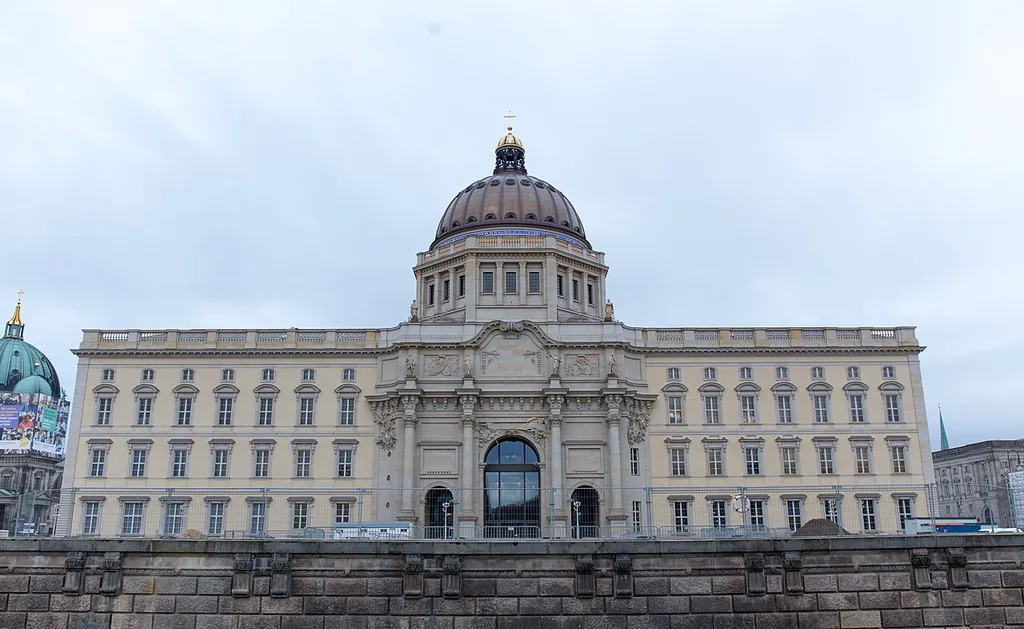
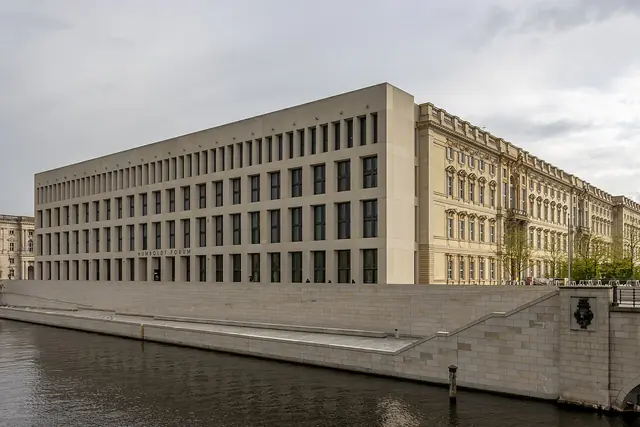
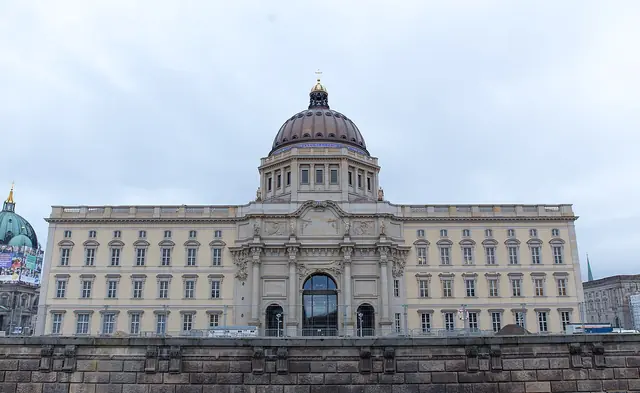
With around 500,000 objects from Africa, Asia, the Americas and Oceania, plus extensive photo, film and sound holdings, the museum is among the largest of its kind. After the Dahlem exhibitions closed in 2017, the display collection moved into the rebuilt palace: the presentations at the Humboldt Forum opened in 2021 and 2022, together with the Museum für Asiatische Kunst.
Today the museum sees itself as a place for critically examining colonial acquisition contexts. It works with societies of origin, conducts provenance research and has returned objects – the Benin Bronzes, for example, were transferred to Nigerian ownership in 2022. At the Forschungscampus Dahlem (Dahlem research campus) it also shows smaller exhibitions with free admission.
Highlights
Boat hall with large boats from Oceania
Richly carved meeting house from Palau
Berlin Phonogramm-Archiv with historic sound recordings from around the world
Sculptures and masks from Cameroon and the Congo, as well as the Benin Bronzes, owned by Nigeria since 2022
Collaboratively developed exhibition “Geschichte(n) Tansanias” (Tanzania's Histories)
Permanent exhibitions
Ethnologische Sammlungen und Asiatische Kunst – Around 20,000 exhibits on more than 16,000 square meters on the 2nd and 3rd floors of the Humboldt Forum – from boats from Oceania to sound documents of the Phonogramm-Archiv, presented together with the Museum für Asiatische Kunst.
Geschichte(n) Tansanias – A presentation developed together with curators from Tanzania on the country's long entanglements, focusing on the German colonial period and its consequences.
Founded
1873
Operated by
Staatliche Museen zu Berlin – Stiftung Preußischer Kulturbesitz
Admission & discounts
Adults
€9
Reduced
€4.50School students, university students, people doing voluntary service and trainees up to age 30, recipients of ALG I (unemployment benefit), Ehrenamtskarte (volunteer card) holders, people with severe disabilities (degree of disability 50 or higher)
Children & teens
freefree up to age 18 · Free admission for children and young people under 19.
Seniors
–No senior discount.
Visitors with disabilities
€4.50companion free · Reduced from a degree of disability of 50; companion with “B” marker admitted free.
Students & apprentices
€4.50Reduced up to age 30; free as a registered group as part of a university course.
Groups (10+ people)
€8 per personGroups of ten or more receive no discount; registered school classes free.
Families
–No family ticket; free under 19.
Museum Pass Berlin (3 days)
€32Reduced €16; valid for permanent exhibitions.
Media guide
€3Usage fee; available at the ticket desk.
The exhibition ticket is valid for the Ethnological Collections and the Museum für Asiatische Kunst, including the temporary exhibitions on the 2nd and 3rd floors. Free admission for, among others, recipients of social benefits, Berlin-Ticket S holders, ICOM/Museumsbund members, the press, and holders of an SMB annual pass or Museum Pass. Exhibitions at the Forschungscampus Dahlem are free.
Accessibility
Wheelchair accessible
Elevator
Accessible restroom
Accessible parking
Service dogs welcome: no information
Tactile models & exhibits
Sign language tours
Easy-to-read materials: no information
Audio description: no information
Fully wheelchair-accessible according to the SMB (Staatliche Museen zu Berlin). Automatic doors, elevators and platform lifts; 22 accessible parking spaces on the south side (currently relocated to Portal 2). Tactile floor guidance system up to the exhibition entrances, tactile floor plans and touch and smell stations with wheelchair clearance underneath. Media guide with videos in German Sign Language for the Ethnological Collections; inclusive guided tours in the program. Texts in Easy Language are in preparation.
Kids & families
Great for kids & families
Time needed
approx. 1.5 hrs
Kids’ admission
free up to age 18
Family tours & workshops
Hands-on stations
Baby changing facilities
The exhibitions feature children's and family areas, reading stations, a walk-in boat, a storytelling house, AR/VR games and touch stations in every room; family tours and creative workshops on the 1st floor of the Humboldt Forum. According to the house rules, children under 12 are only admitted with an adult, may not be carried on backs or shoulders, and strollers may have to be swapped for the museum's own; signposted baby changing rooms.
No parking of its own; the Humboldt Forum refers visitors to the Dom Aquarée, Bebelplatz and Rathauspassagen parking garages. 22 accessible parking spaces on the south side (currently relocated to Portal 2); coach parking on Rathausstraße (9:00–22:30).
Accessible parking
Taxi stand at the corner of Spandauer Straße and Rathausstraße.
Humboldt Forum facilities: Forum Café, Lebenswelten Bistro, Restaurant Baret, shops in the foyer and the passage, free cloakroom on the ground floor and lockers, free Wi-Fi.
Events & venue rental
Rentals are handled by the Stiftung Humboldt Forum, not by the museum.
Plan your visit
Guided tours
yes
Audio guide
yes
School programs
yes
Good to know
Access via Portal 3 (west side) or the revolving door in the passage. Jackets and bags larger than A4 must go to the cloakroom or a locker. The Humboldt Forum estimates around 90 minutes for the Ethnological Collections. Tandem and group tours (€80/hour including admission for certain groups) can be booked; public guided tours may require an additional exhibition ticket.