Cabinet exhibition marking the 300th birthday of the graphic artist Daniel Chodowiecki, presenting his daughters and female pupils and their path into art through drawings and prints; in cooperation with the Akademie der Künste.
About the museum
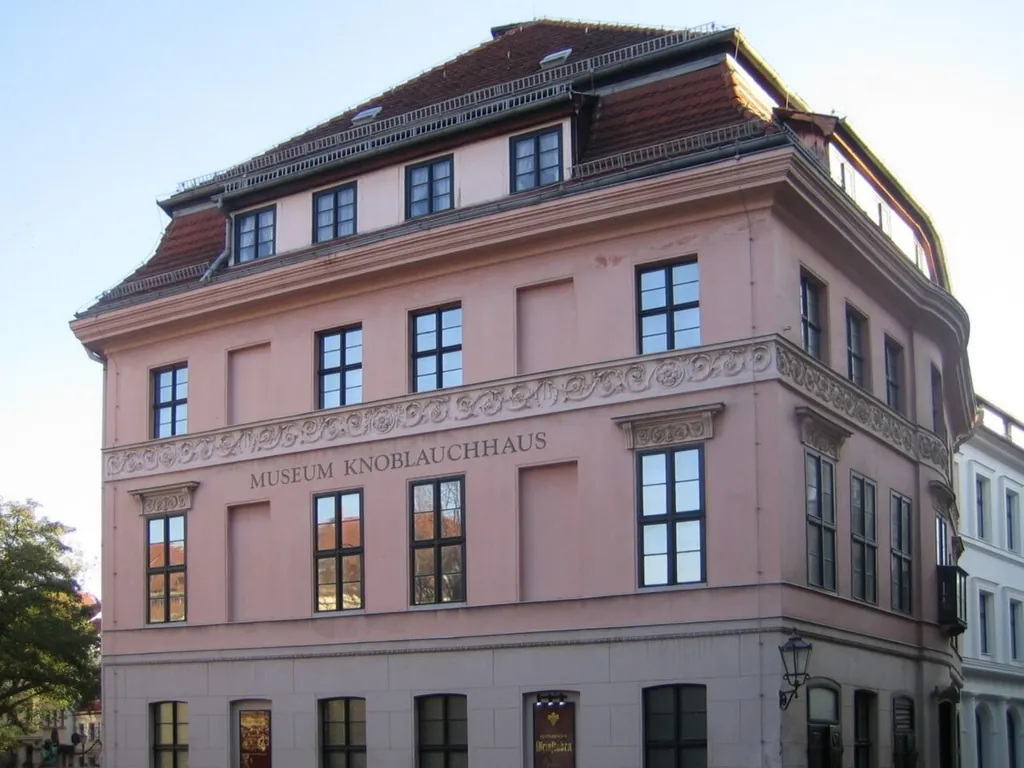
Johann Christian Knoblauch, a master needlemaker from Upper Hungary who had settled in Berlin in 1750 and earned well from orders for the Prussian army, had the three-story residence on Poststraße built from 1759 to 1761. The family lived in it for many generations. In 1806 the Baroque facade was given a Neoclassical makeover, and in 1835 the architect Eduard Knoblauch, a member of the family, redesigned the interiors with a new spiral staircase and late Neoclassical painted decoration.
Under Carl Knoblauch, the house became a meeting place for Berlin's educated middle class in the first half of the 19th century; the family's circle of friends included Karl Friedrich Schinkel, the sculptor Christian Daniel Rauch, the theologian Friedrich Schleiermacher and the Humboldt brothers.
As one of the few buildings in the Nikolaiviertel, the house survived World War II largely intact and afterward served as a residential building with a wine tavern on the first floor. After restoration, it opened in 1989 as a branch of the Märkisches Museum; since 1995 it has belonged to the Stiftung Stadtmuseum Berlin, which today operates under the name Berlin Museum.
The permanent exhibition "Berliner Leben im Biedermeier" shows the living rooms furnished in the style of the period between 1815 and 1848, with the family's furniture, paintings and everyday objects. One section presents the salon and the guests of the house, and the Raphael Cabinet, furnished in 1835, has been faithfully reconstructed. Smaller cabinet exhibitions round out the program.
Highlights
Living rooms furnished in original Biedermeier style (1815–1848)
Berlin salon with Schinkel, Humboldt and other friends of the family
Reconstructed Raphael Cabinet from 1835
Alexander von Humboldt's deathbed
One of the last surviving 18th-century Berlin town houses
Free audio guide in four languages
Permanent exhibitions
Berliner Leben im Biedermeier. Humboldt, Schinkel und Familie Knoblauch – Tour through the historically furnished living rooms of the Knoblauch merchant family, with salon, library, Raphael Cabinet and a hands-on area for current topics.
Founded
1989
Operated by
Stiftung Stadtmuseum Berlin (Berlin Museum)
Director
Sophie Plagemann
Admission & discounts
Adults
€7
Reduced
freeFree admission with proof for, among others, university students, trainees, volunteer service participants, holders of the Berlin-Ticket S, Ehrenamtskarte (volunteer card), Super-Ferienpass or Berliner Familienpass, recipients of Bürgergeld/ALG I (unemployment benefits), refugees, people with severe disabilities (GdB 50) and their companion, ICOM/Museumsbund members, friends' association members and press
Children & teens
freefree up to age 17 · Children and teenagers under 18 get in free.
Seniors
–No senior discount.
Visitors with disabilities
freecompanion free · Free admission with a degree of disability (GdB) of 50 or more, also for the recognized companion.
Students & apprentices
freeUniversity students and trainees get in free with proof.
Groups
–Guided tours for adults as well as daycare and school workshops can be booked; prices not given on the museum's website.
Families
–No family ticket; admission is free for under-18s.
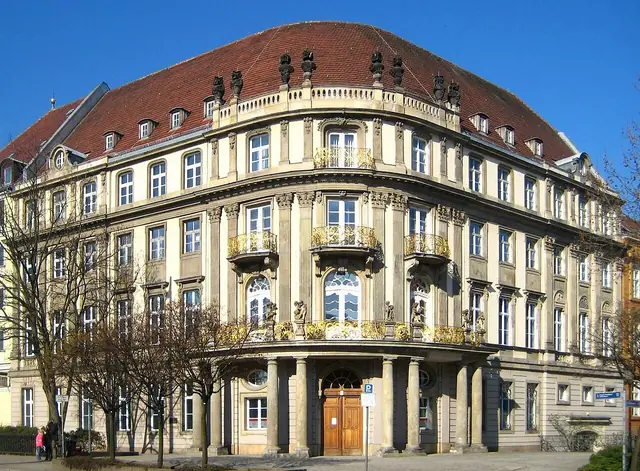
Kombi-Ticket Nikolaiviertel (Nikolaikirche, Ephraim-Palais, Knoblauchhaus, two consecutive days)
€15
Single ticket valid as a day ticket. Here, reduced admission means free admission. Online advance sales open no earlier than 14 days before the day of the visit; online tickets cannot be canceled.
Accessibility
Wheelchair accessible: not available
Elevator: not available
Accessible restroom: not available
Accessible parking
Service dogs welcome
Tactile models & exhibits: no information
Sign language tours: no information
Easy-to-read materials: no information
Audio description: no information
Entrance only via three steps without a handrail, double door without automatic opener (4 cm threshold) – staff will help. The exhibition rooms are on the second and third floors and can only be reached by stairs (19 and then a further 20 steps); no elevator. Restroom not accessible (door width 53 cm). Induction loop in the salon, audio stations and audio content via QR code. Two accessible parking spaces on Rathausstraße (approx. 150 m). "Barrierefreiheit geprüft" (accessibility tested) certificate (Reisen für Alle, 2025, valid until 2028).
Kids & families
Great for kids & families
Kids’ admission
free up to age 17
Family tours & workshops
Activity booklet, scavenger hunt or kids’ audio guide
Kids’ birthday parties
Free children's booklet for the permanent exhibition (German, English, Polish, Turkish, Arabic) and a family version of the audio guide in German. Children's birthday parties for 8- to 12-year-olds, daycare workshop "Family Life in the Past" ("Familienleben früher"). Entrance via three steps, exhibition rooms reachable only by stairs.
Getting there & parking
By public transit
Rotes Rathaus · 400 m
Bus 200 Rotes Rathaus (approx. 400 m); U5 Rotes Rathaus (approx. 450 m); U2 Klosterstraße (approx. 650 m); S-Bahn and U-Bahn Alexanderplatz (approx. 750 m); tram M4, M5, M6 Spandauer Straße/Marienkirche (approx. 650 m).
By car
No on-site parking at the museum.
No visitor parking; two public parking spaces for people with disabilities on Rathausstraße (about 150 m away).
Museum shop with books on the Biedermeier period, cards, souvenirs, and period-style toys. No museum café of its own, numerous cafés and restaurants in the Nikolaiviertel.
Events & venue rental
The museum hasn’t published any information on this – please ask the museum directly.
Plan your visit
Guided tours
yes
Audio guide
yes (DE, EN, ES, TR)
School programs
yes
Good to know
Free audio guide (German, English, Spanish, Turkish, plus a family version in German) at the entrance. Bookable guided tours for adults, daycare workshop "Familienleben früher" (family life in the past) and school workshops "Alltag um 1800" (everyday life around 1800, grades 1–6) and "Zwischen Aufklärung und Moderne" (between Enlightenment and modernity, grades 7–13); also lectures and paper theater in the salon.