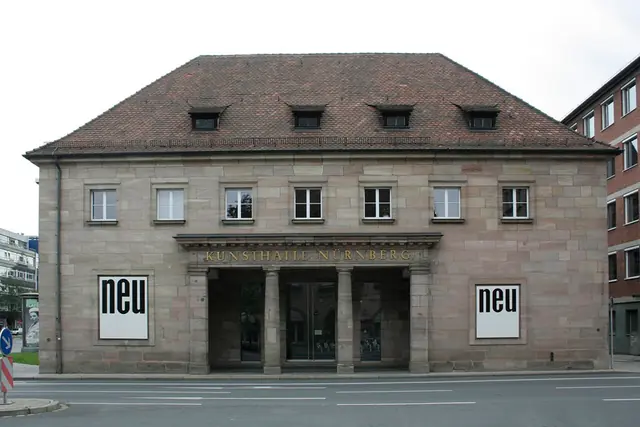
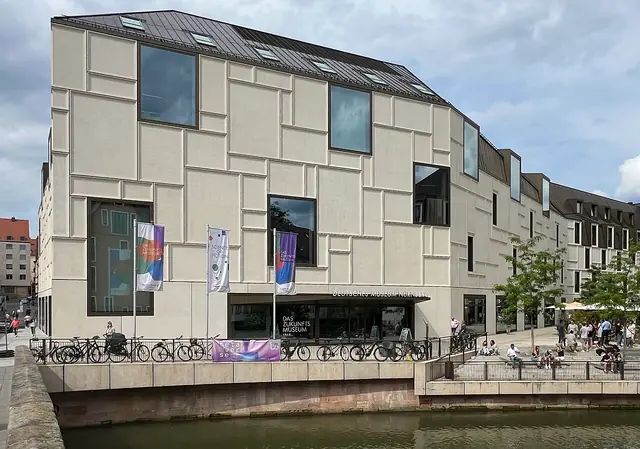
The largest museum of cultural history in the German-speaking world: around 25,000 exhibits from the Stone Age to the present in a former Carthusian monastery in Nuremberg.
Opening hoursAdmission from €10 Wheelchair accessible Café
Limited operations (expected until 2030). Open, but several areas of the permanent exhibition are closed for renovation, including parts of the Sep Ruf buildings: musical instruments, folk culture and the 19th century expected until 2030, Baroque decorative arts until early 2027; the Rittersaal (Knights' Hall) and clothing from 1700 onward are closed, and the late Middle Ages partly closed. Current status on the orientation map on the website.
The major annual exhibition shows works from 1950 to 2020 that explore the human body as a motif and as a precondition for experiencing art; interventions in the permanent exhibition complement the show.
Illuminated fragments from manuscripts of the 9th to 15th centuries, from one of the most important collections of its kind, are presented in the permanent exhibition; the delicate leaves will be swapped out in early November 2026.
16 advertising posters by the Swiss graphic designer, who among other things helped shape the purple Milka cow, are on display in the 20th/21st-century department.
About the museum
The museum was founded in 1852 on the initiative of the Franconian baron Hans von und zu Aufseß. After the failure of political unification in 1848, it was intended to document the shared culture of the German-speaking world; at the time, the name “germanisch” referred to this linguistic and cultural area. Aufseß initially saw the institution above all as a comprehensive index of historical sources; only gradually did collecting original objects take center stage.
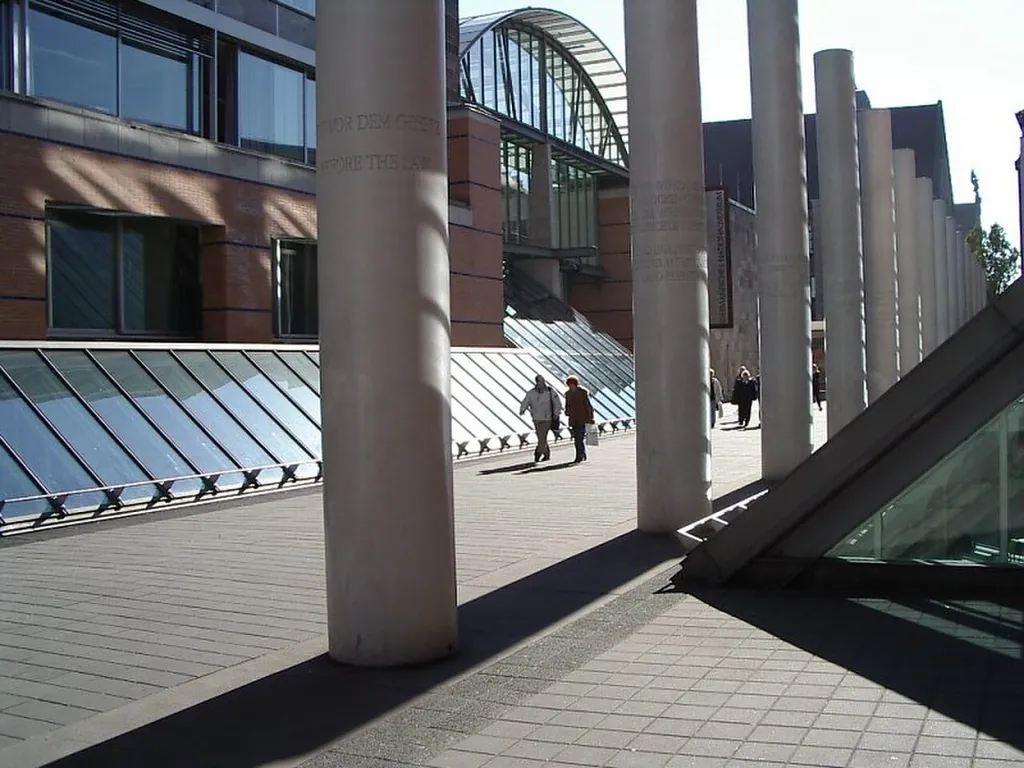
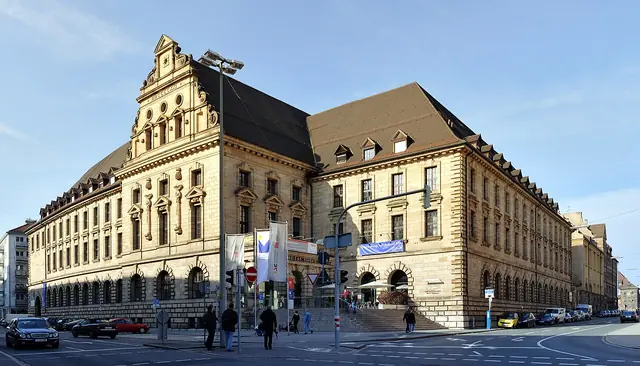
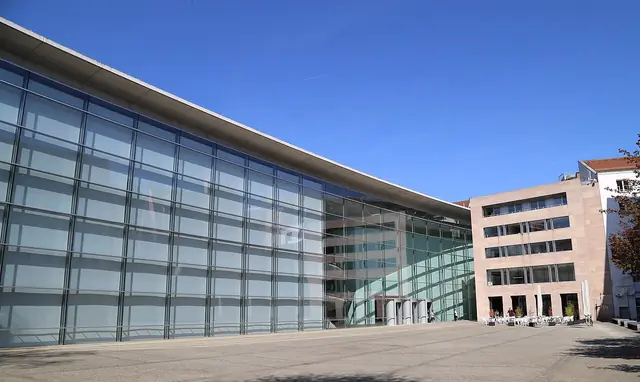
From 1857, the museum occupied the former Carthusian monastery on the edge of Nuremberg's old town, whose Gothic church remains the heart of the complex to this day. Over time, gallery and exhibition buildings were added; after the destruction of World War II, new buildings by Sep Ruf shaped the ensemble. Between 1988 and 1996, the large extension on Kartäusergasse was built to plans by Jan Störmer, with Dani Karavan's “Straße der Menschenrechte” (Way of Human Rights) stretching out in front of it. Since 1999, the museum has also run the Kaiserburg-Museum at Nuremberg Castle as a branch.
Today the GNM is a foundation under public law, supported by the federal government, the Free State of Bavaria and the City of Nuremberg, and, as a research museum, a member of the Leibniz Association. Of around 1.3 million objects, about 25,000 are on display – from hand axes and the Bronze Age golden hat to medieval treasury art, works by Albrecht Dürer and 20th-century design. The Behaim Globe, the oldest surviving depiction of the Earth as a sphere, has been listed in UNESCO's Memory of the World Register since 2023. Parts of the buildings are currently undergoing extensive renovation.
Highlights
Behaim Globe, the oldest surviving terrestrial globe (UNESCO Memory of the World)
Bronze Age golden hat of Ezelsdorf-Buch
Paintings and prints by Albrecht Dürer
Shrine of the Imperial Relics and the cover of the Codex Aureus of Echternach
Gothic Carthusian church at the center of the museum
“Straße der Menschenrechte” by Dani Karavan in front of the entrance
Permanent exhibitions
Ur- und Frühgeschichte – The tour leads from the Paleolithic to the Carolingian period, with masterpieces such as the golden hat of Ezelsdorf-Buch and the eagle fibula of Domagnano.
Mittelalter – Sculptures, stained glass and panel painting, textiles and treasury art from the 8th to 15th centuries, including the Shrine of the Imperial Relics and the Ardennes Cross.
Renaissance, Barock, Aufklärung – In 33 rooms, paintings, sculptures, decorative arts and instruments from 1500 to 1800 come together in a cross-genre display, with a focus on Dürer, Cranach and Rembrandt.
Founded
1852
Operated by
Stiftung des öffentlichen Rechts (getragen von Bund, Freistaat Bayern und Stadt Nürnberg; Mitglied der Leibniz-Gemeinschaft)
Director
Daniel Hess (Generaldirektor)
Visitors per year
approx. 335,163 (2024)
Admission & discounts
Adults
€10
Reduced
€6Children and young people aged 7 to 17, school students, university students, people with severe disabilities, unemployed people, closed groups of 10 or more, and holders of the Bayerische Ehrenamtskarte (Bavarian volunteer card)
Children & teens
€6free up to age 6 · Children up to age 6 free, ages 7–17 reduced. School students in class groups and youth groups €1.
Seniors
–No senior discount listed.
Visitors with disabilities
€6companion free · Reduced price for people with severe disabilities; companion free with the “B” marker in the ID.
Students & apprentices
€6Reduced price for school and university students.
Groups (10+ people)
€6 per personClosed groups of 10 or more pay the reduced price. Group tours via the Kunst- und Kulturpädagogisches Zentrum (KPZ), tel. +49 911 1331-238.
Families
€14Small group/family ticket for 2 to 6 people: 1–2 adults with 1–4 people under 18.
Free admission:Free admission on Wednesdays from 17:30.
€9 with a same-day VGN public transport ticket or VGN season ticket. €2 (families €4) with the Nürnberg-, Erlangen-, Bamberg-, Fürth-, Ansbach-, Schwabach- or Bayreuth-Pass. Free admission for, among others, members and patrons of the GNM and holders of ICOM, Museumsbund, UNESCO and art historians' association cards. A valid admission ticket is required for guided tours (except Wednesdays from 17:30). Media guide €3. Kaiserburg-Museum branch: combined Kaiserburg ticket €9 (concession €8).
Accessibility
Wheelchair accessible
Elevator
Accessible restroom
Accessible parking: no information
Service dogs welcome: no information
Tactile models & exhibits
Sign language tours
Easy-to-read materials
Audio description
Almost all areas can be reached via ramps and elevators, though not always by the most direct route; ticket desk, restrooms, café and shop are wheelchair-accessible. Loan wheelchairs at the ticket desk. The media guide offers four low-barrier tours (approx. 1 hour, no stairs) for wheelchair users, people with hearing impairments (with sign language videos), people with visual impairments and in plain language; also tactile models and a tablet with a large screen to borrow. Tours for people with disabilities at a special rate via the KPZ, as well as a program for people with dementia. The Opernhaus and Lorenzkirche subway stops are accessible.
Kids & families
Great for kids & families
Kids’ admission
free up to age 6
Family ticket
€14 · Small group/family ticket for 2 to 6 people: 1–2 adults with 1–4 people under 18.
Family tours & workshops
Activity booklet, scavenger hunt or kids’ audio guide
Kids’ birthday parties
Family tours on Sundays (recommended for ages 6 and up), plus a children's studio, activity days and a children's club for 8- to 11-year-olds. Children's media guide with six audio tours for ages 6 to 12 (€10 per family) and a creative booklet. Children's birthday parties with a tour and creative activity via the KPZ.
Getting there & parking
By public transit
Opernhaus (U2/U3) oder Lorenzkirche (U1)
U1 to Lorenzkirche or U2/U3 to Opernhaus (both accessible); approx. 10 minutes on foot from the main train station, around 15 minutes from the airport on the U2.
By car
Parking available
No on-site parking; several municipal parking garages nearby, with the Sterntor parking garage recommended on weekends. Coach parking on Grasersgasse right next to the museum.
Café Arte with lunch dishes and cakes (Tue–Sun 10:00–18:00, Wed until 20:30, reservations tel. +49 911 1331-286), in summer also in the Kleiner Klosterhof (small cloister courtyard); accessible without a museum ticket. Museum shop by CEDON. Bags larger than A4 go to the cloakroom or lockers.
Events & venue rental
Spaces for rent
Private parties
Corporate events
Up to 600 guests.
Aufseß-Saal (approx. 650 m², up to 510 people in theater seating, 500 for a standing reception), foyer (up to 120 people), Kunstbalkon (art balcony; up to 90 people), Carthusian church (up to 220 people standing, special conditions) and Kleiner Klosterhof (up to 600 people for a standing reception, special conditions). In-house caterer arte e vivere, other service partners; cultural program with guided tours can be booked. Price list and room dimensions available as a PDF.
Allowed free of charge in the collections without flash or tripod; prohibited in special exhibitions. A tripod or commercial shoots require permission from the press department.