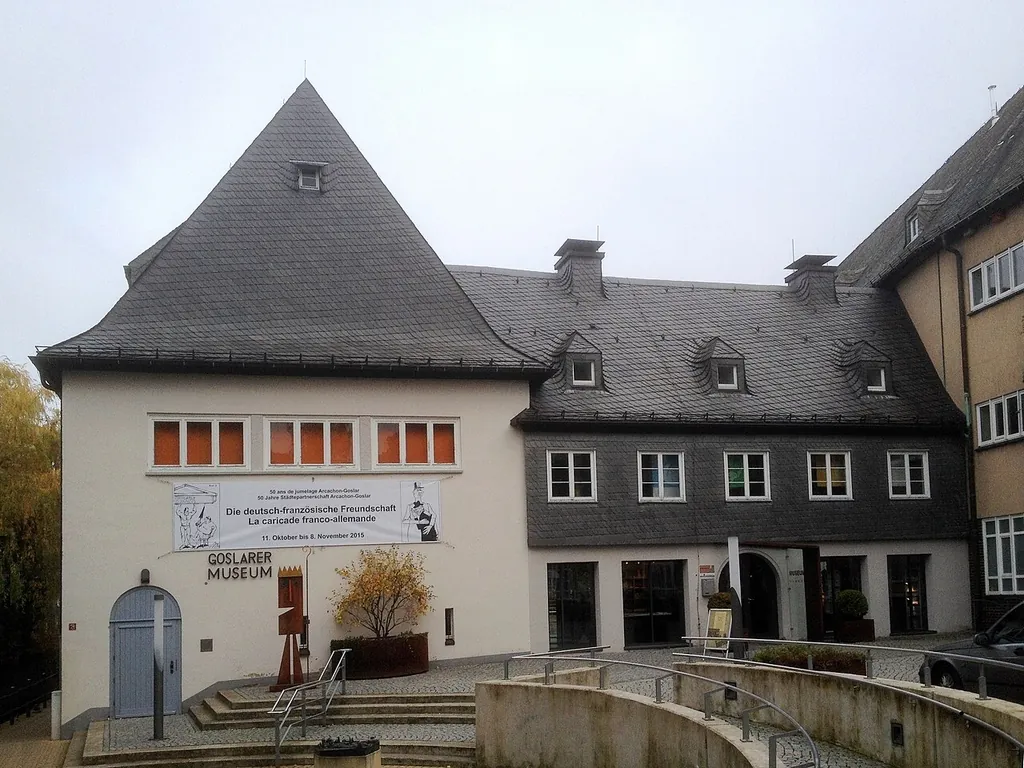
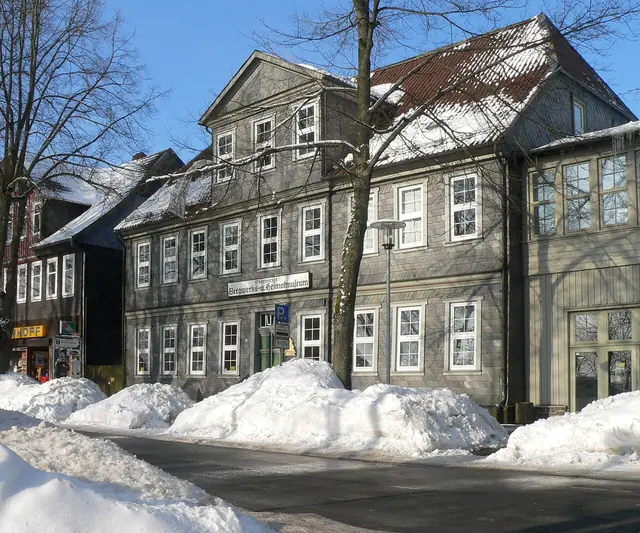
City museum on Goslar's Museumsufer with the Krodo Altar, the Goslar Gospels and the Bergkanne (miners' tankard), plus collections on the geology and fossils of the Harz.
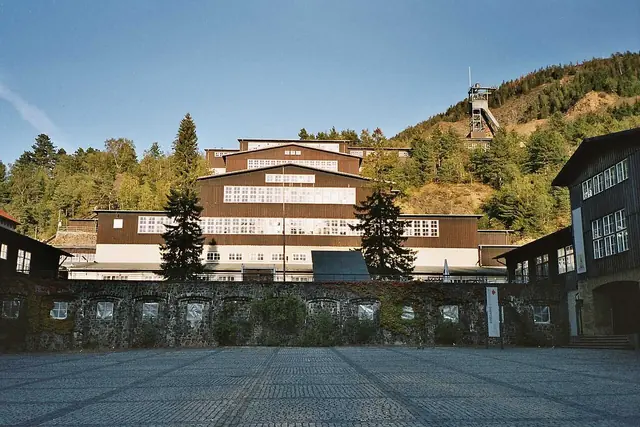
In 66 episodes, the exhibition tells the story of hard rock and metal with loans from the regional scene; an accompanying presentation in the Kulturmarktplatz is devoted to the Rockharz festival.
About the museum
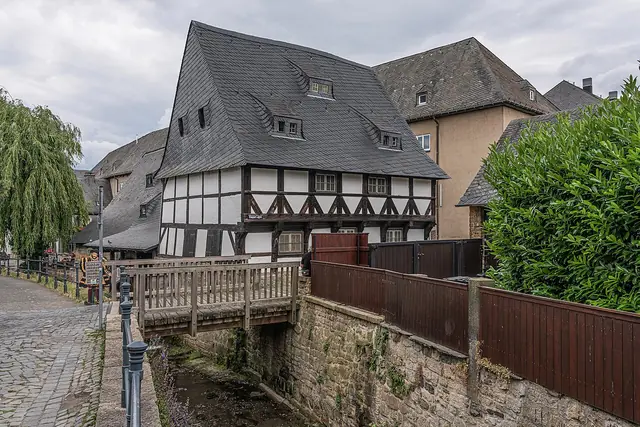
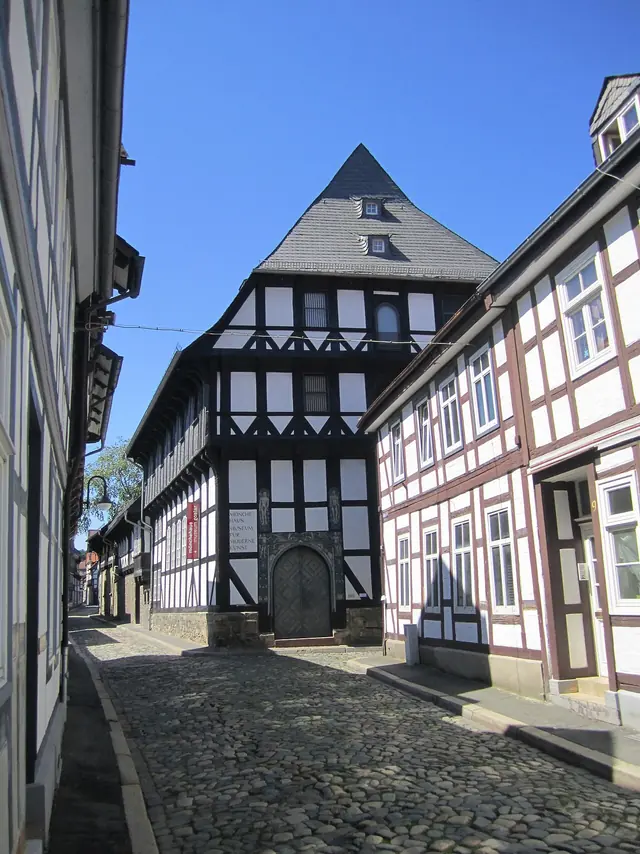
The museum has its roots in two civic associations: the Naturwissenschaftlicher Verein Goslar (natural science society), founded in 1852, and the Museumsverein (museum association), established in 1905. Both built up collections that were initially housed in various rooms. In 1922 the manufacturer H. Borchers provided a canons' house on the Abzucht stream, built in 1514; in the same year the town and the two associations signed a contract governing the joint operation of the museum, which remains in force today.
At the heart of the cultural history section are objects from the collegiate church of St. Simon and Judas, demolished in the early 19th century. These include the bronze Krodo Altar from the early 12th century and the lavishly illuminated Goslar Gospels from the 13th century. Also on display are the original eagle from the market fountain, the Bergkanne (miners' tankard) of 1477 and a coin collection with well over a thousand coins minted in Goslar. Further rooms depict the daily life, crafts and trade of the townspeople over ten centuries.
The natural science society designs the earth history sections: an exhibition on the Klassische Geologische Quadratmeile (Classic Geological Square Mile) was created in 2007, followed in 2011 by "Vom Erz zum Metall" (From Ore to Metal) on the region's smelting history and in 2020 by a fossil exhibition with around a thousand objects spanning 540 million years. The museum is located in the old town, a UNESCO World Heritage Site, and is now part of the municipal Kulturmarktplatz; changing special exhibitions complement the collection.
Highlights
Bronze Krodo Altar, early 12th century
Goslar Gospels from the 13th century
Original eagle from Goslar's market fountain
Bergkanne (miners' tankard) of 1477 and a coin cabinet with more than 1,000 coins minted in Goslar
Fossils, minerals and ores from the Harz
Permanent exhibitions
Stadtgeschichte Goslar – Medieval treasures such as the Krodo Altar, the Gospels and the market fountain eagle, as well as the town's daily life, crafts and coin minting over ten centuries.
Fossilien – 540 Millionen Jahre Erdgeschichte – Around a thousand fossils from the region, newly installed by the natural science society in 2020.
Vom Erz zum Metall – Exhibition on smelting and metal production in the Harz, complemented by the Klassische Geologische Quadratmeile (Classic Geological Square Mile).
Operated by
Stadt Goslar gemeinsam mit dem Museumsverein Goslar e. V. und dem Naturwissenschaftlichen Verein Goslar e. V.
Admission & discounts
Adults
€6
Reduced
€4
Children & teens
freefree up to age 17 · Children and teens up to and including age 17 free.
Visitors with disabilities
freePeople with severe disabilities with a degree of disability (GdB) of 50 or more free.
Students & apprentices
freeTrainees, university students and school students free.
Groups (10+ people)
€4 per personAdults in groups of ten or more.
The town of Goslar lists €4 per person for groups, whereas GOSLAR marketing (meingoslar.de) lists €3. It is not stated who qualifies for the reduced price.
Accessibility
The museum hasn’t published any information on this – please ask the museum directly.
Kids & families
The museum hasn’t published any information on this – please ask the museum directly.
Getting there & parking
The museum hasn’t published any information on this – please ask the museum directly.
Amenities & dining
The museum hasn’t published any information on this – please ask the museum directly.
Events & venue rental
The museum hasn’t published any information on this – please ask the museum directly.
Plan your visit
Good to know
An interactive 360° tour of the museum is available online.