The 2026/2027 special exhibition traces the history of the painting and decorating trade. It shows paintings and the estate of Sagar master painter Herbert Noack (1912–1978), including sample rolls (Musterrollen).
About the museum
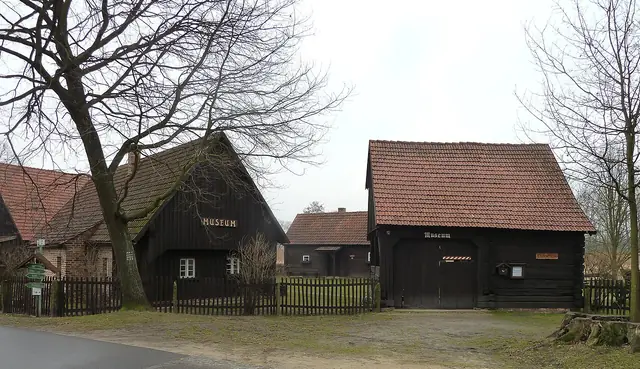
The museum goes back to a group of local and company chroniclers from Krauschwitz who, after 1990, began to safeguard evidence of regional history – partly because dealers were then buying up household goods and tools from the villages. In September 1994 they founded the support association, which remains the museum's volunteer operator to this day. In the same year the municipality of Krauschwitz made the dilapidated sawmill in Sagar and the former municipal office available.
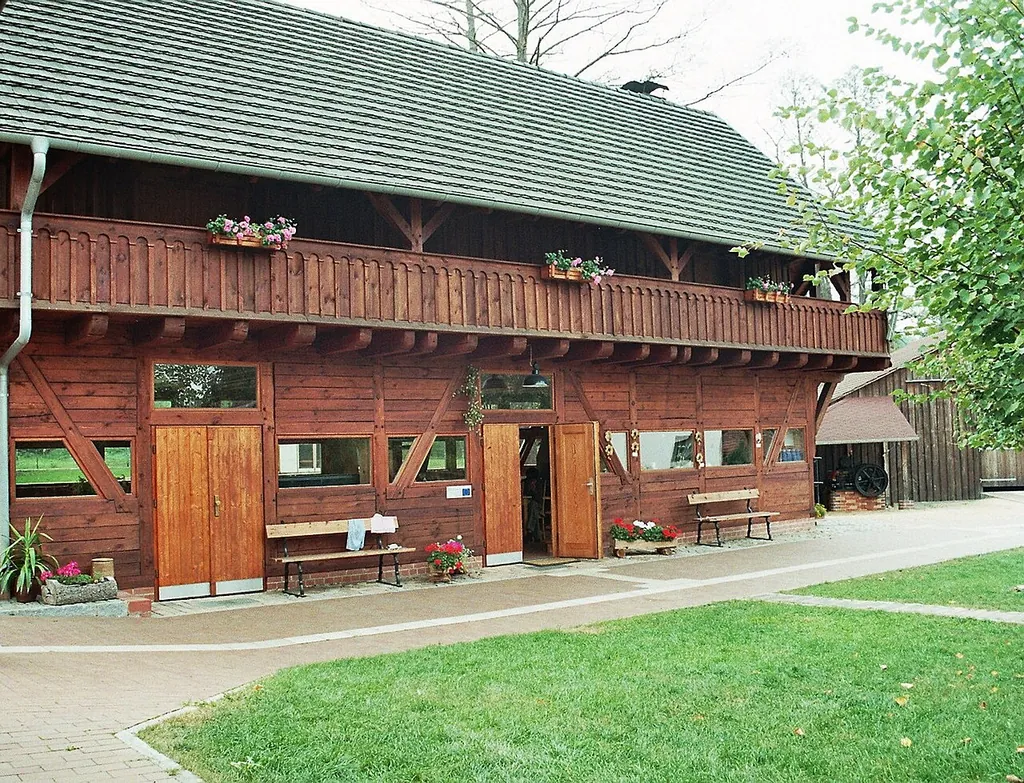
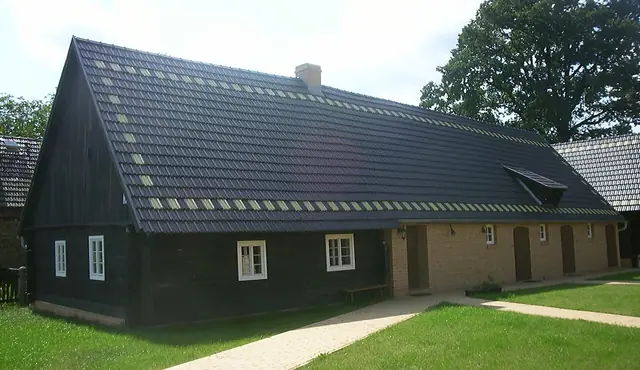
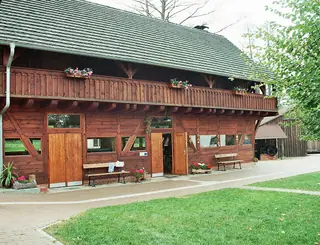
Over the following years the members rebuilt the sawmill with its vertical frame saw of 1895 through their own efforts and relocated several barns from the surrounding area to the site of about one hectare by the mill pond. The first construction phase opened in September 1997. It was followed by a multipurpose building with a ceramics exhibition, a replica bloomery furnace for smelting iron, the steam engine hall with a 100-horsepower steam engine from a sawmill in Weißwasser, a wood grinder and a pulpboard press from Rochsburg, a village smithy and a restored portable steam engine.
The museum's theme is the economic history of the former Muskau estate, whose territory now lies partly in Poland: wood, clay, coal and bog iron ore formed the basis for sawmills, paper and pulpboard production, potteries and the ceramics industry. Workshops of a wheelwright, basket maker, saddler and shoemaker, a toy exhibition and machine demonstrations complete the tour. Since 2015 the museum has been part of the Saxon Route of Industrial Heritage.
Highlights
Steam engine from the Sächsische Maschinenfabrik Hartmann with transmission
Vertical frame saw of 1895 and horizontal frame saw in demonstration
Portable steam engine from the Buckau machine factory, 1930s
Bloomery furnace for iron production and village smithy
Regional ceramics from the 17th century to the 1,000-litre vessel
Historic toys with a large dollhouse
Permanent exhibitions
Dampfmaschinenhalle und Sägewerk – A steam engine, portable steam engine, wood grinder, pulpboard press and historic frame saws show how power was distributed via transmissions and how wood was turned into boards, paper and pulpboard.
Handwerk der Region – Workshops of a wheelwright, basket maker, saddler, shoemaker and blacksmith, as well as household management, small mills and a bloomery furnace for iron production.
Keramik und historisches Spielzeug – Regional pottery and ceramics industry on about 200 m², plus two rooms with dolls, teddy bears, tin cars and a large dollhouse.
Founded
1997
Operated by
Förderverein Museum Sagar e. V.
Admission & discounts
Adults
€5
Reduced
€3Pupils, students, trainees, people with disabilities and children aged 6 to 14
Children & teens
€3free up to age 5 · Children under 6 free; children aged 6 to 14 pay the reduced price.
Seniors
–No senior discount listed.
Visitors with disabilities
€3Reduced admission.
Students & apprentices
€3
Groups
–Group tours and live demonstrations by advance booking only.
Families
€10Two adults with at least two children aged 6 to 14; with a guided tour €12.
Admission with guided tour (adults)
€6Reduced €4.
Individual demonstration of the vertical frame saw
€25
Individual demonstration of the horizontal frame saw
€25
Guided tour with demonstration of both frame saws
€50
Prices as stated on the website: 3 January 2022.
Accessibility
Partially wheelchair accessible
Elevator: no information
Accessible restroom
Accessible parking: no information
Service dogs welcome: no information
Tactile models & exhibits: no information
Sign language tours: no information
Easy-to-read materials: no information
Audio description: no information
Tour set up for wheelchair users, with a tactile guide path for the blind and a wheelchair-accessible toilet; the Saxon museum portal classifies the museum as partly accessible for people with disabilities.
Kids & families
The museum hasn’t published any information on this.
Getting there & parking
By car
Parking available
Car park at the museum according to the Saxon museum portal.