Two-part open-air museum with farmsteads, an indigo block-printing workshop and village history; one of the oldest museums of its kind in Lower Saxony.
Paintings of views of Scheeßel by the painter Ernst Müller-Scheeßel (1863–1936) are set alongside current photographs of the same motifs by Michael Korinth; a walk through the history of the village.
About the museum
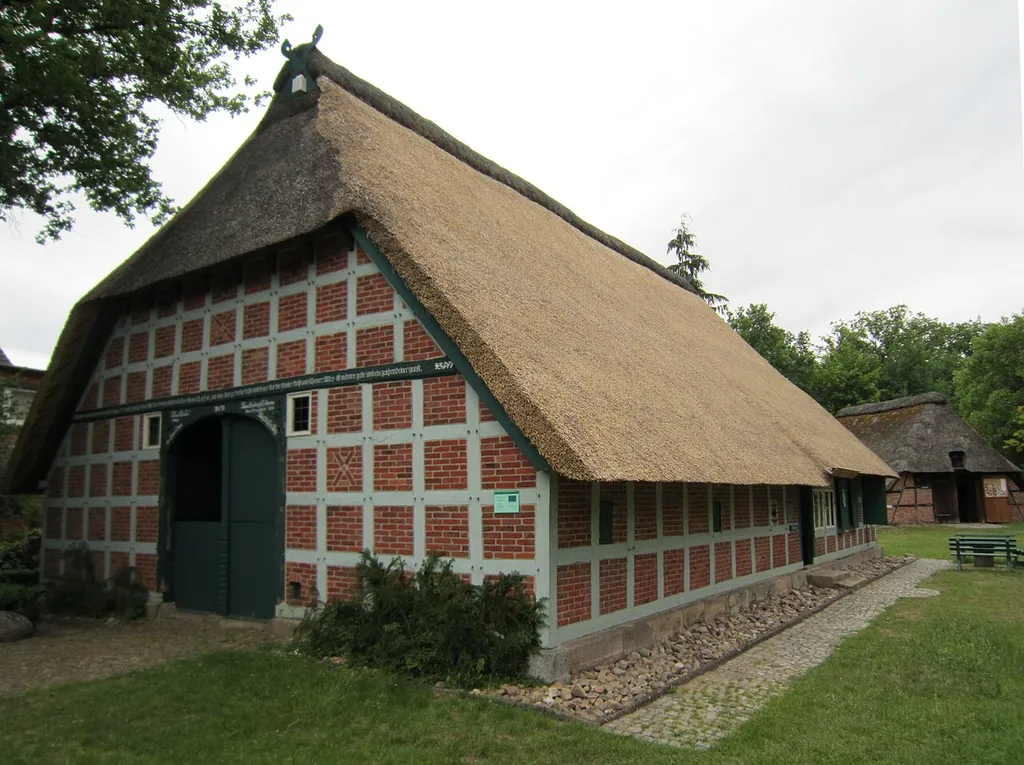
The Heimatmuseum Scheeßel is one of the oldest open-air museums in Lower Saxony. Its roots lie in the Lower Saxon heritage movement: after a costume festival with more than 10,000 guests in 1904, a branch of the Bremen association for Lower Saxon folk culture (Bremer Verein für Niedersächsisches Volkstum) was founded in Scheeßel, from which the Heimatverein “Niedersachsen” e.V. emerged; it still runs the museum today. In 1913 the Heimathaus, a three-aisled hall house built in 1830 on the Üllerk farm, was dismantled in the village center and rebuilt on its present site. It was opened on August 23, 1913. After a period as emergency housing, it has served as a museum again since 1955, and between 1965 and 1972 five outbuildings were added.
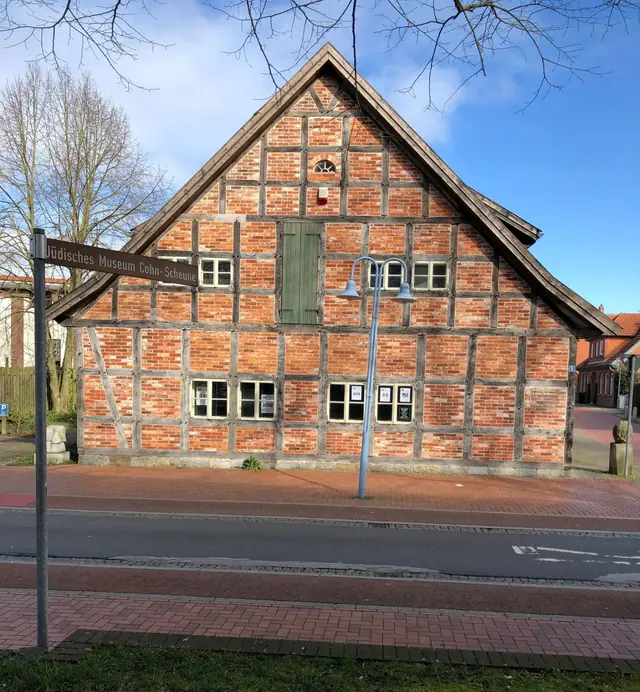
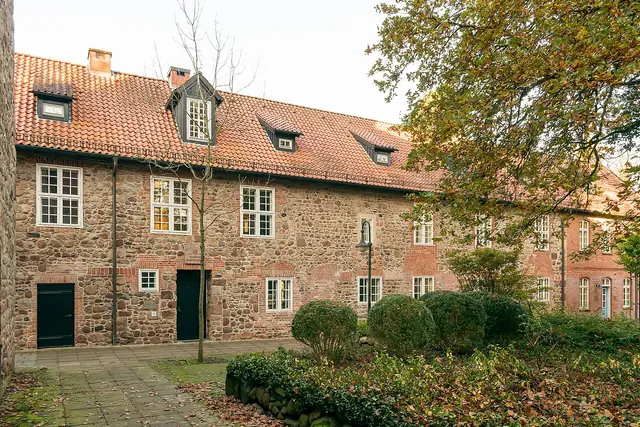
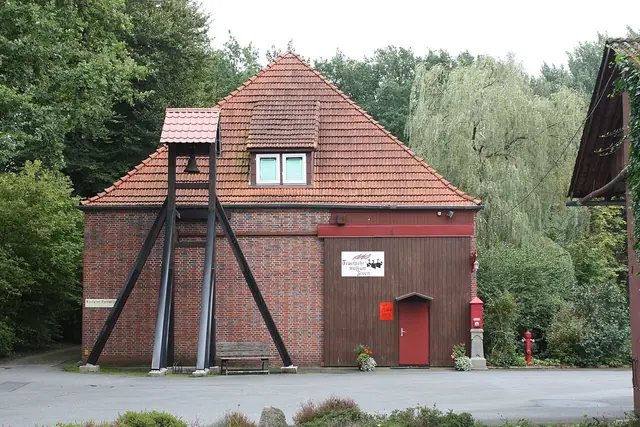
Today the museum consists of two farmsteads with 14 mostly historic buildings. On the Heimathaus grounds, the rural living and working world of the 19th century is shown; the upper floor of the Heimathaus has an exhibition on the natural landscape, settlement, folk costume traditions and the refugees of 1945. The Meyerhof, about 300 meters away, is devoted to traditional crafts: indigo block printing, weaving, spinning and blacksmithing are not only displayed but still practiced by volunteers. Indigo block printing has been part of UNESCO's Intangible Cultural Heritage of Humanity since 2018.
The collection covers rural life and village crafts, folk costumes, and the artistic estates of the painter Ernst Müller-Scheeßel and the graphic artist Heinz Fehling. The Kunstgewerbehaus (arts and crafts house), founded in 1908 by Müller-Scheeßel, has been used for changing exhibitions since the 1970s; increasingly, local history after 1900 is also in focus.
Highlights
Indigo block-printing workshop with permanent exhibition (UNESCO Intangible Cultural Heritage)
Heimathaus: Low German hall house from 1830 with an open hearth
Weaver's house with twelve historic farm looms
Art collection of Ernst Müller-Scheeßel
Audio guide to the indigo-printing tour in German, English and Low German (Platt)
Free admission
Permanent exhibitions
Dauerausstellung Blaudruck – Complementing the working indigo block-printing workshop, the exhibition has shown the history and technique of hand block printing since 2020.
Heimathaus mit ortsgeschichtlicher Ausstellung – Rural living and working world of the 19th century in the hall house from 1830; on the upper floor, local history from the Wümme lowlands to the refugees of 1945.
Founded
1913
Operated by
Heimatverein „Niedersachsen“ e.V. Scheeßel
Admission & discounts
Admission is free.
Guided tour by prior booking (per person)
€3.50Also available in folk costume, in Low German (Platt) or in English; focus topics on request.
Admission is free. School classes from Scheeßel take part in the museum education programs free of charge; schools from elsewhere pay €3.50 per child.
Accessibility
Partially wheelchair accessible
Elevator: no information
Accessible restroom
Accessible parking: no information
Service dogs welcome
Tactile models & exhibits: no information
Sign language tours: no information
Easy-to-read materials: no information
Audio description: no information
The museum is housed in historic buildings with cobblestones and is therefore only partly accessible; the exhibitions can be reached by ramps, and the Meyerhof has a low-barrier restroom. Dogs may accompany visitors into the exhibition on a short leash.
Kids & families
Great for kids & families
Family tours & workshops
Activity booklet, scavenger hunt or kids’ audio guide
Hands-on stations
Baby changing facilities
For school classes there are guided tours, a museum rally with the museum goblin Willi Winkelmann (ages 8–12, also in English and Polish), historical schoolyard games (ages 6–12) and a printing workshop; there are also pupils' holiday programs. There is a baby changing room.
Getting there & parking
The Meyerhof and the Heimathaus grounds are about 300 m apart in the village center of Scheeßel.
The museum hasn’t published any information on this.
Events & venue rental
The museum hasn’t published any information on this.
Plan your visit
Guided tours
yes
Audio guide
yes (DE, EN, NDS)
School programs
yes
Good to know
The indigo-printing tour through Scheeßel is available as an audio guide in German, English and Low German (Platt). Guided tours are possible at any time with prior booking; the indigo block-printing workshop can be visited as part of a guided tour.