April 18, 2026 – October 25, 2026
Trave-Taucher-Technik – ohne Taucher geht es nicht!
Commercial divers and their equipment from the beginnings to the present, with historic helmets, a decompression chamber and Dräger developments from 1906 onward.
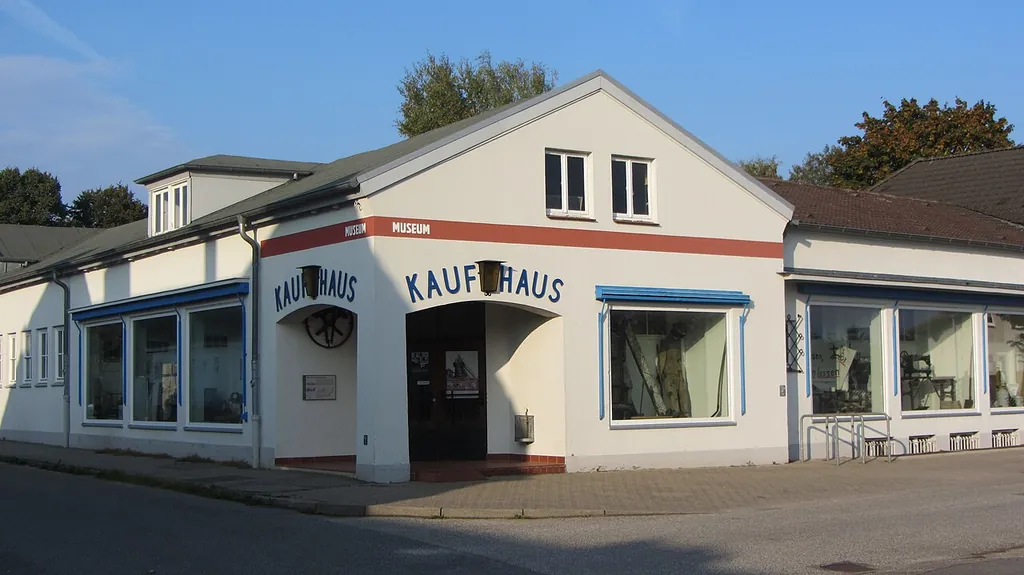
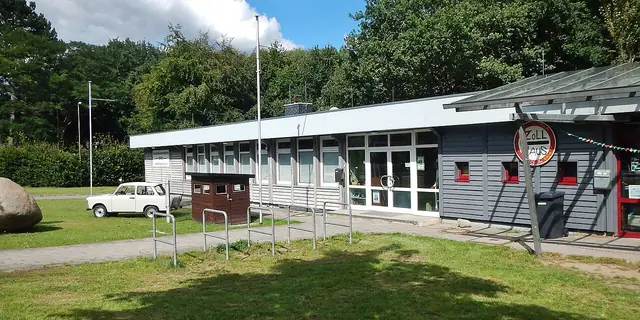
Museum in the former company store of Lübeck's blast furnace works, covering industrial labor, the workers' housing estate and everyday life in the 20th century.
April 18, 2026 – October 25, 2026
Commercial divers and their equipment from the beginnings to the present, with historic helmets, a decompression chamber and Dräger developments from 1906 onward.
November 13, 2026 – April 24, 2027
Objects from Lübeck's Kulturen der Welt (World Cultures) collection trace Korea's path from secluded kingdom to industrial nation and its pop culture today.
In the 20th century, Herrenwyk grew from a small village on the Trave River into an industrial suburb of Lübeck. In 1907 the Hochofenwerk Lübeck (Lübeck blast furnace works) began operating here and for decades was one of the city's most important employers; a company housing estate was built for the workforce from 1906/07 onward. After several changes of ownership, the company went bankrupt in 1981, and the plant was dismantled by 1992.
The museum grew out of a history workshop run by what was then Lübeck's Museum für Kunst- und Kulturgeschichte, which from 1983 to 1985 researched the history of the works together with former employees and residents. An exhibition originally planned for only a short time drew so much interest that the city made it a permanent institution. It is housed in the former company store on the edge of the estate and is now part of the Lübeck museums; since 2017 it has been headed by Bettina Braunmüller, supported by the Verein für Lübecker Industrie- und Arbeiterkultur.
The permanent exhibition tells of work and everyday life at the blast furnace works and in the housing estate, and in 2025 was expanded to cover how Lübeck merchants became factory owners. Other sections are devoted to the Flender shipyard and to forced labor in Lübeck between 1939 and 1945. The collection includes machines and tools from Lübeck companies, office machines, everyday objects of the 20th century, as well as photographs, company records and oral history interviews, including rare aerial photos of the works from 1954 to 1966. Temporary exhibitions, some in cooperation with industrial museums in Elmshorn, Neumünster and Kiel, round out the program.
| Adults | €7 |
|---|---|
| Children & teens | freefree up to age 17 · Free for children and young people up to age 18 |
| Seniors | –No senior discount listed |
| Visitors with disabilities | freecompanion free · Free for people with severe disabilities (degree of disability 50 or higher) |
| Students & apprentices | freeFree for school students, university students, apprentices and FSJ volunteers (voluntary social year) |
| Groups (12+ people) | €6 per personAdult groups of 12 or more €6 per person. Group tour (1–2 hours) €75 plus admission, €50 for school classes and children's groups; dates by arrangement. |
| Families | –No family ticket; children and young people are free |
| Lübeck Day Pass (day ticket for all Lübeck museums) | €14Unlimited visits on the booked day |
| Lübeck Day Pass (2 days) | €18Booked day and the following day |
| Lübeck Day Pass plus | €18Also includes St. Mary's Church (Marienkirche) and the tower of St. Petri |
| Lübeck Day Pass plus (2 days) | €22 |
| Annual pass for the Lübeck museums | €40All exhibitions of the Lübeck museums, non-transferable |
| Public guided tour | €4Plus admission |
Prices valid since April 1, 2026. Free admission also for holders of the LübeckCard and the Ehrenamtskarte (volunteer card), and for members of the Museumsverband Schleswig-Holstein und Hamburg, the Deutscher Museumsbund and ICOM.
A small ramp or step at the entrance, and a higher step into some exhibition rooms; with advance notice (0451 122 4195), staff will lay out portable ramps. Restrooms are not accessible. No wheelchairs for loan, but folding stools are available as a walking aid. No hearing loops. Instead of texts in Easy Read German, there is easy-to-understand information for children; tours in plain language by arrangement.
Great for kids & families
| Kids’ admission | free up to age 17 |
|---|
Children's birthday parties (about two hours) and age-appropriate tours for daycare and school groups; the exhibition has easy-to-understand texts for children. Free admission for children and young people. No strollers for loan; please register a visit with a stroller in advance.
Herrenwyk · 5-min walk
Bus 31 from Lübeck city center or bus 33 from Bad Schwartau to the Herrenwyk stop, then via Bäckereistraße to the museum.
By car via the B 75 and the Herrentunnel (toll), via the A 226 (exit Herrenwyk/Siems) or from Travemünde via the B 75 (exit Kücknitz); then via Hochofenstraße and Bäckereistraße to the corner of Kokerstraße.
Get directionsThe museum hasn’t published any information on this – please ask the museum directly.
The museum hasn’t published any information on this – please ask the museum directly.
| Guided tours | yes |
|---|---|
| School programs | yes |
| Good to know | Tours for adult groups, daycare groups and school classes (1–2 hours) by arrangement, also outside opening hours; topics include industrialization using the example of the blast furnace works and living in the housing estate. Public guided tours and lectures accompany the special exhibitions. |
Cookies help you use this website. We only load the map and statistics with your consent.