KZ Lichtenburg
Memorial in the Renaissance castle of Prettin: a concentration camp for men 1933–1937, then the German Reich's first central concentration camp for women 1937–1939. Free admission.
About the museum
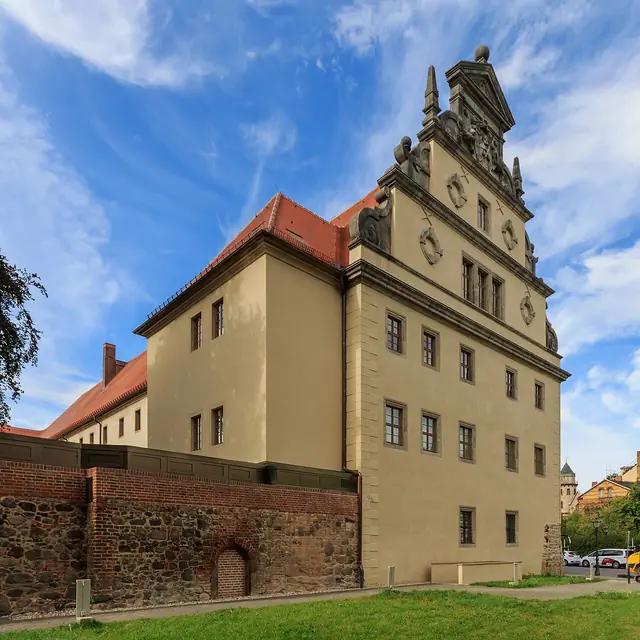
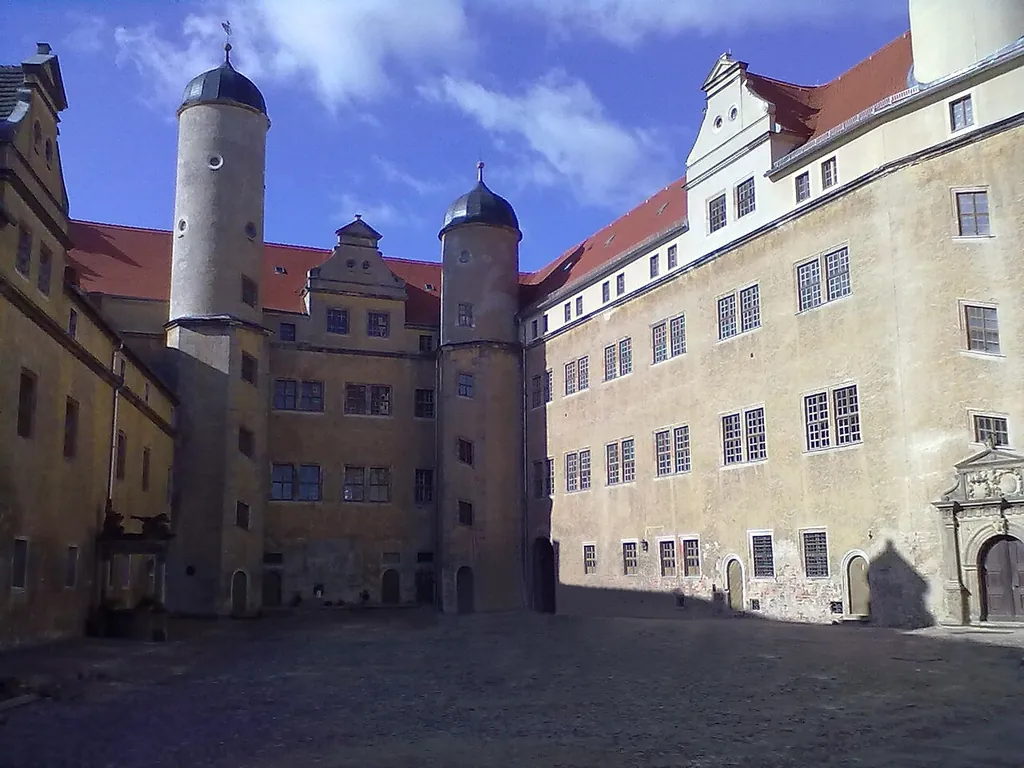
Schloss Lichtenburg in Prettin, a 16th-century Renaissance building, served as a prison for more than a century from 1812. In June 1933 the Nazis set up a concentration camp for men in the castle, which stands in the middle of the small town. Designed for 1,000 prisoners, it was already overcrowded with some 2,000 inmates by the fall of 1933 – mainly political opponents, including Ernst Reuter, later Governing Mayor of Berlin, and the lawyer Hans Litten. The camp played an important role in the early concentration camp system and was dissolved in August 1937.
From December 1937 to May 1939, Lichtenburg was the first central concentration camp for women in the entire Reich; 1,415 prisoner numbers are documented. From 1941 to 1945 there was also a subcamp of the Sachsenhausen concentration camp here. In total, more than 10,000 people were imprisoned at this site between 1933 and 1945.
On May 8, 1965, a first East German memorial was established in the former "bunker"; in 1978 an exhibition followed in former prisoner barracks, which belonged to the district museum in the castle. In 2004 the museum and memorial were closed. Following civic engagement, the state parliament decided in 2006 that the newly founded Stiftung Gedenkstätten Sachsen-Anhalt (Saxony-Anhalt Memorials Foundation) would take it over.
In December 2011 the redesigned memorial opened with a permanent exhibition in the former workshop wing. The cell block of 1878/79 has been accessible again since 2024 after stabilization work, while large parts of the castle are closed due to construction. The memorial sees itself as a place of remembrance, historical and political education, and research.
Highlights
- Permanent exhibition on the camps 1933–1945 on two floors of the former workshop wing
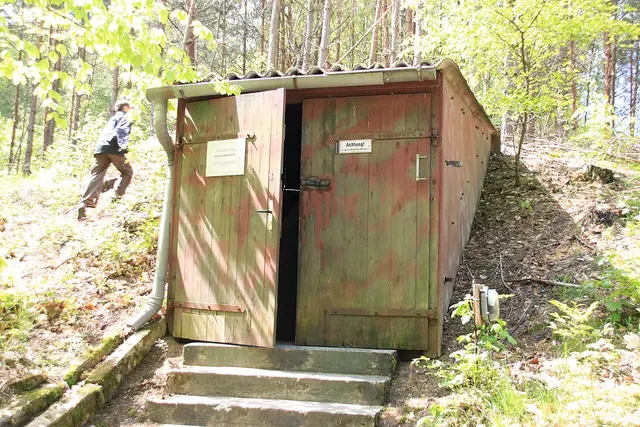
- Cell block ("bunker") of 1878/79 as a place of punishment and violence
- Biographical film portraits and interviews with contemporary witnesses
- Augmented reality app on the structural traces on the castle grounds
- Free guided tours and project days for young people and children
Permanent exhibitions
- „Es ist böse Zeit …“ Die Konzentrationslager im Schloss Lichtenburg 1933–1945 – The ground floor places the camps in the context of Nazi persecution policy and the region; the upper floor juxtaposes prisoners and camp staff through objects, documents, and film portraits. Media stations address postwar trials and the culture of remembrance in East and West Germany.
- Founded
- 1965
- Operated by
- Stiftung Gedenkstätten Sachsen-Anhalt
- Director
- Melanie Engler
Admission & discounts
Admission is free.
| Groups | –Guided tours and project days for groups are free but must be booked in advance. |
|---|
Visiting the memorial and all educational programs (guided tours, project days) are free of charge.
Accessibility
- Partially wheelchair accessible
- Elevator
- Accessible restroom
- Accessible parking: no information
- Service dogs welcome
- Tactile models & exhibits: no information
- Sign language tours: no information
- Easy-to-read materials: no information
- Audio description: no information
Exhibition and seminar areas are step-free, elevator (90 × 138 cm), accessible restroom on the ground floor, exhibition panels with knee clearance for wheelchair users. There is one step to the former punishment bunker (assistance needed), and the courtyard is paved. Some texts in high contrast, no tactile guidance system, two listening stations with interviews of contemporary witnesses. Please register in advance so the team can prepare assistance.
Kids & families
Only partly suitable for kids
- Family tours & workshops: not available
Concentration camp memorial; the guided tours are aimed mainly at adults. For children there are project days for school classes in grades 4–6, but no dedicated family programs.
Getting there & parking
By public transit
Lindenstraße bzw. Drei Linden (Prettin)
By train to Jessen or Annaburg, then bus line 364 to Prettin (Lindenstraße or Drei Linden stop); from the Leipzig direction via Torgau with bus 751 to Drei Linden (book up to 1 hour in advance); from Holzdorf station, on-demand bus "Anrufbus flex." Prettin lies on the Elbe Cycle Route (Elberadweg).
By car from Berlin via the B101 to Jüterbog and on via Jessen and Annaburg (L113); from Leipzig via Torgau and Zwethau; from Wittenberg via the B187 to Jessen. The memorial provides no information on parking.
Get directionsAmenities & dining
The museum hasn’t published any information on this – please ask the museum directly.
Events & venue rental
The museum hasn’t published any information on this – please ask the museum directly.
Plan your visit
| Guided tours | yes · approx. 1.5 hrs |
|---|---|
| School programs | yes |
| Good to know | Overview tour (mainly for adults) approx. 90–120 minutes; project days for school classes and youth groups 3–5 hours, for children in grades 4–6 3–4 hours. All educational programs are free, and on request also available outside opening hours. |