From May 7, 2026
WAR ZONES by Martin Roemers
35 large-format black-and-white photographs by the Dutch photographer show the everyday lives of soldiers on peacekeeping missions in the Balkans and Afghanistan, 1997–2002. No end date is given.
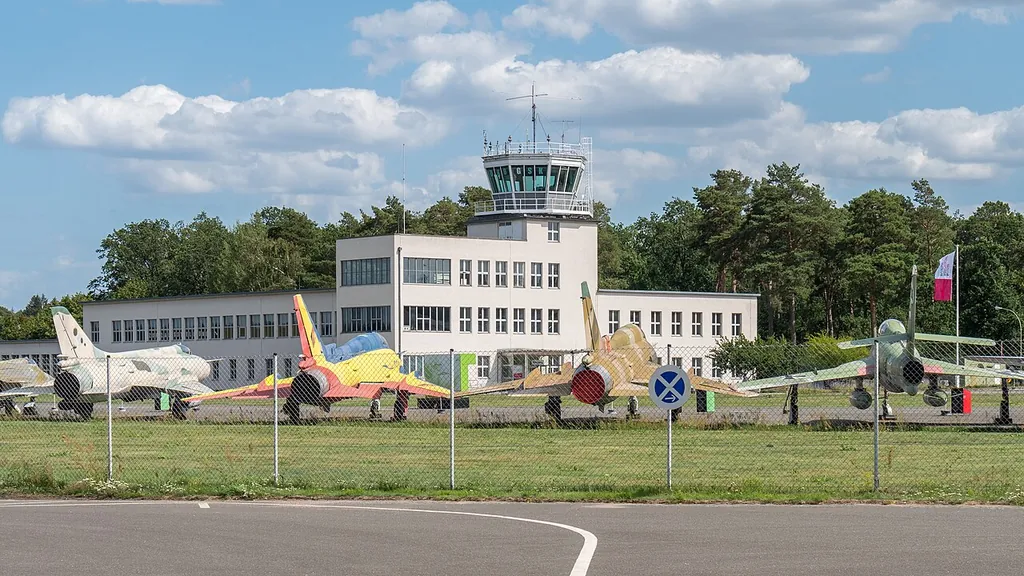
Branch of the Bundeswehr Museum of Military History: military aviation and airfield history in hangars and on the outdoor grounds, free admission.
From May 7, 2026
35 large-format black-and-white photographs by the Dutch photographer show the everyday lives of soldiers on peacekeeping missions in the Balkans and Afghanistan, 1997–2002. No end date is given.
The museum's roots go back to 1957, when the first uniforms and pieces of equipment of the Luftwaffe (German Air Force) were collected at the Uetersen air base in Schleswig-Holstein. This led to the founding of the Luftwaffenmuseum Uetersen in 1963, whose collection grew over decades and was taken over by the Bundeswehr in 1987.
Gatow airfield in southwest Berlin was established in 1934/35 as a training facility for the Nazi Luftwaffe; pilots and technicians were trained here, as were general staff officers. After its capture by the Red Army in April 1945, the British took over the site in the summer of 1945. During the Berlin Blockade of 1948/49, Gatow was one of the landing sites of the Berlin Airlift and thus a lifeline for West Berlin.
After the Allies withdrew in 1994, the airfield passed to the Bundeswehr, which moved its aviation collection here from northern Germany. The Luftwaffenmuseum der Bundeswehr opened in Gatow in September 1995. In 2011 it was incorporated as a branch into the Bundeswehr Museum of Military History (Militärhistorisches Museum der Bundeswehr), headquartered in Dresden, and renamed.
Today the site of roughly 100 hectares, with hangars, control tower, and the old airfield fire station, presents the permanent exhibition "Zwischenlandung" on more than a hundred years of military aviation, the exhibition "You can't miss Gatow" on the history of the site, and, on the outdoor grounds, a large collection of Cold War aircraft and weapon systems from East and West.
Admission is free.
| Groups | –Group tours free; request by email from visitor services. |
|---|
Free admission; guided tours and workshops are also free.
The outdoor grounds, special exhibitions in the tower, and the permanent exhibition "Zwischenlandung" are accessible; the upper floor of Hangar 3 ("You can't miss Gatow") has no elevator. No Braille materials. For people with walking disabilities, arriving by car is recommended (parking on site).
Great for kids & families
Activity stations for families (including a sliding puzzle, a telescope with search tasks, historic 3D images, and a small walk-in bunker), guided by the characters Pat, George, and Dakota the dachshund. The museum asks that children be accompanied through the exhibition, given the topics of the military and war. Tours and workshops for families free on request.
Kurpromenade oder Seekorso (Bus 135) · 10-min walk
Bus 135 to Kurpromenade or Seekorso, then an approx. 10–15-minute walk.
Free parking
Free car and bus parking on the museum grounds.
Reachable by car via the B2. The walk from the stop takes about 10 minutes according to the visitor page, and 10–15 minutes according to the accessibility page.
Get directionsNo café; Hangar 3 has vending machines with snacks and cold drinks.
The museum hasn’t published any information on this – please ask the museum directly.
| Guided tours | yes |
|---|---|
| School programs | yes |
| Good to know | Free public guided tour every Sunday at 14:00 (meeting point: tower building). Themed tours and workshops (90–120 minutes) for school classes, families, and groups are free on request by email; seasonally also a bike tour to Cold War sites. Annual airfield festival (2026: September 5–6). |
Cookies help you use this website. We only load the map and statistics with your consent.