The exhibition traces more than two centuries of board game history and asks what the games reveal about the values, roles and ideas of success of their time. In a separate room, visitors can also play.
About the museum
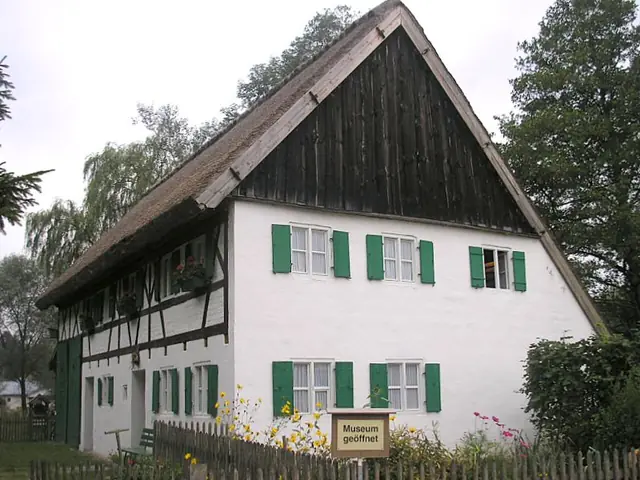
The museum goes back to the museum program adopted by the Swabian district council in 1980: alongside Maihingen and Illerbeuren, Oberschönenfeld was to document the rural cultural history of Central Swabia. This became possible because the Cistercian abbey had given up its farming at the end of 1971; the district rented the Baroque stables and barns and renovated them in keeping with their historic character.
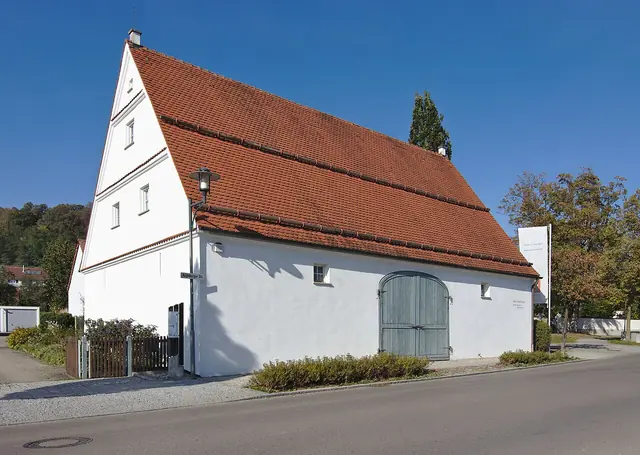
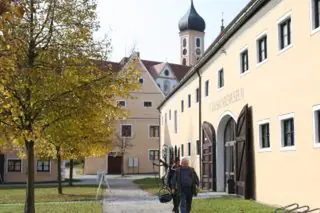
In 1984, the Schwäbisches Volkskundemuseum (Swabian Folklore Museum) opened in the former sheepfold with agricultural tools and machinery. In 1990, the former ox and horse stable of 1708 was added as the main building, followed by exhibitions on rural living and on festivals and customs. Since 2003, the barn built in 1743 with its mighty roof structure has served as a gallery – at first as the Schwäbische Galerie, and since 2025 as the Kunstforum Oberschönenfeld.
In 2013, the sheepfold was converted into a visitor center with an introductory exhibition. With the new permanent exhibitions "Tradition und Umbruch" (Tradition and Upheaval) and "Geschichten aus Schwaben" (Stories from Swabia), the museum received the shorter name Museum Oberschönenfeld in 2018 and the Bavarian Museum Prize in 2019. The Hammerschmiede (hammer forge) in Naichen belongs to the museum as an outpost; the abbey grounds also include the Bauernmuseum Staudenhaus (Staudenhaus farm museum), the Naturpark-Haus, and an accessible playground.
Highlights
A tour through parlor, kitchen, bedroom, and stable showing country life in transition
Insight into the everyday monastery life of the Cistercian nuns
Stories from Swabia from 1800 to today with a children's tour
Art forum for art exhibitions in the Baroque barn
Accessible playground with a stream on the abbey grounds
Permanent exhibitions
Tradition und Umbruch – Leben im Wandel – On the second floor of the folklore museum: rural everyday life in parlor, kitchen, bedroom, and stable since 1900 as well as the life of the nuns in the abbey.
Geschichten aus Schwaben – von 1800 bis heute – In the attic: work, leisure, war years, and images of home through biographies, with hands-on stations and a children's tour.
Oberschönenfeld und Bayerisch-Schwaben – Introductory exhibition in the visitor center on Oberschönenfeld, the Stauden region, the museum, and Swabia.
Founded
1984
Operated by
Bezirk Schwaben
Director
Simon Kotter
Admission & discounts
Adults
€4
Reduced
€2People with disabilities, retirees, unemployed people, military and volunteer service participants
Children & teens
freefree up to age 18 · Children and young people up to 18 free.
Seniors
€2Reduced admission for retirees
Visitors with disabilities
€2
Students & apprentices
freeSchool students, trainees, and students free
Groups (10+ people)
€3 per person
Combination ticket with the Bauernmuseum Staudenhaus
€5Adults; children, school students, trainees, and students free
Annual pass
€9
The ticket is valid for the visitor center, folklore museum, art forum, and Naturpark-Haus including special exhibitions. When arriving by bus and train, an additional €1 reduction on presentation of the ticket. Free admission with the volunteer card (Ehrenamtskarte) and for members of the Bavarian State Association for Heritage Preservation (Bayerischer Landesverein für Heimatpflege), ICOM, DMB, and the Federal Association of Museum Education. Group tours (10 or more people) cost an additional €2 (60 minutes) or €3 (90 minutes) per adult; children pay half.
Accessibility
Partially wheelchair accessible
Elevator
Accessible restroom
Accessible parking
Service dogs welcome
Tactile models & exhibits
Sign language tours
Easy-to-read materials
Audio description
The visitor center and folklore museum are accessible (elevator to the second floor and the attic); the art forum is only partly accessible (steps, stair lift, attic gallery reachable only by stairs). Paths on the abbey grounds partly with cobblestones, gravel, and slopes. Loaner wheelchair and walker at the ticket desk, folding stools in the folklore museum. Media guide with audio description, sign language, and Easy Language; induction neck loops available to borrow; booklets in Easy Language and large print; tactile stations. "Reisen für Alle" (Travel for All) certificate since 2021.
Kids & families
Great for kids & families
Kids’ admission
free up to age 18
Family tours & workshops
Activity booklet, scavenger hunt or kids’ audio guide
Hands-on stations
Stroller-friendly
Baby changing facilities
Playground / play area
Children's tour with the museum mascot Kater Bernhard (Tomcat Bernhard) and interactive stations in the permanent exhibition. Holiday courses and family events. Accessible playground with a stream and water play area at the museum. Strollers are allowed in the exhibitions; baby changing areas in the visitor center and in the folklore museum.
Getting there & parking
By public transit
Train or AVV regional bus 600/601 to Gessertshausen station, then on by bus 720 (weekday afternoons, approx. 5 minutes) or by the on-demand bus AktiVVo. On foot from Gessertshausen station approx. 45 to 60 minutes (3.5 km).
By car
Free parking
Free designated parking; two accessible parking spaces each at the start of the row of parking spaces and at the Naturpark-Haus. Bus parking in lot 2; tour groups please register 1–2 weeks in advance. Overnight stays in motorhomes not permitted.
Accessible parking
Via the B 300 Augsburg–Memmingen, at the traffic light in Gessertshausen turn toward Waldberg; GPS, if needed: "Gessertshausen, Oberschönenfelder Straße". E-bike charging station available.
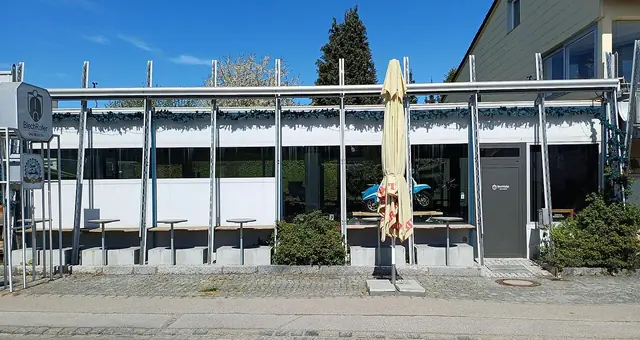
Drinks vending machine and seating in the visitor center, picnicking possible in the carriage house. Restaurant Klosterstüble on the abbey grounds; monastery shop and bread shop of the abbey; permanent barbecue area.
Events & venue rental
The museum hasn’t published any information on this.
Plan your visit
Guided tours
yes · approx. 60 min
Audio guide
yes
School programs
yes
Photography
Allowed for private purposes without flash; no selfie sticks or tripods.
Good to know
Media guide for the permanent exhibitions available to borrow free of charge. Please register groups at least two weeks in advance, even without a tour; group tours for 10 or more people (60 or 90 minutes) on various topics.