ReichenhallMuseum
City museum in the former salt-works storehouse with over 4,000 years of Bad Reichenhall history, focusing on archaeology, salt and spa history.
No sound? Check your device’s silent switch.
Have only individual sections read aloud
About the museum
A small museum already existed in Reichenhall in the 18th century; it was lost in the great town fire of 1834. In 1854 a new museum was set up in the town hall, which soon closed again; in 1900 another followed in the rear building of the Villa Saxonia, for the archaeological finds that had been discovered shortly before. After a move to the "Feuerhaus" things declined; in 1938 the town acquired the collection and set up a local history museum in the town hall, which existed until 1962.
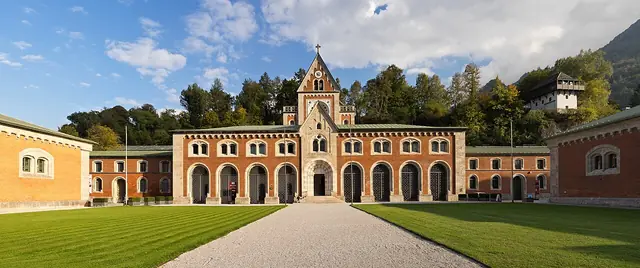
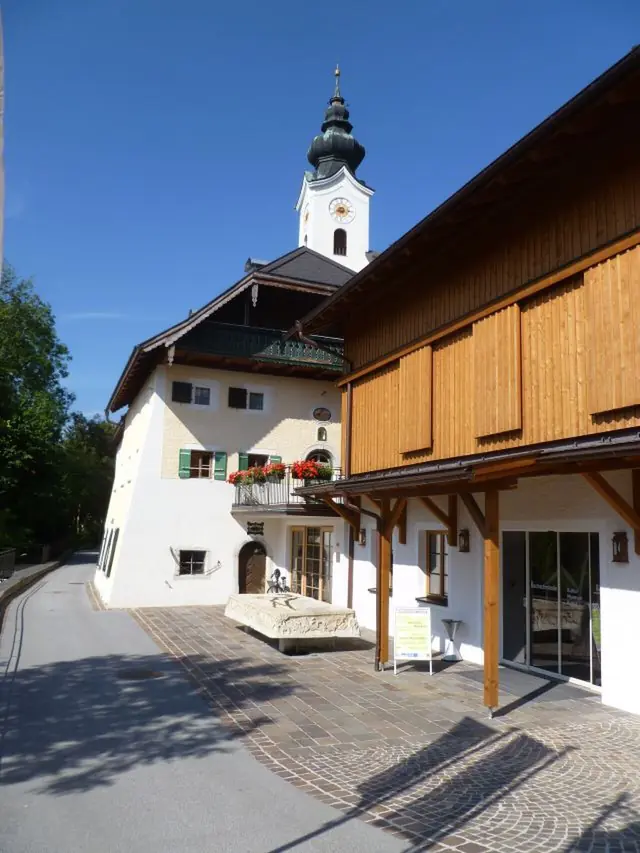
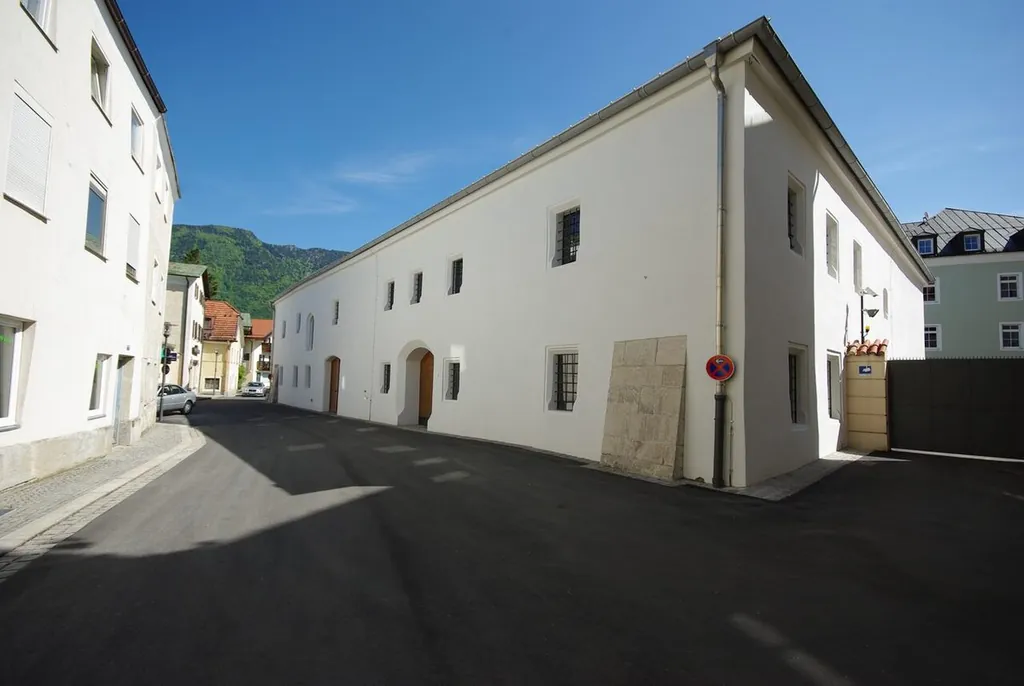
Since 1966 the museum has used the historic salt-works storehouse. The building goes back to a grain store for the saltworks planned in 1479; it burned out in 1834 and, after restoration, served as a municipal depot until the 1960s. Comprehensive renovation and a complete reconception of the permanent exhibition led to the ReichenhallMuseum reopening in new form in 2019.
The exhibition's common thread is salt, which has been produced in Bad Reichenhall since ancient times. It tells the story of the town and its surroundings, from the Neolithic through the Bajuwaren (early Bavarians) and medieval salt-making to the development of the spa town.
Highlights
- Archaeology of the Reichenhall area, from the Neolithic to the Bajuwaren
- Medieval salt-making: the "reiche Hall" and its salt
- Development of the spa town after the great fire of 1834
- Legends and sagas of the region
- Museum building from the late 15th century, formerly the saltworks' grain store
Permanent exhibition
- Dauerausstellung: 4000 Jahre Reichenhaller Geschichte – Themed rooms from the geology of salt through archaeology, the Middle Ages, war and destruction, and religion to the emergence of the spa town.
- Operated by
- Stadt Bad Reichenhall
Admission & discounts
| Adults | €5 |
|---|---|
| Reduced | €4Kurkarte (spa guest card), holders of a severe disability ID (Schwerbehindertenausweis), apprentices, students up to 27 years, federal volunteer service, voluntary social or ecological year, Ehrenamtskarte (volunteer card), pensioners, members of the Verein für Heimatkunde (local history society), discount cards of partner museums, SN-Card |
| Children & teens | €3free up to age 5 · Children and young people from 6 to 18 years; children up to 6 years free. |
| Seniors | €4Pensioners pay the reduced price. |
| Students & apprentices | €4Students up to 27 years. |
| Groups | –Guided tour by museum staff (prior registration required): flat fee of €70 for up to 15 participants plus admission; from 16 participants, €3 more per additional person; school classes €2 per schoolchild (also for museum education programs). |
| Families | €102 adults with their own children up to 18 years. |
Free admission for schoolchildren within school lessons, certified city and guest guides, and press representatives with a press card.
Accessibility
- Wheelchair accessible
- Elevator: no information
- Accessible restroom: no information
- Accessible parking
- Service dogs welcome: no information
- Tactile models & exhibits: no information
- Sign language tours: no information
- Easy-to-read materials
- Audio description: no information
All rooms are barrier-free. The media stations are tailored to different senses; at the ticket desk there is a free guide to the museum in Leichte Sprache (easy-read German). Accessible parking spaces are at Wörgötterplatz (about 2 minutes on foot).
Kids & families
Great for kids & families
| Kids’ admission | free up to age 5 |
|---|---|
| Family ticket | €10 · 2 adults with their own children up to 18 years. |
- Family tours & workshops
- Activity booklet, scavenger hunt or kids’ audio guide
The museum quiz for children is available free of charge at the ticket desk; school classes and families discover the house in a playful way. Workshops on themes of the permanent exhibition are offered for school classes.
Getting there & parking
By public transit
Rathausplatz (Stadtbus 1 und 2) · 5-min walk
Train to Bad Reichenhall Hbf (about 15 minutes on foot) or Kirchberg stop (about 10 minutes on foot); city buses 1 and 2 and RVO lines 828, 841, 9526 and 9535, each with about 5 minutes on foot.
By car
Paid parking · 2-min walk to the entrance
Paid parking nearby: Wörgötterplatz (2 minutes on foot, max. 3 hours, including accessible parking), P 10 Zentrum at the town wall/Spitalgasse (3 minutes on foot, max. 3 hours) and P 9 Innsbrucker Straße (4 minutes on foot, max. 24 hours).
- Accessible parking
By car from all directions via the A 8 (exit Bad Reichenhall/Piding) or the B 20 and B 21 toward Bad Reichenhall city center.
Get directionsAmenities & dining
The museum hasn’t published any information on this.
Events & venue rental
The museum hasn’t published any information on this.
Plan your visit
| Guided tours | yes |
|---|---|
| School programs | yes |
| Photography | Photography is generally permitted in the museum. |
| Good to know | Guided tours and museum education workshops can be booked for school classes; in cooperation with Caritas there are free guided tours for people with a migration background. Curator-led tours and open tours take place regularly. |