Special exhibition
Reitzeuge Kurfürst Max Emanuels
Small presentation in the Marstallmuseum marking the 300th anniversary of the elector's death (since May 2026), with splendid riding equipment from his possession.
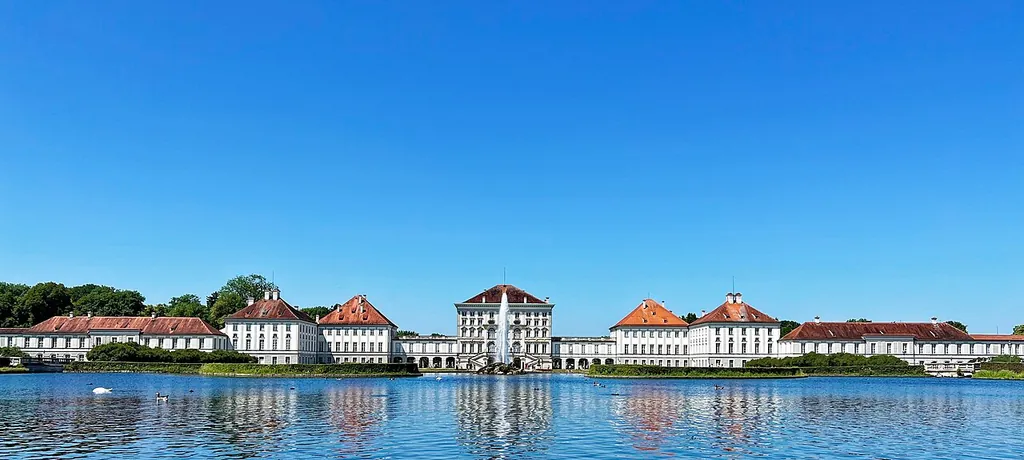
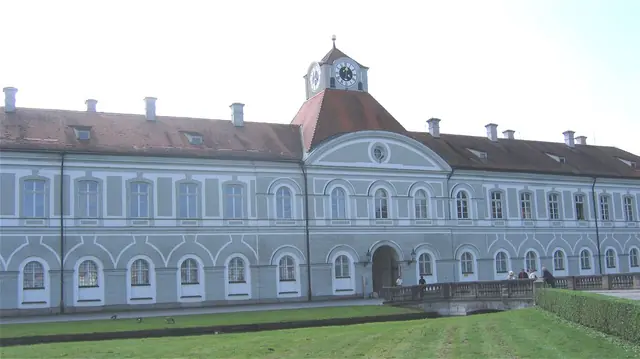
Baroque summer residence of the Wittelsbach dynasty in western Munich with state rooms, the Gallery of Beauties, the Marstallmuseum, and an expansive palace park.
Special exhibition
Small presentation in the Marstallmuseum marking the 300th anniversary of the elector's death (since May 2026), with splendid riding equipment from his possession.
The palace was built to celebrate the birth of the long-awaited heir to the throne, Max Emanuel, in 1662: from 1664, Elector Ferdinand Maria and his consort Henriette Adelaide of Savoy had a country palace on the Italian model built in open fields west of Munich, to plans by the northern Italian Agostino Barelli. The initially cube-shaped central building was largely finished by around 1679.
From 1701, Max Emanuel and Enrico Zuccalli enlarged the complex with side pavilions and connecting galleries. After his return from exile in 1715, Joseph Effner and the Parisian garden designer Dominique Girard drew up an overall plan for the palace, outbuildings, and Baroque garden. Karl Albrecht added the Schlossrondell (the semicircle of buildings in front of the palace) and commissioned François Cuvilliés to build the Amalienburg, a masterpiece of Rococo. Under Max III Joseph, the Great Hall received its decoration by Johann Baptist Zimmermann, and the porcelain manufactory moved into the Schlossrondell.
Elector Karl Theodor opened the park to the public in 1792. Commissioned by King Max I Joseph, Friedrich Ludwig von Sckell transformed the garden into a landscape park between 1804 and 1823, while keeping the Baroque central axis. Nymphenburg remained the Wittelsbachs' summer residence until 1918; the future King Ludwig II was born here in 1845.
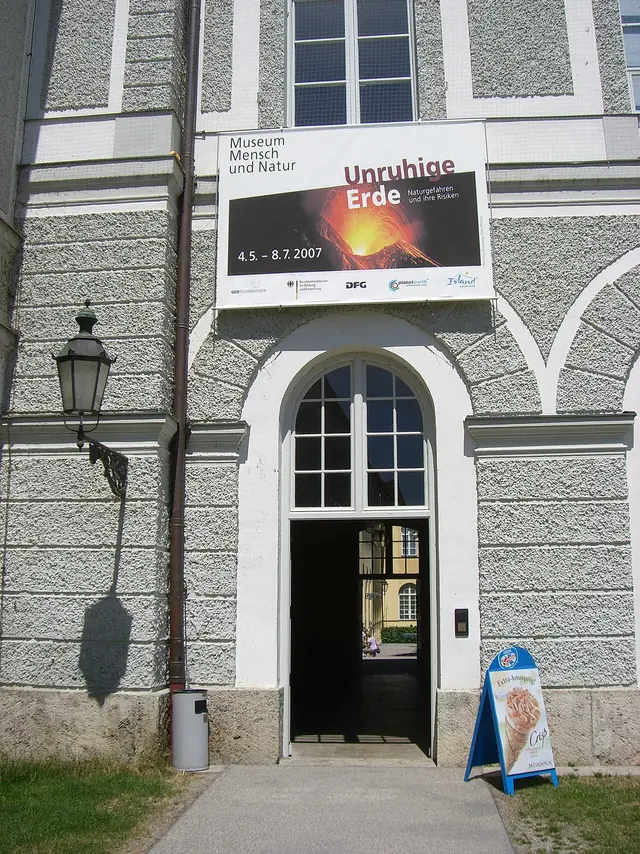
After the end of the monarchy, the complex passed into state ownership and is now managed by the Bayerische Schlösserverwaltung (Bavarian Palace Administration). In 1950 the present Marstallmuseum opened in the former royal stables, displaying the Wittelsbachs' state coaches and sleighs; the Bäuml porcelain collection is on view on the upper floor.
| Adults | €10 |
|---|---|
| Reduced | €9People aged 65 and over, students, people with severe disabilities, groups of 15 or more paying visitors, people doing voluntary service, and other groups as set out in the Bayerische Schlösserverwaltung's fee schedule |
| Children & teens | freefree up to age 17 · Children and teens under 18 free; children under 14 only when accompanied by adults. |
| Seniors | €9Reduced admission from age 65 (with ID card). |
| Visitors with disabilities | €9companion free · Reduced with a severe disability ID (Schwerbehindertenausweis); companion free if noted on the ID. |
| Students & apprentices | €9Reduced with a student ID; students of art/art history and pupils over 18 at general-education schools free. |
| Groups (15+ people) | €9 per personReduced rate for 15 or more paying visitors (also bookable online as "adults reduced"); in the palace a maximum of 25 people plus a guide per group. |
| Families | –No family ticket for a single visit; family/partner annual pass of the Schlösserverwaltung €100. |
2026 prices for the palace. Combined ticket (palace, Marstallmuseum with porcelain museum, park pavilions): summer (April 1 to mid-October) €20/€18, winter €16/€14. Marstallmuseum only €8/€7, "Parkburgen" (park pavilions) ticket €6/€5 (only at the palace and Marstallmuseum ticket offices and online). Palace admission only with a timed-entry ticket (entry up to one hour after the selected time); online purchase up to one day before the visit. Audio guide €3.50 (groups €2.50). Annual pass €55 (family/partner €100), 14-day multi-day ticket €40 (€80). Sckell exhibition in the Geranienhaus and the palace park free.
Palace: separate step-free entrance to the left of the main entrance; exhibition rooms on the upper floor reachable by elevator (135 × 87 cm). Marstallmuseum and porcelain museum step-free, porcelain museum by elevator. Park pavilions: Amalienburg via mobile ramps, Pagodenburg ground floor only with a high step, Badenburg and Magdalenenklause only via steps. Five accessible parking spaces in front of the palace (approx. 200 m to the ticket office); accessible restrooms on the palace ground floor and on the park side. Park paths mostly asphalt or gravel. No tactile guidance system, no induction loop; audio guide available. Online videos: tour of the Marstallmuseum in sign language with subtitles and a palace tour in plain language; website information in Leichte Sprache (Easy German). Dogs are not allowed in the palace and museums.
Great for kids & families
| Kids’ admission | free up to age 17 |
|---|
Children's audio guide with Marie and Max for ages 6 to 12 (19 stops, max. 1 hour). Family tour for children aged 5 to 9 (approx. 90 min., only with adults). Child-friendly tours can also be booked for birthdays; the Schlösserverwaltung does not provide games or food for these. Bulky items are not allowed in the palace.
Schloss Nymphenburg
S-Bahn to Laim, then bus to Schloss Nymphenburg, or U-Bahn to Rotkreuzplatz, then tram to Schloss Nymphenburg.
Free parking · 200 m to the entrance
Parking lot in front of the palace with around 450 free car spaces and 8 bus spaces, including 5 accessible spaces; approx. 200 m without incline over gravel and paving to the palace ticket office.
By car via the A8, A96, A95, or A9 highways, then follow the signs to "Schloss Nymphenburg."
Get directionsSchlosscafé im Palmenhaus (in the park, entrance 43) and the Schlosswirtschaft Schwaige restaurant with beer garden (south wing, entrance 30). Museum shop. Lockers for bags and backpacks; bulky items not permitted. Free Wi-Fi in the ticket area and in front of the main palace. Gondola rides on the central canal April–October in good weather.
Up to 392 guests.
Available for rent through the palace and garden administration: Hubertussaal (up to 392 people in theater seating, 220 banquet), Orangeriesaal (up to 170 standing), and Johannissaal (up to 90; also civil and non-religious wedding ceremonies) in the Orangery wing, as well as the Eisernes Haus in the palace park (up to 80; family celebrations, corporate events, non-religious wedding ceremonies). The Hubertussaal and Orangeriesaal are unavailable until the end of 2026 due to renovation. The Geranienhaus is for exhibitions only; wedding photo shoots in the interiors are not possible.
Inquiries & details| Guided tours | yes · approx. 1.5 hrs |
|---|---|
| Audio guide | yes (DE, EN, IT, FR, ES, PT, RU, TR, ZH, JA) |
| School programs | yes |
| Photography | Private photography allowed free of charge (no flash, tripod, etc.); other photography and drones only with written permission |
Cookies help you use this website. We only load the map and statistics with your consent.