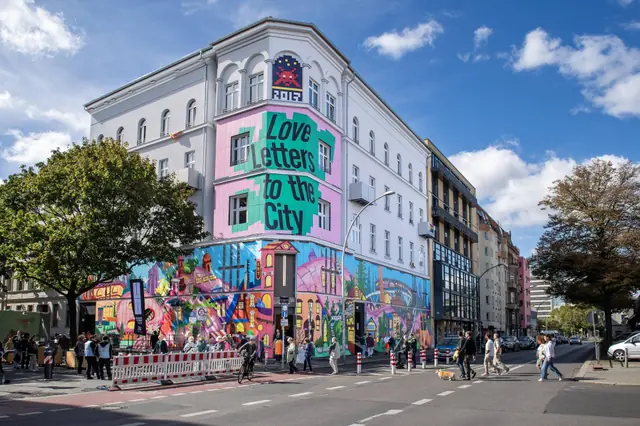
Portrait series by the photographer John Kolya Reichart: for one year he photographs people in Schöneberg, each of whom suggests the next person. Voices can be heard via QR code alongside the pictures.
About the museum
The collection of today's Schöneberg Museum arose toward the end of the 19th century but was largely lost in the Second World War. After the war, volunteers built up a new collection focused on local history from the first mention of Schöneberg in 1264 to its incorporation into Greater Berlin in 1920, initially shown in so-called Heimatschauen (local history displays) in Rathaus Schöneberg. In 1976, these presentations first found a permanent home in the Haus am Kleistpark.
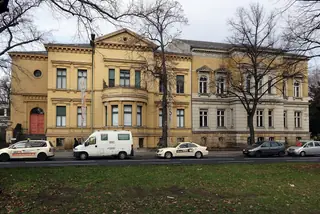
In the 1980s, as part of the new history movement, the museum opened up to social and everyday history, worked closely with initiatives from the neighborhoods, and developed programs for young people. It has been called Schöneberg Museum since 1990; in 1994 it moved into a Gründerzeit villa on Hauptstraße. Here, in 1995, the Jugend Museum grew out of the educational work, aimed mainly at children and young people between 10 and 18.
Together with the Tempelhof Museum, both are among the municipal museums of the Tempelhof-Schöneberg district; the archive and collection are also housed in the villa. The Schöneberg Museum shows changing exhibitions on individual neighborhoods such as Friedenau, the Bayerisches Viertel, or northern Schöneberg and offers city walks, readings, and conversations with contemporary witnesses. The Jugend Museum focuses on interactive exhibitions on diversity, democracy, and history as well as workshops for school classes.
Highlights
Hands-on exhibition "Villa Global – The Next Generation" with 14 rooms furnished by Berliners
Hands-on exhibition "PROTEST" with a print workshop, photo studio, and recording studio
Changing exhibitions on the history of Schöneberg's neighborhoods
Open studio for families on the 1st and 3rd Sunday of the month
Archive and reference library on district history
Free admission
Permanent exhibitions
Villa Global – The Next Generation – In the Jugend Museum, Berliners of all ages and backgrounds introduce themselves in 14 rooms they furnished themselves, complemented by video interviews. The exhibition invites visitors to discover diversity and commonalities; project days are available for schools from grade 5.
PROTEST. Einmischen. Laut werden. Verändern. – Interactive exhibition in the Jugend Museum about historical and present-day forms of protest, with a print workshop, photo studio, and recording studio to try yourself; no fixed end date.
Free admission. Use of the archive and reproductions may incur fees.
Accessibility
Wheelchair accessible: not available
Elevator: not available
Accessible restroom: not available
Accessible parking: no information
Service dogs welcome
Tactile models & exhibits: no information
Sign language tours
Easy-to-read materials: no information
Audio description: no information
The entrance on the raised ground floor can only be reached via a staircase of 11 steps; there is no elevator or ramp, and the exhibition rooms on the lower level and second floor are also accessible only by stairs. Restrooms on the raised ground floor, not wheelchair-accessible. Seating in the foyer and in the exhibition rooms. Tours in German Sign Language on request (museum@ba-ts.berlin.de). Depending on the exhibition, content is offered via texts, audio, QR codes, and interactive stations.
Kids & families
Great for kids & families
Family tours & workshops
Hands-on stations
Stroller-friendly: not available
Baby changing facilities: not available
The Jugend Museum is aimed mainly at 10- to 18-year-olds but also has programs for preschool children and families. Open studio for crafting and tinkering for everyone aged 6 and over on the 1st and 3rd Sunday of the month, 14:00–17:00, free and without registration; holiday workshops during school holidays. Exhibitions with interactive stations. Strollers can be left in the foyer; the entrance is up a flight of stairs. No baby changing table.
Getting there & parking
By public transit
U Eisenacher Straße · 10-min walk
U7 to Eisenacher Straße (approx. 10 minutes on foot); S-Bahn to Schöneberg (approx. 5–10 minutes on foot); bus 104, 187, M46, M48 to Albertstraße (a few minutes on foot).
Lockable cabinets and coat racks in the foyer. Archive and reference library by appointment (archiv@ba-ts.berlin.de).
Events & venue rental
The museum hasn’t published any information on this.
Plan your visit
Guided tours
yes
School programs
yes
Good to know
The Jugend Museum offers project days and workshops for school classes and groups (including on diversity, protest and democracy, the Nazi era, and divided Berlin), Mon–Thu 9:00–14:00 by booking through the online reservation system; inquiries to jugendmuseum@ba-ts.berlin.de. The Schöneberg Museum invites visitors to city walks, readings, and conversations with contemporary witnesses; tours in German Sign Language on request.