Uhrensammlung Karl Gebhardt
Around 1,000 clocks and watches from five centuries – from the time of Peter Henlein to the radio-controlled solar watch – with free admission at the NÜRNBERGER Akademie.
About the museum
The collection is the work of three generations of the Gebhardt family of Nuremberg. Karl Gebhardt's grandfather laid the foundation, his son Ludwig continued collecting and benefited from the fact that around 1900 many people swapped their pocket watch for a wristwatch. In 1923, Ludwig Gebhardt founded the shop "Uhren-Gebhardt" in Nuremberg, which his son Karl took over in 1947. Over four decades, timepieces were collected, repaired and restored in the workshop of the watch and jewelry store.
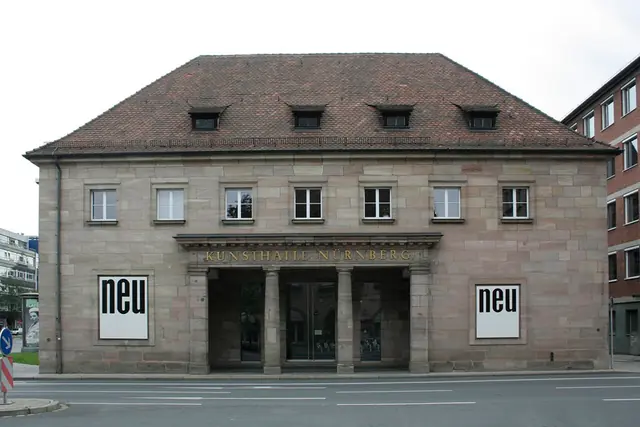
Karl Gebhardt, a businessman and engineer, was involved in the development and market launch of quartz, radio-controlled and radio-controlled solar wristwatches and received the Montreux Prize, among other honors, for it. His collection has been on public display since 2002 at the NÜRNBERGER Akademie, the former Gewerbemuseum on Gewerbemuseumsplatz not far from the main train station; he designed the exhibition concept himself. Gebhardt died in January 2014.
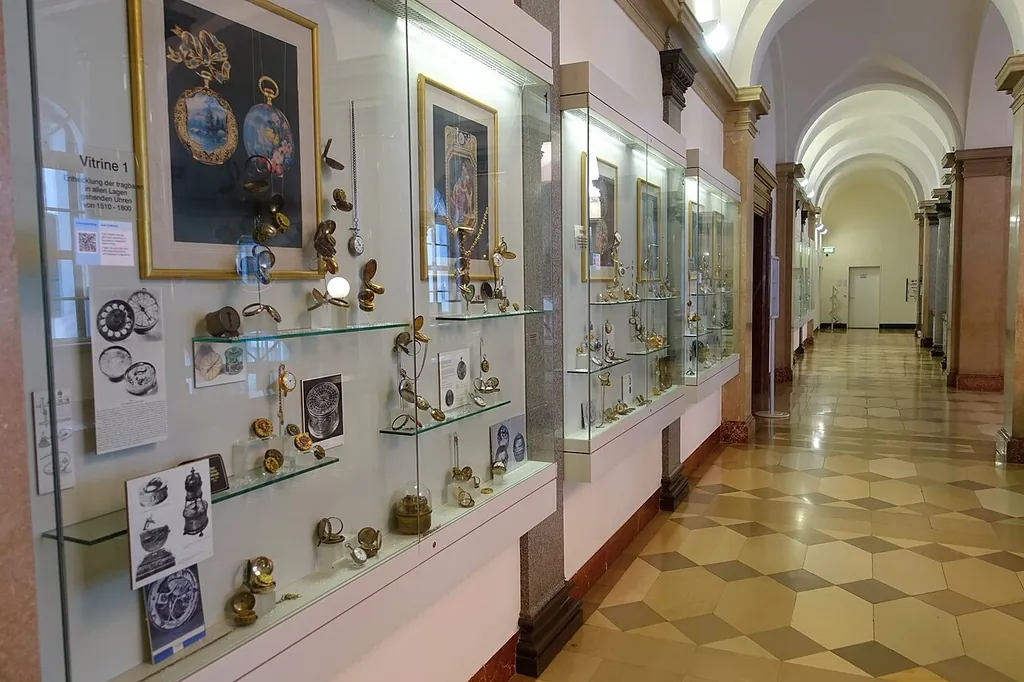
The presentation is divided into two parts: eleven display cases from the main entrance through the stairwell up to the fourth floor explain the general development of clock technology, for example with Bohemian wall clocks and skeleton clocks of the 19th century. Six display cases on the third floor show 500 years of portable timepieces in compact form, up to tuning-fork, radio-controlled and solar watches. On the fourth floor is the specialist library of the Deutsche Gesellschaft für Chronometrie.
Highlights
- Around 1,000 clocks and watches from five centuries
- Development of the pocket watch and wristwatch from Peter Henlein to the radio-controlled solar watch
- 19th-century skeleton clocks and Bohemian wall clocks
- Specialist library of the Deutsche Gesellschaft für Chronometrie
- Open daily until 20:00 with free admission
Permanent exhibitions
- Die Geschichte der Uhr – Eleven display cases from the entrance up to the fourth floor explain different clock technologies, from Bohemian wall clocks to Swiss pocket watches.
- Die Entwicklung tragbarer Uhren – Six display cases on the third floor sum up 500 years of portable timepieces, from enameled pocket watches to radio-controlled and solar quartz watches.
- Founded
- 2002
- Operated by
- Stiftung NÜRNBERGER Versicherung
Admission & discounts
Admission is free.
Admission is free.
Accessibility
- Partially wheelchair accessible
- Elevator: no information
- Accessible restroom: no information
- Accessible parking: no information
- Service dogs welcome: no information
- Tactile models & exhibits: no information
- Sign language tours: no information
- Easy-to-read materials: no information
- Audio description: no information
Limited wheelchair accessibility.
Kids & families
The museum hasn’t published any information on this – please ask the museum directly.
Getting there & parking
By public transit
Marientor
Tram line 8 to the stop Marientor; about 500 m from Nuremberg main station.
By car
Parking available
Parking garage NÜRNBERGER Akademie, Rosa-Luxemburg-Platz, 90403 Nuremberg – just a few steps away.
By car from the main station, drive in the direction of Rathenauplatz (signposted "Cinecittà").
Get directionsAmenities & dining
The museum hasn’t published any information on this – please ask the museum directly.
Events & venue rental
The museum hasn’t published any information on this – please ask the museum directly.
Plan your visit
| Good to know | For both exhibition parts there is a catalog at the information desk at the main entrance. The exhibition is spread across several floors of the Akademie building. |
|---|