From August 23, 2026
Hochofen B – Duisburg
Photo exhibition by Ralf Breer and Rainer Scholz on the relining of blast furnace B at Hüttenwerke Krupp Mannesmann in Duisburg.
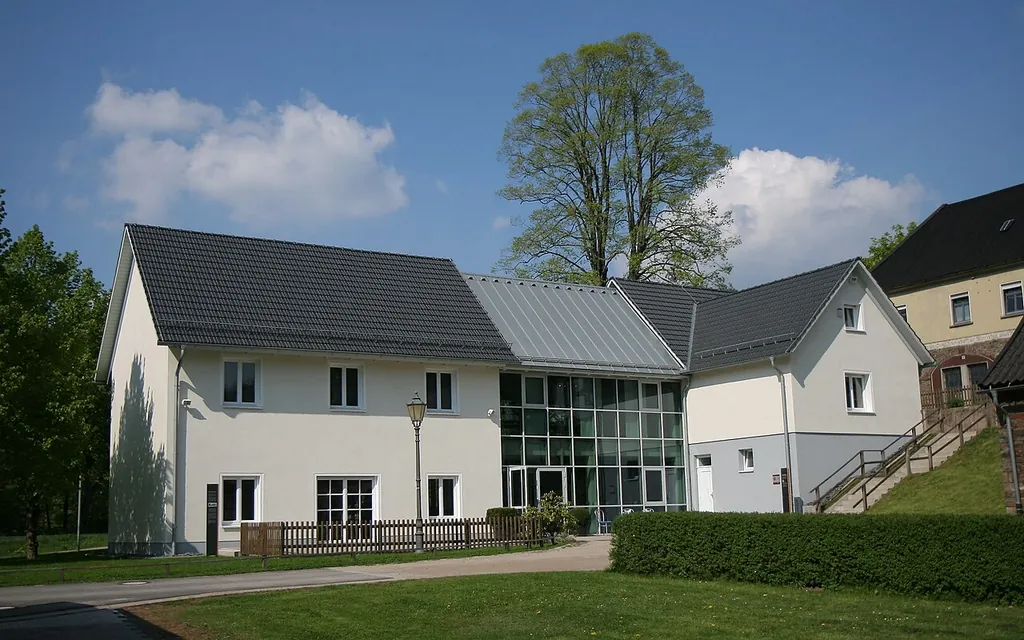
Charcoal blast furnace works from 1728 in Wenden with a hammer mill and water wheels: an industrial heritage site with a museum on the history of iron.
From August 23, 2026
Photo exhibition by Ralf Breer and Rainer Scholz on the relining of blast furnace B at Hüttenwerke Krupp Mannesmann in Duisburg.
The ironworks was founded in 1728 by the ironmasters Peter and Johannes Ermert with the permission of Clemens August, Elector of Cologne, and passed in the 1740s to the Remy family, one of the leading iron-producing families on the Middle Rhine. The pig iron smelted here was processed into wrought iron in hammer mills and sold to wire-drawing works and steel hammers in the County of Mark; with the first refining hammer in the Duchy of Westphalia, the works even reached the Rotterdam market.
Thanks to technical upgrades, the charcoal-fired plant held its own for a long time against competition from the Siegerland. However, the construction of the railway through the distant Lenne valley and the rise of coke-based industry in the Ruhr made it unprofitable; the blast furnace was shut down in 1866. Afterward, a sawmill and a knitwear factory used the buildings, and the equipment was lost.
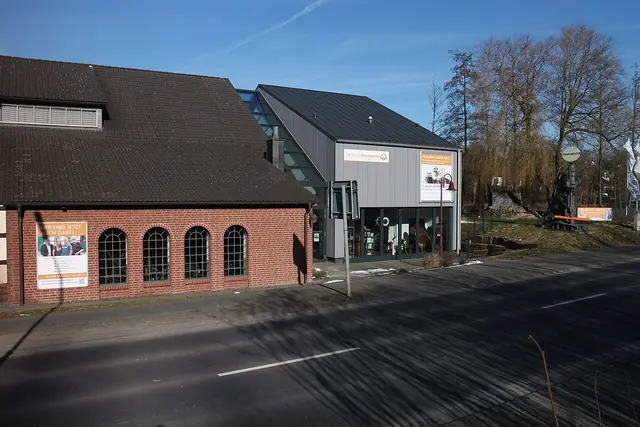
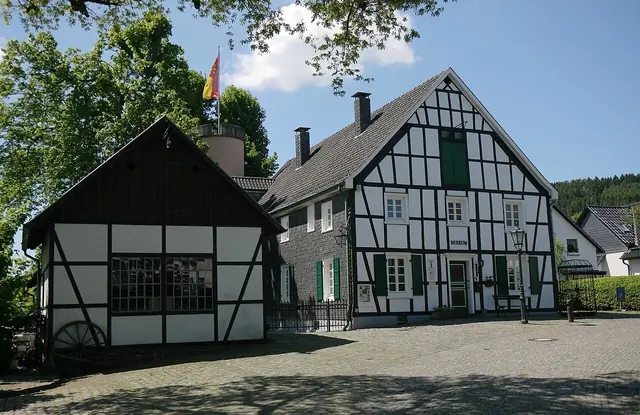
In 1969, Westphalian heritage conservators discovered the almost complete ensemble of buildings and the ironworks archive. Restoration began in 1977/78, the site was protected as an industrial heritage monument, and a museum association was founded in 1989. Since 1993, the most important parts of the works have been open to visitors – the charging floor, the casting house with its 1809 blast furnace, and the 1774 hammer mill, reconstructed with help from the LWL-Freilichtmuseum Hagen. In 2007, a visitor center with a museum on the history of iron production and a cafeteria was added.
| Adults | €2 |
|---|---|
| Reduced | €1School students, apprentices, university students, people with disabilities |
| Children & teens | –School students pay the reduced price of €1. |
| Visitors with disabilities | €1 |
| Students & apprentices | €1 |
| Groups | –Tour of the ironworks: €60 per group plus €1 per person; school classes €60; tours in English, French, or Polish €70. Museum education programs €40 (1 hr), €60 (2 hrs), €80 (3 hrs) per group. |
| Families | €4.502 adults with children |
Admission applies to the museum; the ironworks grounds are freely accessible.
According to AG Museumslandschaft Kreis Olpe, the museum is accessible, with an accessible restroom and accessible parking spaces; no details are available for the historic ironworks buildings.
Great for kids & families
| Family ticket | €4.50 · 2 adults with children |
|---|
Museum scavenger hunt, holiday programs, and programs for kindergartens. Children's birthday parties with selectable programs; picnic at the benches by the pond or in the old horse stable, coffee and cake by arrangement in the cafeteria.
Bus lines R50 (Olpe), R42 (Wenden), SB1 (Siegen), and R38 (Freudenberg); the ironworks is on the Ruhr-Sieg cycle path.
Parking available
Parking at the museum.
Cafeteria in the visitor center, museum store.
Civil weddings performed by the municipality of Wenden in the historic vaulted cellar; the grounds also serve as an event venue (e.g., Hüttenrock, Christmas market).
Inquiries & details| Guided tours | yes |
|---|---|
| School programs | yes |
| Good to know | Guided tours in German, English, French, and Polish by reservation. Blacksmithing demonstrations in the hammer mill on special event days. A hiking trail on the history of the ironworks and a sculpture trail lead around the site. |
Cookies help you use this website. We only load the map and statistics with your consent.