Castello di Brescia
Vast fortress on Cidneo Hill overlooking Brescia, with the Mastio Visconteo, Venetian bastions and the Strada del Soccorso; the grounds are open free of charge every day and house the Museo delle Armi and the Museo del Risorgimento.
Show individual sections
About the museum
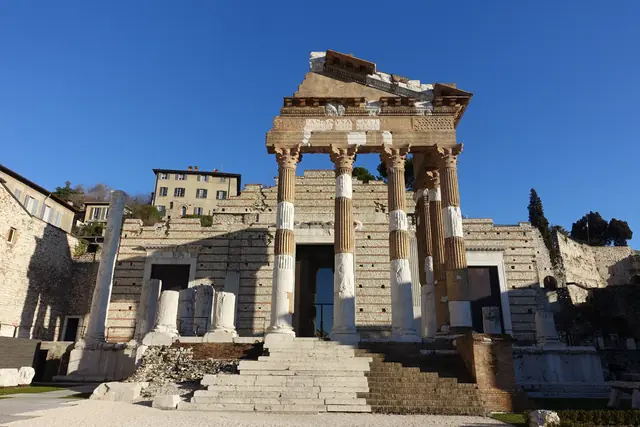
The Castello stands on Cidneo Hill, the oldest settled site in Brescia: the earliest finds date back to the Iron Age. The Celts made it a place of worship and the Romans built temples here; the staircase of a Roman temple can still be seen inside the Museo delle Armi, and Roman oil stores survive beneath it. The Lombards built the first fortification, a castrum.
In the Middle Ages churches were built on the hill, among them Santo Stefano in Arce, of which the Torre Mirabella survives, and construction of the Mastio began. It was the Visconti who reorganised the defences: the Mastio Visconteo was built in 1343 by Giovanni and Luchino Visconti on top of the remains of the Roman temple. During roughly four centuries of Venetian rule the fortress was strengthened with the bastions of San Pietro, San Marco, San Faustino and della Pusterla, to designs attributed to Giulio Savorgnan and Bonaiuto Lorini among others; the third ring of walls was built in 1588. The Venetian period also produced the Torre dei Prigionieri, converted from a square Visconti tower into a round one, and the Torre Coltrina, commissioned by Giacomo Coltrino; the Torre dei Francesi recalls the French occupation. From the summit the Strada del Soccorso, a secret escape route that still exists today, leads down to the city.
Under the Austrians the Castello became a barracks. In 1849 it was at the centre of the Dieci giornate (Ten Days, 23 March – 1 April), the uprising in which Tito Speri was one of the leading figures and which earned Brescia the title Leonessa d'Italia (Lioness of Italy). In 1859 the city became part of the new Kingdom of Italy; with the Exhibition of 1904 the Castello became a public park. A zoo, no longer in existence, was also set up on the site of the demolished Venetian barracks, and during the Second World War the Italian Social Republic used the castle as a barracks and a prison.
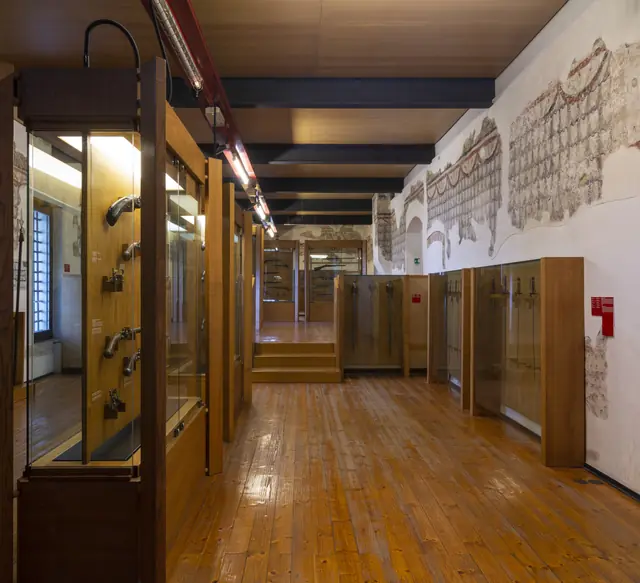
Today the Castello, protected as a monument since 1912, is one of the largest fortified complexes in Europe and a park open every day. Since 1988 the Mastio has housed the Museo delle Armi «Luigi Marzoli», and the Grande Miglio, a former storehouse, is home to the Museo del Risorgimento «Leonessa d'Italia»; the Specola Cidnea, a public astronomical observatory, stands on the San Marco bastion, and a 1909 locomotive is on display in the Piazzale della Locomotiva.
Highlights
- Mastio Visconteo of 1343, home of the Museo delle Armi «Luigi Marzoli»
- Venetian bastions of San Pietro, San Marco, San Faustino and della Pusterla
- Strada del Soccorso, a historic escape route between the castle and the city
- Torre Mirabella, Torre dei Prigionieri, Torre Coltrina and Torre dei Francesi
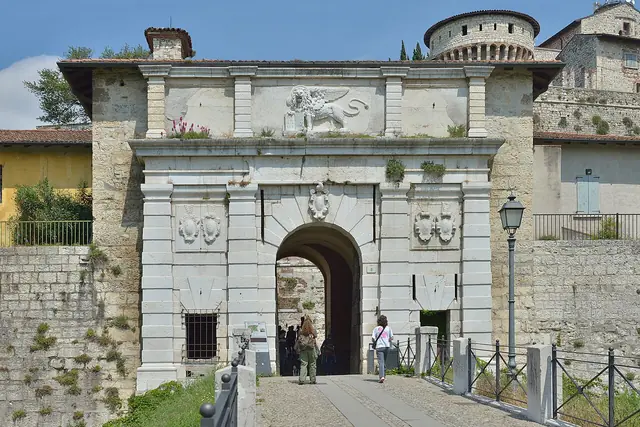
- Monumental entrance gate and drawbridge of the 14th-century ring of walls
- 1909 locomotive in the Piazzale della Locomotiva
- Panoramic view over the city from Cidneo Hill
- Operated by
- Fondazione Brescia Musei
Admission & discounts
Admission is free.
| Biglietto Musei (Museo delle Armi «Luigi Marzoli», Museo del Risorgimento «Leonessa d'Italia», Museo di Santa Giulia, Pinacoteca Tosio Martinengo) | €18Partner discounts and over-65s €15, groups €13, under-26s and people with disabilities up to 67% €11 (companion free), schools €4.50 per museum; free up to age 5; valid until 22 August 2027, includes the exhibition «Tesori». |
|---|
Access to the castle grounds is free of charge. Visiting the two museums inside the fortress, the Museo delle Armi «Luigi Marzoli» and the Museo del Risorgimento «Leonessa d'Italia», requires the paid Biglietto Musei; there is no separate ticket for the castle museums alone.
Accessibility
- Partially wheelchair accessible
- Elevator: no information
- Accessible restroom: no information
- Accessible parking
- Service dogs welcome: no information
- Tactile models & exhibits: no information
- Sign language tours: no information
- Easy-to-read materials: no information
- Audio description: no information
Along the road up to the castle there are free and paid parking spaces, including spaces for people with disabilities. The route through the Museo del Risorgimento is fully accessible to visitors with reduced mobility, with lifts and accessible toilets; the Museo delle Armi is not accessible (a virtual tour is available). No specific accessibility information is available for the castle's outdoor areas on the hill; for particular needs, contact the Fondazione Brescia Musei (+39 030 817 4200).
Kids & families
Great for kids & families
The 1909 locomotive on display in the Piazzale della Locomotiva is a favourite with younger visitors.
Getting there & parking
By public transit
San Faustino · 10-min walk
Metro: San Faustino stop (about a 10-minute walk) or Vittoria (about a 15-minute walk); Brescia Mobilità buses. About a 20-minute walk from Brescia railway station. From the centre you can also walk up through the narrow streets of the old town, for example via Contrada San Urbano.
By car
Parking available
Along the castle road there are free and paid parking spaces, including spaces for people with disabilities.
- Accessible parking
Bicimia bike sharing by Brescia Mobilità; Radio Taxi Brixia +39 030 35111.
Get directionsAddress & contact
Castello di BresciaVia del Castello 9
25121 Brescia
Lombardy, Italy
Amenities & dining
The castle has an Infopoint (+39 030 817 4400) with a refreshment area and, in the Piccolo Miglio, the bookshop of the Museo del Risorgimento.
Events & venue rental
The museum hasn’t published any information on this.
Plan your visit
| Guided tours | yes |
|---|---|
| Good to know | Within the grounds, visitors can pay to see the Museo delle Armi «Luigi Marzoli» in the Mastio and the Museo del Risorgimento «Leonessa d'Italia» in the Grande Miglio. Guided tours of the castle are booked through the central booking service of the Fondazione Brescia Musei (+39 030 817 4200); the Associazione Speleologica Bresciana runs guided tours of the Strada del Soccorso and areas normally hidden from view. The Specola Cidnea, a public astronomical observatory with a planetarium, is located on the San Marco bastion. |
Visitor experiences
Loading experiences …