Castello Maniace
Swabian castle on the tip of Ortigia, built in the 13th century by Frederick II: square plan, cylindrical towers and a large columned hall.
Have only individual sections read aloud
About the museum
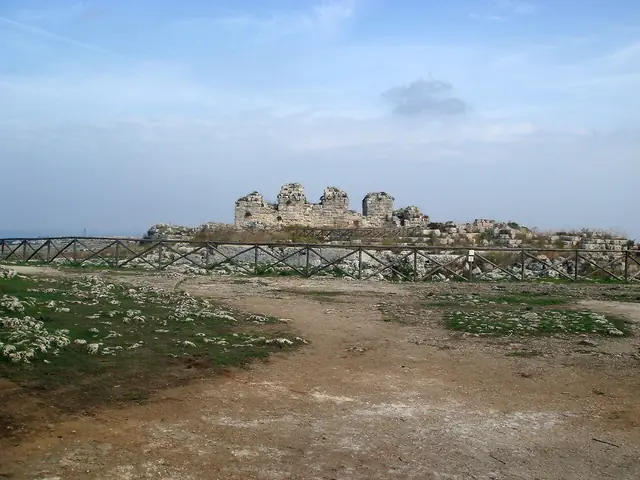
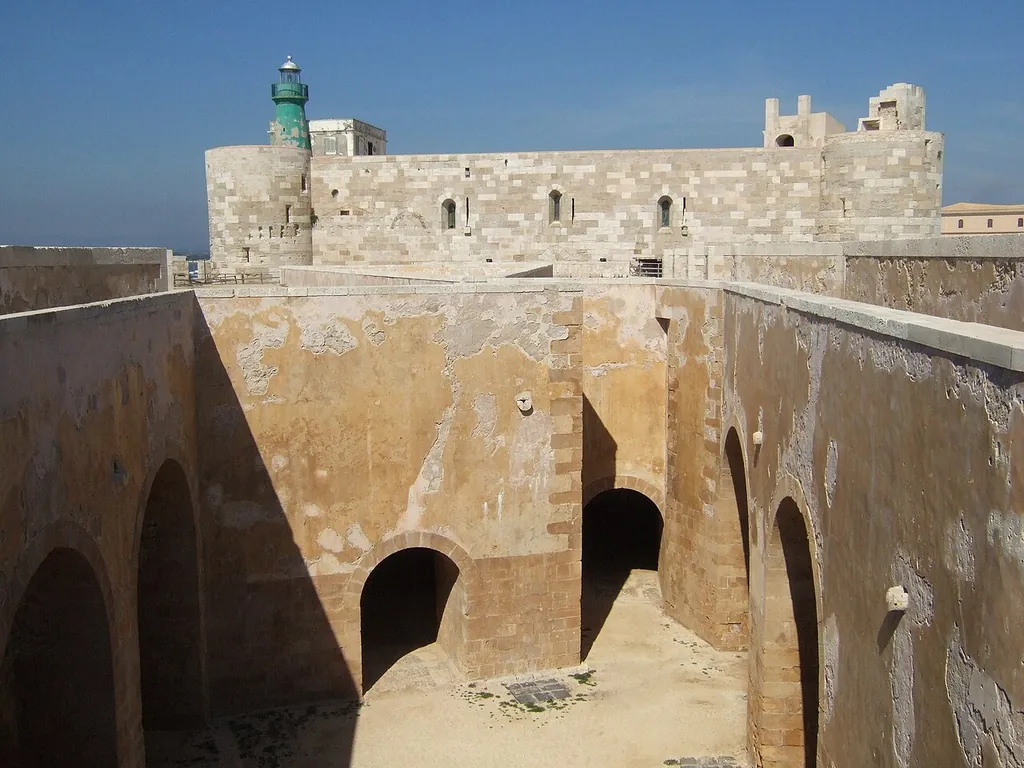
At the far tip of the island of Ortigia, where fortifications already existed in Greek times, stands the Castello Maniace. It was built between 1232 and 1239 at the wish of Frederick II of Swabia, who entrusted the work to a Sicilian architect, Riccardo da Lentini, on earlier fortifications attributed to the Byzantine general Giorgio Maniace, who in 1038 had retaken the city from the Arabs and from whom the castle takes its name.
The building has a perfectly square plan, with four cylindrical towers at the corners, and is an example of Swabian architecture in Sicily. On either side of the entrance portal there were originally two bronze rams: one has been lost, the other is kept in the Museo Archeologico Salinas in Palermo. The large inner hall was conceived as a single space, with free-standing and wall columns surmounted by hook capitals, whose fine decoration suggests the work of Cistercian craftsmen.
The castle was also used as a residence and a place of representation: here Frederick II signed the establishment of the University of Naples, and in 1300 Robert of Anjou and Frederick of Aragon signed a truce. Spanish rule, the earthquake of 1693 and the fire caused in 1704 by the explosion of the powder magazine transformed its appearance. Today it hosts cultural events throughout the year.
Highlights
- Square plan with four cylindrical towers
- Decorated marble portal
- Large columned hall with hook capitals
- Position on the tip of Ortigia, over the sea
- Work by Riccardo da Lentini for Frederick II
- Founded
- 1038
- Visitors per year
- approx. 120,113
Admission & discounts
The museum hasn’t published any information on this.
Accessibility
The museum hasn’t published any information on this.
Kids & families
The museum hasn’t published any information on this.
Getting there & parking
The museum hasn’t published any information on this.
Amenities & dining
The museum hasn’t published any information on this.
Events & venue rental
The museum hasn’t published any information on this.