Complesso nuragico di Palmavera
Nuragic village near Alghero with a two-tower nuraghe, an outer wall (antemurale) and the famous assembly hut.
Have only individual sections read aloud
About the museum
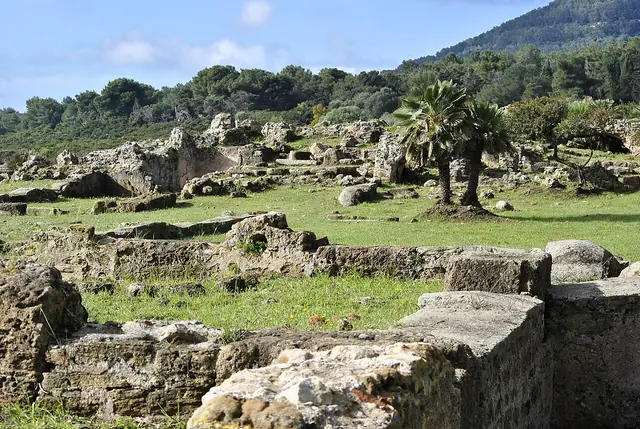
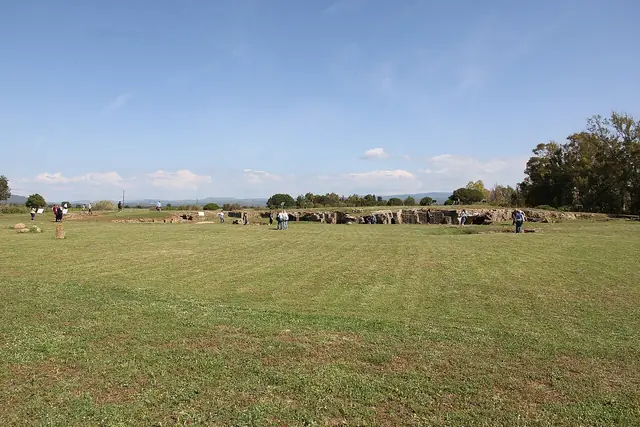
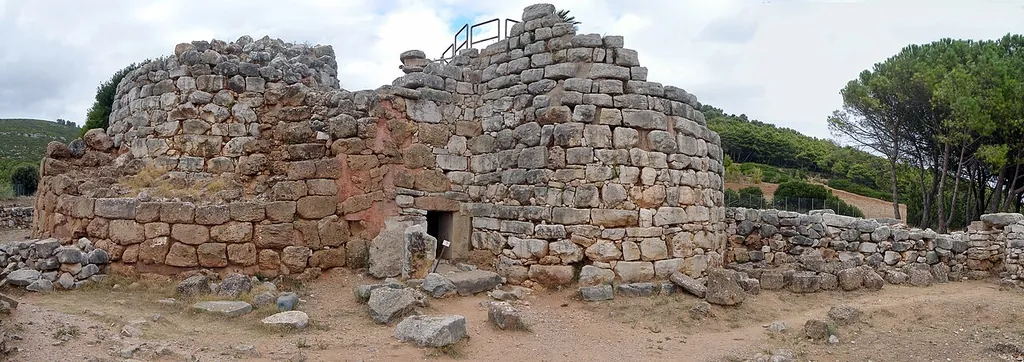
The Palmavera Nuragic complex lies in north-western Sardinia, between the Alghero roadstead and the Gulf of Porto Conte. It is a settlement established from the 15th century BC, consisting of a complex nuraghe and the remains of a village of about fifty huts, of which only about a quarter is visible today; in the Bronze Age the village had around two hundred huts. It was inhabited from the middle Bronze Age to the early Iron Age.
The construction took place in three phases. The main tower, the oldest, dates from the 15th–14th centuries BC and retains the central chamber with a tholos roof. In the first half of the 9th century BC a second tower and the assembly hut were added, with a stone bench running along the whole perimeter and, at the centre, a sandstone model of a Nuragic tower; the original is in the Museo Sanna in Sassari and is replaced here by a copy. Between the 9th and 8th centuries BC the outer wall and the enlargement of the village were built.
The village was probably destroyed by fire at the end of the 8th century BC and was only sporadically inhabited in the Punic and Roman periods. The first excavations were carried out in 1905 by Antonio Taramelli. Today the site is visited on an archaeological tour of about one hour; the visit can be combined with the nearby necropolis of Anghelu Ruju.
Highlights
- Nuraghe with two towers and outer wall
- Main tower of the 15th–14th centuries BC with tholos chamber
- Assembly hut with stone bench and tower model
- Village of about fifty huts
- Combined tour with the Anghelu Ruju necropolis
- Operated by
- Cooperativa SILT
Admission & discounts
| Adults | €7 |
|---|---|
| Combined Palmavera and Anghelu Ruju necropolis experience | €12 |
| Archaeological tour with aperitif | €20 |
The ticket includes the archaeological tour of about one hour. A private two-hour archaeological experience can also be booked on the site.
Accessibility
The museum hasn’t published any information on this.
Kids & families
The museum hasn’t published any information on this.
Getting there & parking
The museum hasn’t published any information on this.
Amenities & dining
- Café
Small bar in the reception area.
Events & venue rental
The museum hasn’t published any information on this.
Plan your visit
| Guided tours | yes · approx. 60 min |
|---|---|
| Good to know | The site is visited on an archaeological tour of about one hour; booking is recommended on the operator’s website. |