Castello della Zisa
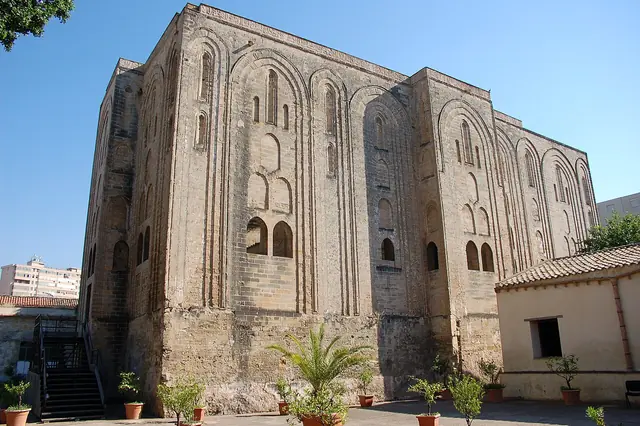
Norman summer residence of the 12th century with Arabic taste, a UNESCO World Heritage Site, which houses the Museum of Islamic Art.
Have only individual sections read aloud
About the museum
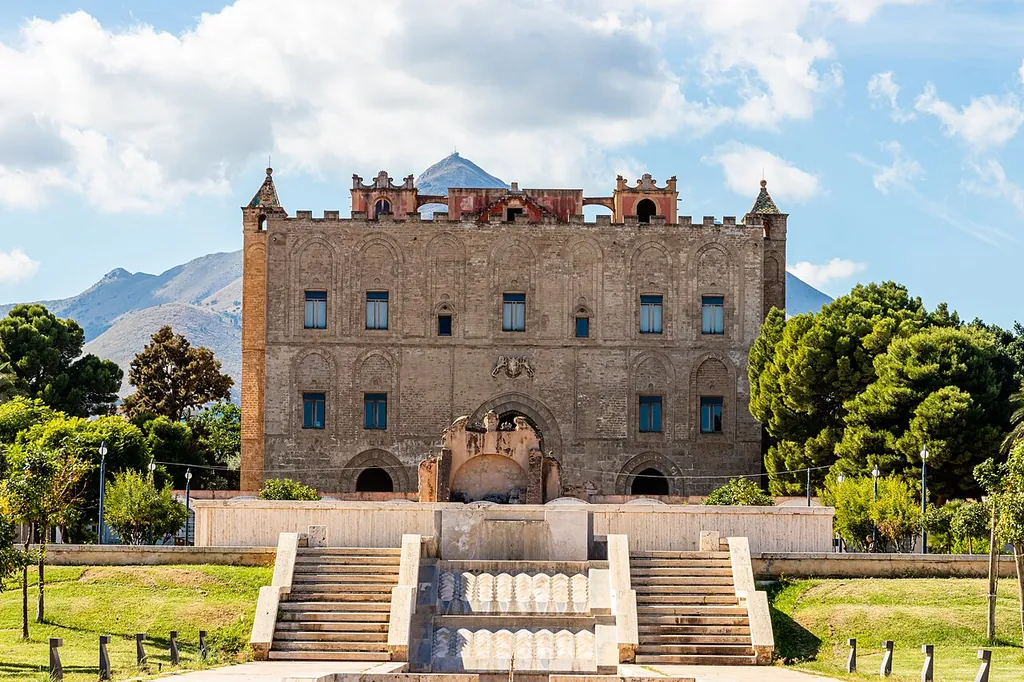
The Palazzo della Zisa, whose name derives from the Arabic “al-Aziz”, meaning “splendid”, was begun under King William I and completed by William II around 1167. Built outside the walls of ancient Palermo by craftsmen of Muslim origin, it served as the summer residence of the Norman rulers and their court. It has a rectangular plan and rises over three floors: the ground-floor rooms were intended for feasts, ceremonies and dances, while the residential apartments were on the upper floors.
The building appears as a compact block, with a vestibule called the Sala della Fontana, decorated in Islamic style, where water flowed in a channel and in two basins. Particularly interesting is the ventilation system, with chimneys that ensured summer coolness. In 1635 Baroque elements were added, including the fresco of the so-called “devils of the Zisa” on the entrance arch.
Since 2015 the palace has been part of the UNESCO World Heritage of the Arab-Norman itinerary of Palermo. Inside is the Museum of Islamic Art, opened in 1991, with works produced between the 9th and 12th centuries and coming from Sicily and the Mediterranean area.
Highlights
- Sala della Fontana with decorations in Islamic style
- Natural ventilation system with chimneys
- Baroque fresco of the “devils of the Zisa”
- Museum of Islamic Art in the palace
- Inscription of 1149 in four languages (Hebrew, Latin, Greek and Arabic)
Permanent exhibition
- Museo d'arte islamica – Collection of Islamic art objects from Sicily and the Mediterranean, produced between the 9th and 12th centuries, including brass, silver and wooden musharabia.
- Operated by
- Regione Siciliana
Admission & discounts
| Adults | €8 |
|---|---|
| Reduced | €4EU citizens aged 18 to 25 and FAI members |
| Children & teens | freefree up to age 17 · Free under 18; under-12s must be accompanied by an adult. |
| Visitors with disabilities | freecompanion free · Free for people with disabilities and a companion. |
Other free admissions provided by the regulations: EU tourist guides and interpreters, ICOM members, journalists, school groups visiting by booking, teachers, and students of degree courses in art-historical and archaeological subjects.
Accessibility
- Wheelchair accessible: no information
- Elevator: no information
- Accessible restroom: no information
- Accessible parking: no information
- Service dogs welcome: no information
- Tactile models & exhibits: no information
- Sign language tours: no information
- Easy-to-read materials: no information
- Audio description: no information
The palace is partly under restoration; for information on accessibility, it is advisable to contact the museum.
Kids & families
The museum hasn’t published any information on this.
Getting there & parking
By public transit
Piazza Principe di Camporeale
From Stazione Centrale, line 101 to Piazza Politeama, then line 106 to Piazza Principe di Camporeale; by train, Orleans/Palazzo Reale station plus 15–20 minutes on foot.
By car from Stazione Centrale, reach Piazza Indipendenza, continue along via Dante to Piazza Principe di Camporeale and then via dei Normanni. The entrance is from via dei Normanni.
Get directionsAmenities & dining
- Museum shop
Bookshop.
Events & venue rental
The museum hasn’t published any information on this.
Plan your visit
| Guided tours | yes |
|---|---|
| Audio guide | yes (IT, EN, FR, DE, ES) |
| School programs | yes |
| Good to know | Audio guide downloadable with the AudioCulture app; individual visits in the calendar, in Italian and English; groups by booking (tour@coopculture.it) and schools (edu@coopculture.it). The Museum of Islamic Art can be visited inside the palace. |