Museo archeologico nazionale e Parco archeologico di Luni
State museum and archaeological park of the Roman colony of Luna, with the new display in the Casale Benettini Gropallo, the forum, the Capitolium, the theatre and the amphitheatre.
Have only individual sections read aloud
About the museum
Luna was founded in 177 BC as a Roman colony, with two thousand colonists and a territory between the River Magra and present-day Pietrasanta. Its life lasted more than a thousand years, until in 1204 the episcopal see moved because of the silting of the port and changes in the environment. It grew rich through the exploitation of the Apuan marble quarries, intensified from the time of Augustus. In Late Antiquity it became the Byzantine capital of the Provincia maritima Italorum, and later an episcopal see and a stage on the Via Francigena.
Excavations began in the 19th century and led to the discovery of important statuary groups, which entered the Regie Collezioni (Royal Collections) of Turin. Until the early 20th century, private initiatives prevailed, such as those of the marquises Gropallo and Remedi and of Carlo Fabbricotti; the private collections are now kept in various museums, including those of La Spezia and Florence. In 1964 the National Archaeological Museum was built inside the archaeological area, so that the finds could be displayed where they had been found. Between 1991 and 2004 thematic sections were set up in the site's farmhouses (casali).
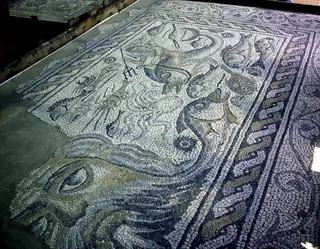
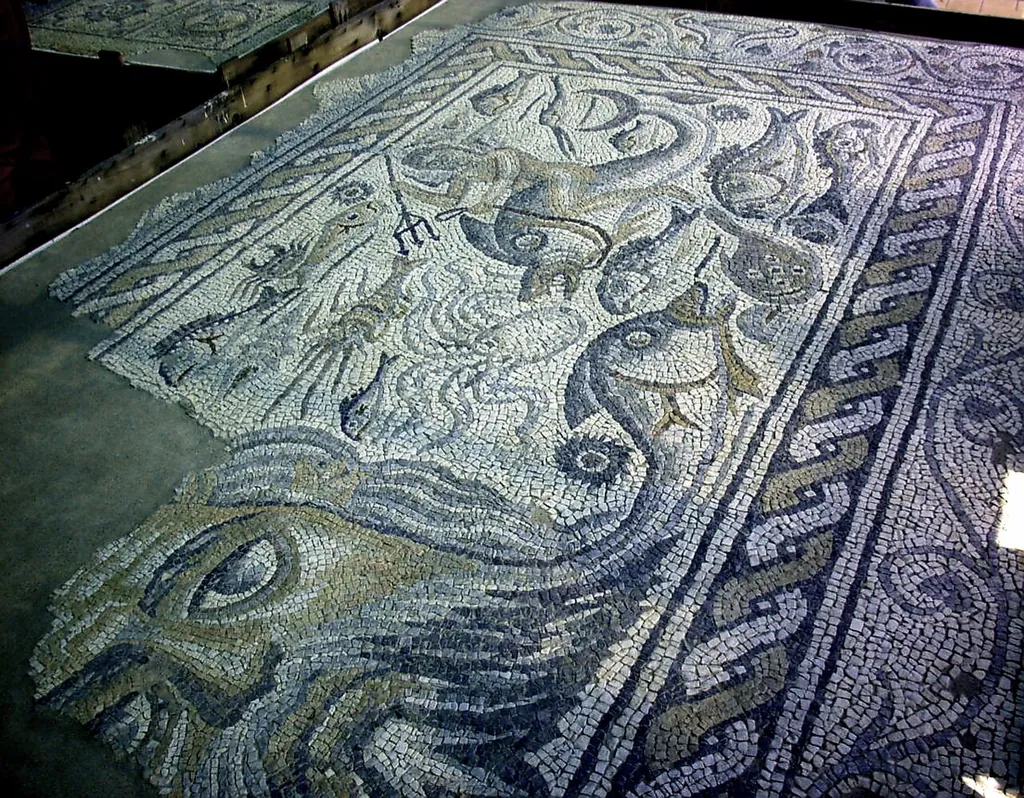
Today the museum is housed in the Casale Benettini Gropallo, where the new two-floor display was inaugurated on 29 May 2025. The ground floor is devoted to the city's link with Apuan marble, with the base dedicated to the goddess Luna, the mosaic of Oceanus and the mosaic with Medusa, from which the museum's logo derives. The upper floor follows a chronological route from prehistory to the Byzantine, Lombard and Christian phases.
The archaeological area, set in the Lunense plain, includes among other things the temple of the goddess Luna, the forum, the Capitolium, the theatre, the amphitheatre and the early Christian cathedral. The site is run by the Direzione regionale Musei nazionali Liguria.
Highlights
- New display in the Casale Benettini Gropallo (2025)
- Mosaic of Oceanus and mosaic with Medusa
- Base dedicated to the goddess Luna, from her temple
- Apuan marble in architecture and statuary
- Amphitheatre, theatre, forum and Capitolium in the archaeological area
- Remains of the early Christian basilica, later a cathedral
- Founded
- 1964
- Operated by
- Ministero della Cultura – Direzione regionale Musei nazionali Liguria
Admission & discounts
| Adults | €5 |
|---|---|
| Reduced | €2 |
| Children & teens | freefree up to age 17 · Free admission for under-18s. |
| Combined ticket with the Villa romana del Varignano | €8 |
| Plus ticket (with a paper guide) | €10 |
| Ultra Plus ticket (with the catalogue of the exhibition “Pietra di Luna”, Palazzo Reale Genova 2024) | €20 |
| Amphitheatre (dedicated ticket office) | €2 |
Free admission: Free admission on the first Sunday of every month.
Other categories are entitled to free or reduced admission (list on the website). Tickets can also be bought on museiitaliani.it. Notice on the website for September 2026: cash payments only.
Accessibility
- Wheelchair accessible
- Elevator
- Accessible restroom: no information
- Accessible parking: no information
- Service dogs welcome: no information
- Tactile models & exhibits: no information
- Sign language tours: no information
- Easy-to-read materials: no information
- Audio description: no information
The museum is accessible to people with disabilities and to families with pushchairs; a lift serves the first floor. The archaeological area can be reached by step-free routes marked on the map.
Kids & families
| Time needed | approx. 2 hrs |
|---|---|
| Kids’ admission | free up to age 17 |
- Family tours & workshops
Educational workshops for schools, including “Ludicra, giochi nell’antica Roma” and “Il kit del gladiatore”.
Getting there & parking
By car
Parking available
The museum car park is on Via Falaschi. From the A12 motorway the museum can also be reached from the two rest areas “Antica Luni”, between Sarzana and Carrara, with a 1.2 km walk to the archaeological area.
Follow the tourist signs for “Antica città di Luni”; on a satnav, search for “Museo archeologico nazionale di Luni” or “Parcheggio di Luni”.
Get directionsAmenities & dining
The museum hasn’t published any information on this.
Events & venue rental
The museum hasn’t published any information on this.
Plan your visit
| Guided tours | yes |
|---|---|
| Audio guide | yes |
| School programs | yes |
| Good to know | The site suggests an average visit of about two hours. At the entrance you collect the map of the archaeological area with the barrier-free routes. In the park there are information panels and a free audio guide to listen to on your own mobile phone. Comfortable shoes and a hat are recommended. Educational routes and workshops are available by booking (tel. +39 0187 66811). |