Museo archeologico nazionale di Napoli
One of the largest archaeological museums in the world, with the Farnese collections, finds from Pompeii and Herculaneum, and the Egyptian section.
Have only individual sections read aloud
About the museum
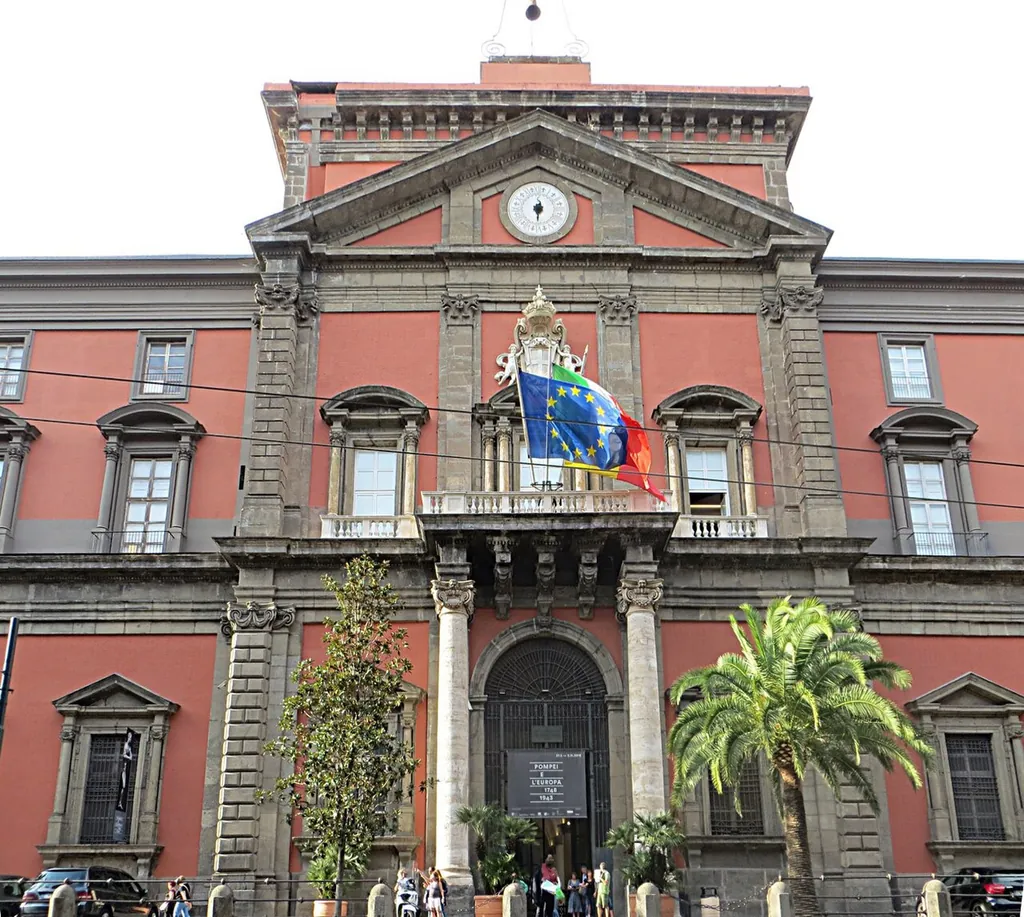
The museum was founded in 1777, when Ferdinand IV of Bourbon decided to bring together the art and antiquities collections of the dynasty in a single site. The Palazzo degli Studi, a former university building, was chosen; it was adapted and enlarged to a design by Ferdinando Fuga. The museum opened to the public in 1816 under the name Real Museo Borbonico.
The oldest core is the Farnese collection, inherited by Charles of Bourbon, to which were added antiquities transferred from Rome and from the other Farnese residences. To these were joined finds from the excavations of Herculaneum, Pompeii and Stabia, which were first kept in the royal palace of Portici and then moved to the city to protect them from the risks linked to Vesuvius.
Today the museum, which is state-run and autonomous, holds sculptures, frescoes, mosaics, everyday objects, the oldest Egyptian collection in Italy, and collections of numismatics, prehistory and Magna Graecia. The museum is undergoing re-display and energy-efficiency works, so some sections are open on a rotating basis or temporarily closed.
Highlights
- Farnese Bull and sculptures from the Farnese collection
- Frescoes and everyday objects from Pompeii and Herculaneum
- Egyptian section, the oldest in Italy
- Magna Graecia collection
- Gran Salone della Meridiana
- Gabinetto segreto and mosaic collection (temporarily closed for re-display)
Permanent exhibitions
- Collezione Farnese: sculture e gemme – The ancient statues of the Farnese collection, including the Farnese Bull, and the collection of gems.
- Sezione egizia – The oldest Egyptian collection in Italy, with finds from different periods.
- Affreschi e arredi di Pompei – Wall paintings, everyday objects and furnishings from the Vesuvian cities.
- Founded
- 1777
- Operated by
- Ministero della Cultura
- Director
- Francesco Sirano
- Visitors per year
- approx. 532,985 (2024)
Admission & discounts
| Adults | €20 |
|---|---|
| Reduced | €2Citizens aged 18 to 25 of the European Union and the European Economic Area, of Switzerland and Uruguay (subject to reciprocity), and non-EU citizens with a residence permit |
| Children & teens | freefree up to age 17 · Free admission for all persons under 18. |
| Visitors with disabilities | freeFree admission for people with disabilities. |
| Groups (10+ people) | –Groups of 10 to 30 people (including guides and accompanying persons): booking mandatory, with advance online purchase of tickets. School groups from the European Union enter free with a free combined ticket issued with the booking. |
| Special ticket (Artecard holders, once free admissions are used up) | €10 |
| OPEN MANN – ordinary annual pass (over 25) | €25Unlimited entry to the museum and exhibitions for 365 days from first use. |
| OPEN MANN – Young pass (18–25 years) | €5 |
| OPEN MANN – Academy pass (EU university students) | €10 |
| OPEN MANN – Family pass (minimum 2 passes) | €23Price per pass, for two adults over 25. |
Free admission: Free admission for everyone on the first Sunday of the month and, in 2026, on 25 April, 2 June and 4 November. On 8 March admission is free for women.
The ticket is valid for one day and also covers the exhibitions on show. With culture cards, a reduced ticket costing €2 is bought with a voucher. Free admission also for Italian teaching staff with certification. On free-admission days tickets are collected only at the ticket office, and for security reasons the Egyptian section and the Magna Graecia section remain closed. Online purchase carries no advance-sale fee.
Accessibility
- Partially wheelchair accessible
- Elevator
- Accessible restroom: no information
- Accessible parking
- Service dogs welcome
- Tactile models & exhibits
- Sign language tours: no information
- Easy-to-read materials: no information
- Audio description: no information
The western entrance is accessible to visitors with disabilities and to families with strollers. The lifts only serve the wing in which they are located, and on the first floor you cannot move from one wing to another without stairs. Reserved parking on the embankment in front of the museum is available on request with documentation; priority access for people with disabilities and special needs. LIS video guide, tactile resources in the Magna Graecia section and free tactile tours on booking. Guide dogs are admitted with a harness.
Kids & families
| Kids’ admission | free up to age 17 |
|---|
- Family tours & workshops
- Stroller-friendly
The museum offers educational workshops for children and young people on the occasion of exhibitions and national initiatives, as well as game-visits. The western entrance is accessible with a stroller.
Getting there & parking
By public transit
Museo (metro linea 1)
Metro line 1, Museo stop; metro line 2, Cavour stop (from the central station, Stazione Centrale); buses 201, R1, 139, 168, C63 and 178; from the airport, the Alibus to Stazione Centrale and then the metro.
By car
Paid parking (blue lines) in the surrounding area; dedicated parking on the embankment in front of the museum for visitors with disabilities, on request.
- Accessible parking
By car from the motorway, take the Corso Malta or Capodimonte exits of the ring road; the area in front of the museum can be driven through.
Get directionsAmenities & dining
- Café
- Museum shop
- Coat check
- Lockers
- Wi-Fi
MANNCaffè on the ground floor next to the Giardino delle Camelie; bookshop in the ground-floor entrance hall; free self-service lockers in the luggage store; free Wi-Fi for visitors (access details at the Infopoint).
Events & venue rental
The museum hasn’t published any information on this.
Plan your visit
| Audio guide | yes (IT, EN, FR, ES, DE) |
|---|---|
| School programs | yes |
| Photography | Photographing, filming and drawing are permitted for personal use only. Flash, tripods, drones and professional equipment require authorisation. Selfie sticks are not allowed. |
| Good to know | The audio guide can be rented at the ticket office (€5; €4 with OPEN MANN or Campania Artecard) and offers an 85-minute route with 90 finds. Backpacks and bulky items must be deposited. In the Magna Graecia section, entry is allowed only in flat-soled shoes or with overshoes provided by staff. Entry is temporarily through the western gate. |