Museo Bottacin
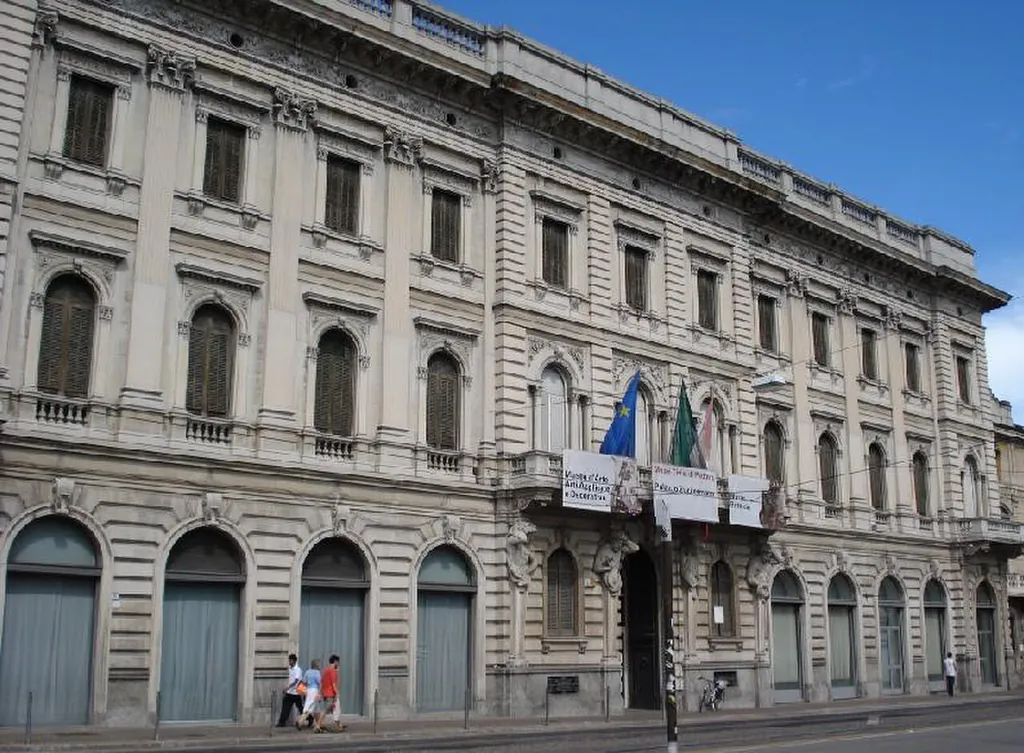
Numismatic and art museum founded on the bequest of Nicola Bottacin, housed together with the Museo di Arti Applicate in the Palazzo Zuckermann in Padua.
Have only individual sections read aloud
About the museum
The Museo Bottacin originates from the bequest that the wealthy Trieste merchant Nicola Bottacin made to the city of Padua in 1865; the entire collection of artworks and coins had been gathered mainly in Trieste around the mid-19th century. Since 2004 the collection has been displayed in the Palazzo Zuckermann on Corso Garibaldi, after a long stay at the site on Piazza del Santo. The building was constructed between 1912 and 1914 to a design by the Milanese architect Filippo Arosio for Enrico Zuckermann; in 1953 it passed to the Ministry of Posts and Telecommunications, and from 1985 to Poste Italiane, which had it restored before it was given its museum use.
The museum is arranged along two routes. The art route includes paintings by artists from Veneto, Trieste and Lombardy, sculptures by Magni, Cameroni and Vela, the bust of Doge Paolo Renier by Antonio Canova, objects linked to Massimiliano d'Asburgo, antique weapons and precious pieces such as the Nuremberg cup of 1534 and the Graduale Malaspina. The numismatic route, among the most prestigious in Europe, traces the history of money from pre-Roman Venetia, with Greek, Roman, Byzantine, medieval and modern coins, the Venetian series and the gold ducat of Francesco I da Carrara, up to the euro.
The same palazzo also houses the Museo di Arti Applicate, on the ground and first floors, with more than two thousand works of artistic craftsmanship from the Middle Ages to the present: 16th-century ceramics, inlaid 18th-century furniture, dresses from the 18th and 19th centuries, accessories and jewellery.
Highlights
- Numismatic collection among the most important in Europe
- Bust of Doge Paolo Renier by Antonio Canova
- Nuremberg cup of 1534 and Graduale Malaspina
- Gold ducat of Francesco I da Carrara
- Museo di Arti Applicate with ceramics, inlaid furniture and dresses
Permanent exhibitions
- Museo Bottacin: collezione artistica e numismatica – 19th-century paintings and sculptures, antique weapons, precious objects and one of the most important numismatic and medal collections in Europe.
- Museo di Arti Applicate – More than two thousand works of artistic craftsmanship from the Middle Ages to the present, including ceramics, furniture, dresses and jewellery.
- Founded
- 1865
- Operated by
- Comune di Padova (Musei Civici)
Admission & discounts
| Adults | €11 |
|---|---|
| Reduced | €9 |
| Students & apprentices | €5Reduced rate for young people and students (€5). |
| Musei (Museo Eremitani and Palazzo Zuckermann) plus Cappella degli Scrovegni | €15Reduced €11; a €1 booking fee is added for the Cappella. |
The “Musei” ticket at €11 (reduced €9, residents €5) is valid for the Museo Eremitani and Palazzo Zuckermann. Categories with free admission and rates for educational programmes are also available.
Accessibility
The museum hasn’t published any information on this.
Kids & families
- Family tours & workshops
The educational services of the Musei Civici have programmes dedicated to children and families.
Getting there & parking
The museum hasn’t published any information on this.
Amenities & dining
The museum hasn’t published any information on this.
Events & venue rental
The museum hasn’t published any information on this.
Plan your visit
| School programs | yes |
|---|---|
| Good to know | The Musei Civici di Padova offer educational services for schools, children, families and adults; the museum also hosts cycles of talks (for example “Incontri d'Autunno”). |