Museo Civico Archeologico Etnografico «C.G. Fanchini»
Civic museum of Oleggio with an ethnographic section (workshops and crafts between the 19th and 20th centuries) and an archaeological section with finds from Pombia and Oleggio; free admission.
Have only individual sections read aloud
About the museum
The museum grows out of the patient work of Carlo Giacomo Fanchini, president of the civic library, who from 1967 promoted the collection of objects of everyday life in old Oleggio, also thanks to the collections of Enzio Julitta, a scholar of the local dialect, and Rina Palestrini. The original nucleus was opened to the public on 10 October 1974 and declared municipal property by the town council in 1978.
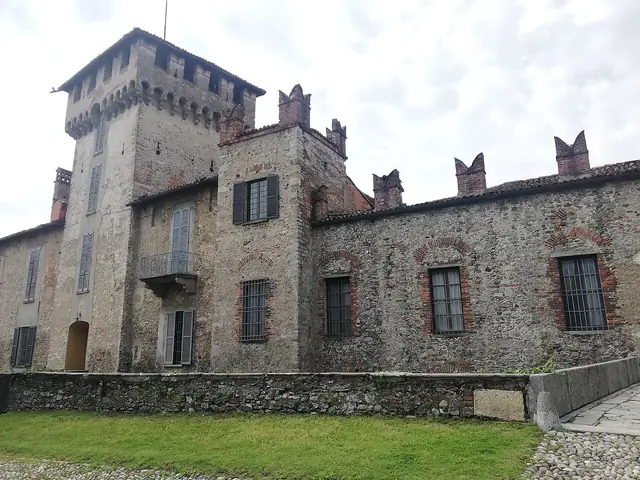
It is housed in a building of ancient origin, first built as a Franciscan convent (documented in 1652, together with the church of San Rocco), later a summer seminary for the seminarians of Novara, a nursery school and an orphanage. The structure develops around a rectangular arcaded cloister, and the rooms retain 17th-century cross vaults and traces of frescoes.
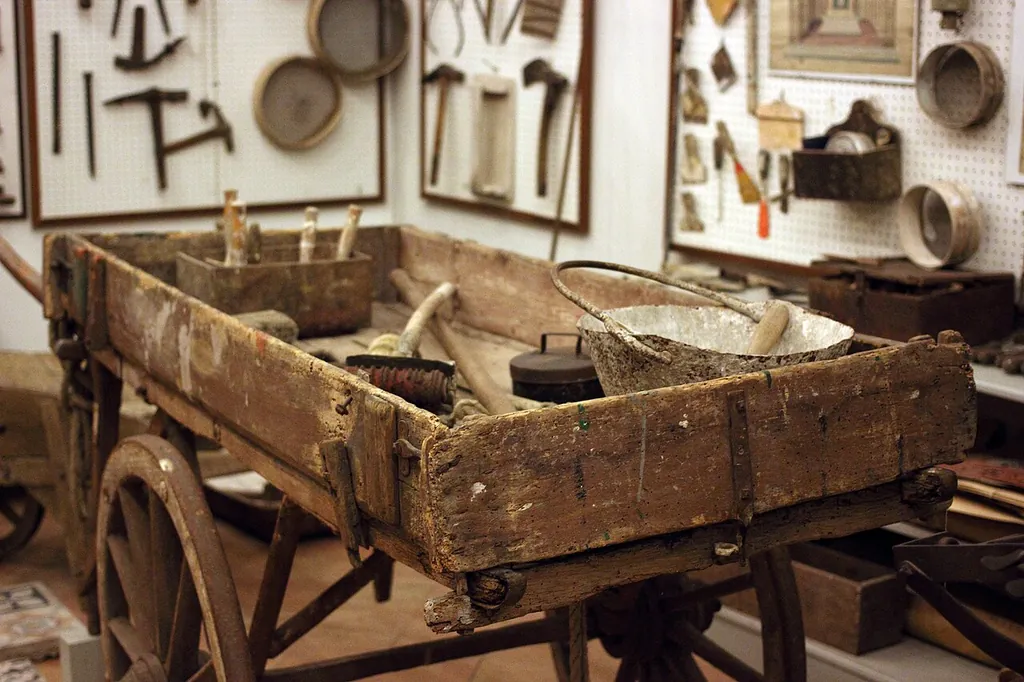
The ethnographic section reconstructs life between the late 19th and early 20th centuries through the wheelwright's workshop, the crafts room, the clothing hall, the play corner, the peasant kitchen, the bedroom, the parlour and a school classroom, as well as portraits of the hospital's benefactors. In a restored wing the archaeological section, set up with the heritage authority (Soprintendenza) and the Museo delle Antichità Egizie, presents the finds from Pombia (Golasecca culture, 7th–5th century BC, including the “bicchiere della birra” (beer beaker) and an amber necklace) and from the necropolis of Oleggio-Loreto (2nd century BC–4th century AD), which documents the Vertamocori and the Romanisation of the area.
Highlights
- Reconstructed peasant kitchen, bedroom, parlour and school classroom
- Workshops and trades: wheelwright, crafts, clothing
- Golasecca finds from Pombia, including the “bicchiere della birra” and an amber necklace
- Oleggio-Loreto necropolis with warrior grave goods (2nd century BC–4th century AD)
- Cloister of the former Franciscan convent
- Free admission
Permanent exhibitions
- Sezione etnografica – Reconstructed domestic and craft rooms of the late 19th and early 20th centuries, with the wheelwright's workshop, clothing, games and a school classroom.
- Sezione archeologica – Golasecca finds from Pombia and grave goods from the Oleggio-Loreto necropolis, from the 2nd century BC to the 4th century AD.
- Founded
- 1974
- Operated by
- Comune di Oleggio
Admission & discounts
Admission is free.
Free admission, including with a guided visit. For schools, customised visits and workshops are charged and must be booked.
Accessibility
The museum hasn’t published any information on this.
Kids & families
- Family tours & workshops
For schools, ethnographic and archaeological workshops are planned. The ethnographic section includes a play corner.
Getting there & parking
The museum hasn’t published any information on this.
Amenities & dining
The museum hasn’t published any information on this.
Events & venue rental
The museum hasn’t published any information on this.
Plan your visit
| Guided tours | yes |
|---|---|
| School programs | yes |
| Good to know | The museum offers free guided visits; for schools it also offers educational routes and ethnographic and archaeological workshops, which are charged and must be booked. |