Museo Civico Medievale
Civic museum in Palazzo Ghisilardi-Fava in central Bologna, with medieval sculptures and tombs, bronzes, ivories, arms and illuminated manuscripts.
Have only individual sections read aloud
About the museum
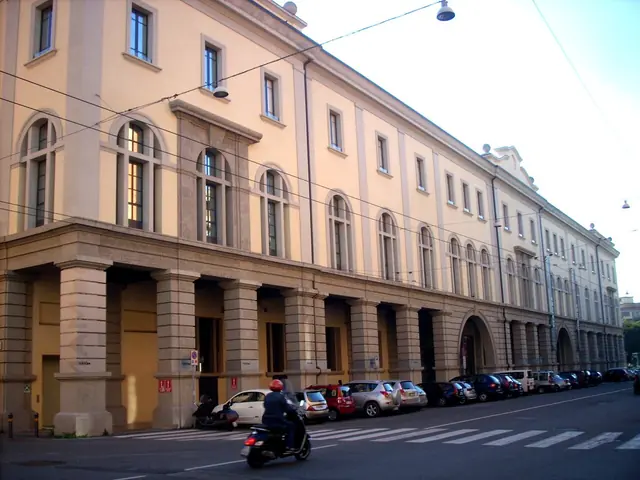
The Museo Civico Medievale has been open since 1985 in Palazzo Ghisilardi-Fava, at Via Manzoni 4, and since July 2022 has been part of the Settore Musei Civici Bologna. Its collections have ancient origins: the “camera delle meraviglie” (chamber of wonders) of Ferdinando Cospi, set up in 1675 in the Palazzo pubblico, and the experimental collection of Luigi Ferdinando Marsili, formed in 1714 at the Istituto delle Scienze. In 1742–1743 the two collections passed to Palazzo Poggi and were enriched by a donation from Pope Benedict XIV.
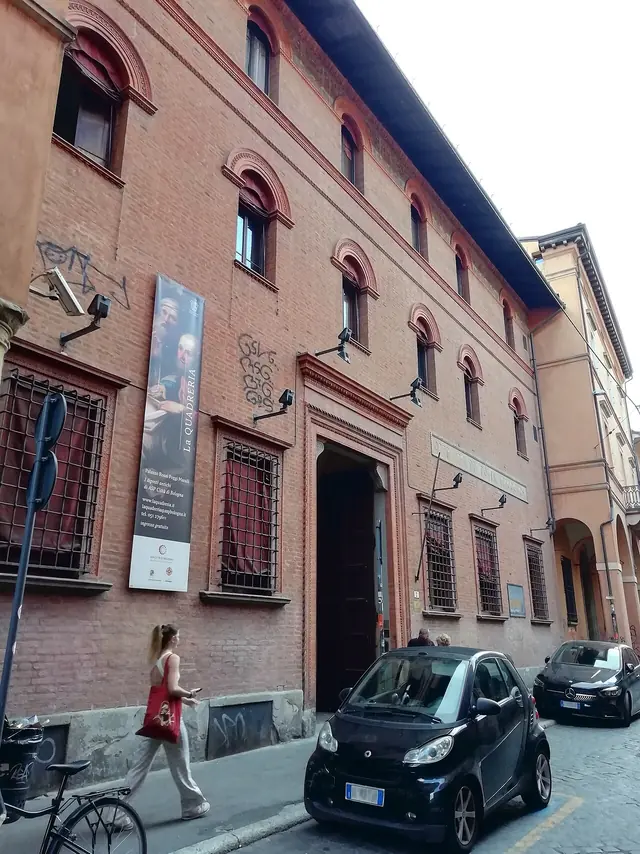
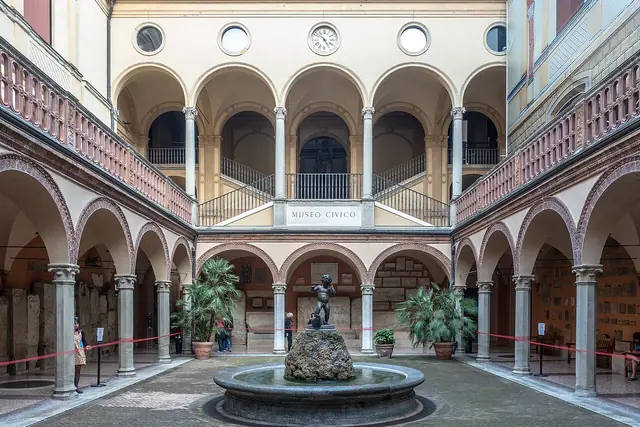
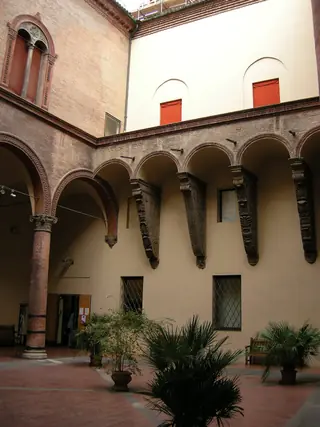
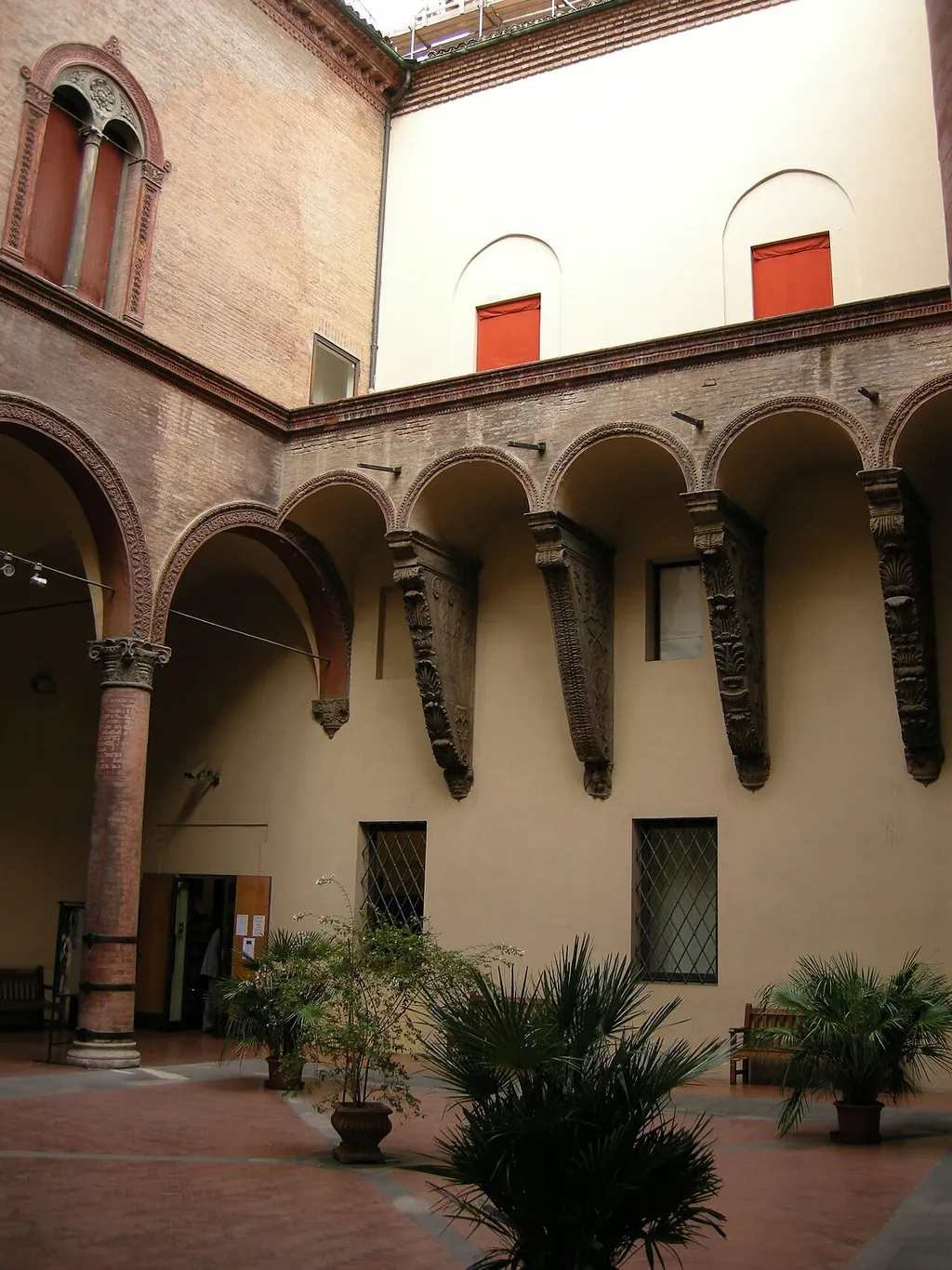
The palazzo was built between 1483 and 1491 for the notary Bartolomeo Ghisilardi, on a 13th-century building, and in 1546 passed to the Fava family. The restorations of the 1970s brought to light the Torre Conoscenti, a 13th-century tower house in the courtyard, as well as Roman remains and traces of a 12th-century imperial fortress. In the former stables is the Lapidario, with inscriptions, coats of arms and medieval tombstones, which also hosts exhibitions and lectures.
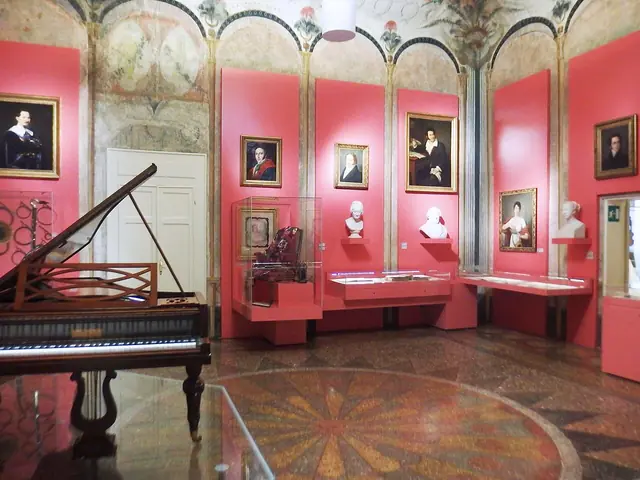
The route, on three floors, includes the 14th-century tombs of the doctors of the Studio bolognese (University of Bologna), works by sculptors such as Roso da Parma and Bettino da Bologna, the gilded copper statue of Boniface VIII (1301) by Manno Bandini, an early 14th-century English cope (opus anglicanum), ivories, glass, ceramics, arms, musical instruments and Bolognese illuminated codices from the 13th to the 16th century. Among the Renaissance and Baroque bronzes are the model for Giambologna's Neptune, Alessandro Algardi's Saint Michael and Gian Lorenzo Bernini's bust of Pope Gregory XV Ludovisi.
Highlights
- Gilded copper statue of Boniface VIII (1301) by Manno Bandini
- 14th-century tombs of the doctors of the Studio bolognese (University of Bologna)
- Renaissance and Baroque bronzes: Giambologna, Algardi and Bernini
- Cospi and Marsili collections with exotic objects and scientific instruments
- Bolognese illuminated codices from the 13th to the 16th century
- Palazzo Ghisilardi-Fava with the Torre Conoscenti in the courtyard
Permanent exhibitions
- Le raccolte Cospi e Marsili – The first rooms illustrate the history of the museum with Cospi's chamber of wonders and Marsili's scientific collection, with exotic objects and instruments.
- Tombe e scultura medievale – Funerary monuments of the doctors of the Studio bolognese, the statue of Boniface VIII and Gothic sculptures.
- Bronzi, avori, armi e manoscritti – Renaissance and Baroque bronzes, applied arts, arms and Bolognese illuminated codices from the 13th to the 16th century.
- Founded
- 1985
- Operated by
- Comune di Bologna – Settore Musei Civici Bologna
- Visitors per year
- approx. 27,795 (2022)
Admission & discounts
| Adults | €6 |
|---|---|
| Reduced | €2young people aged 18 to 25 |
| Visitors with disabilities | freecompanion free · Free admission for people with disabilities and one companion. |
| Reduced | €4For the categories provided for by the Musei Civici di Bologna. |
Free admission for holders of the Bologna Welcome Card, Card Cultura and Card Musei Metropolitani. The Musei Civici di Bologna accept the European Disability Card.
Accessibility
- Partially wheelchair accessible
- Elevator
- Accessible restroom: no information
- Accessible parking: no information
- Service dogs welcome: no information
- Tactile models & exhibits
- Sign language tours: no information
- Easy-to-read materials: no information
- Audio description: no information
The museum spans three floors and the services can also be reached by lift. The rooms are rather small; to reach the third room there is a 14 cm step without handrail or other aids. Some display cases and captions are placed too high for wheelchair users. In some rooms certain objects can be touched on request from staff; there are no Braille or large-print materials, and there are no visual alarms in the lift and toilets.
Kids & families
The museum has an educational section with activities for schools.
Getting there & parking
The museum is in the historic centre of Bologna, in the area between Piazza Maggiore and Via Indipendenza, at Via Manzoni 4.
Get directionsAmenities & dining
- Museum shop
Bookshop and conference room.
Events & venue rental
The museum hasn’t published any information on this.
Plan your visit
| Guided tours | yes |
|---|---|
| Audio guide | yes (IT, EN) |
| School programs | yes |
| Good to know | Guided tours and an educational section with routes for schools are available, bookable all year round. Booking is not required for an individual visit. |