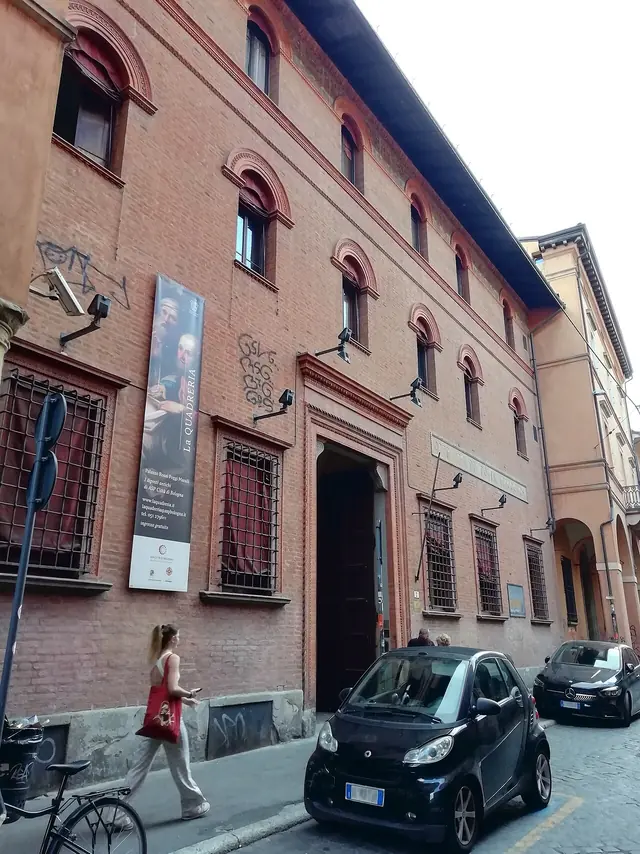
Complesso monumentale di Santa Maria della Vita
The complex in the Quadrilatero with the church and the Compianto sul Cristo morto by Niccolò dall’Arca, the oratory with the Transito della Vergine and a multimedia room.
Have only individual sections read aloud
About the museum
The complex of Santa Maria della Vita was built in the 13th century as a hospital and church at the wish of Riniero Barcobini Fasani, who in 1261 founded the Confraternita dei Battuti Bianchi. After the Napoleonic reforms of 1796–1797 the confraternity’s property was expropriated; in 1814 the complex took the name Ospedale Maggiore, which was destroyed by the bombing of 1943 and rebuilt elsewhere.
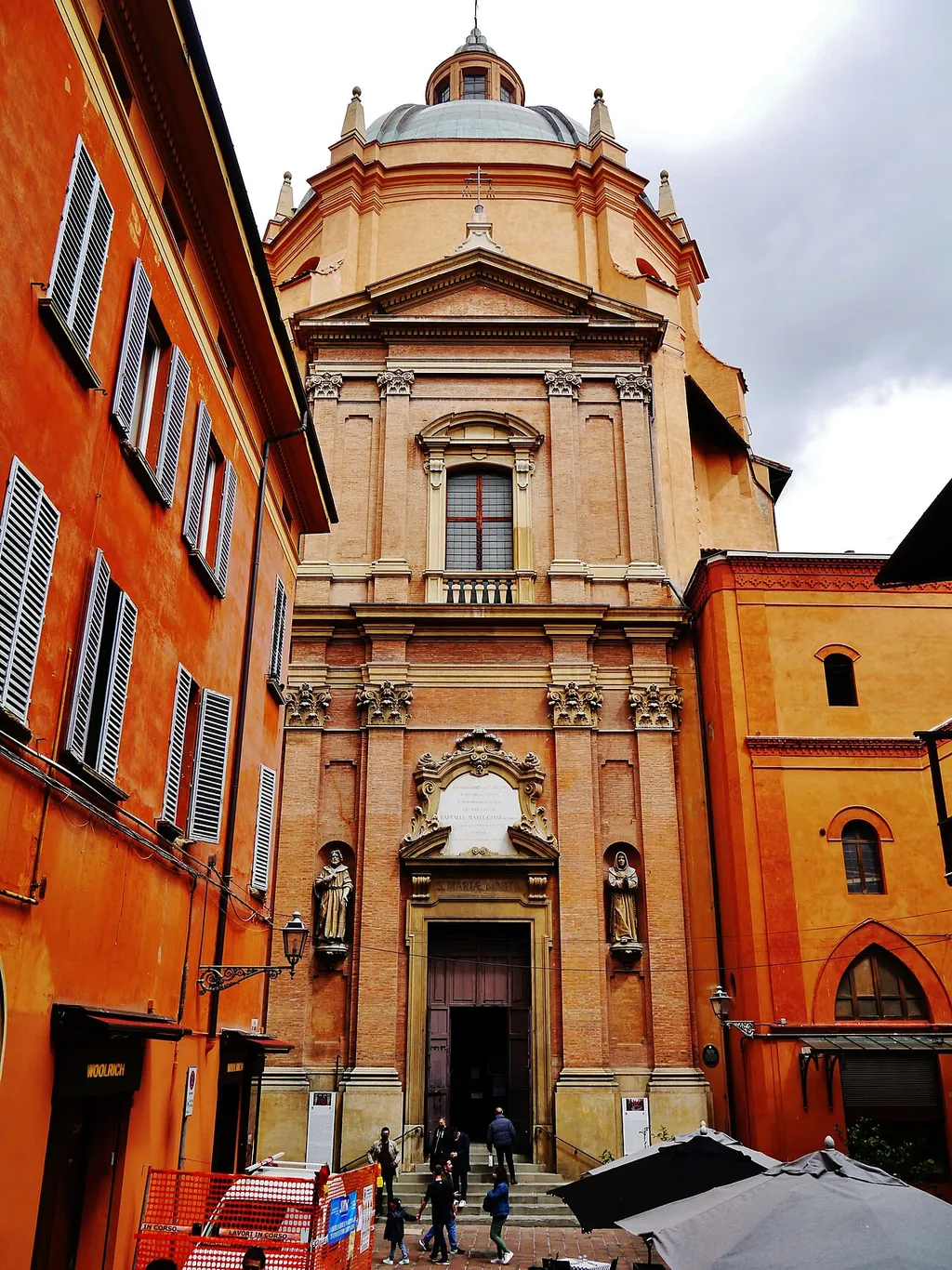
In 2006 management passed to the Fondazione Cassa di Risparmio in Bologna, and after restoration the complex reopened to the public in May 2010. The Baroque church, with a dome designed by Bibiena, houses the Compianto sul Cristo morto, a terracotta group by Niccolò dall’Arca made in the second half of the 15th century.
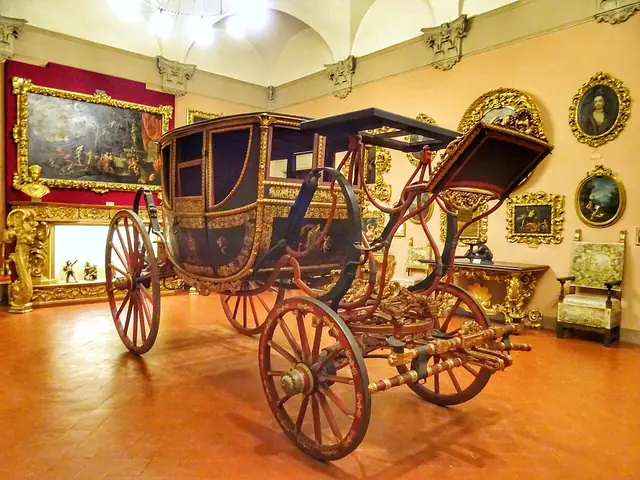
The adjoining oratory, rebuilt between 1604 and 1617 by Bonifacio Socchi, houses the Transito della Vergine by Alfonso Lombardi (1519–1522), an altarpiece by Nosadella dating from 1564 and a permanent collection of the Fondazione Carisbo that includes works such as the Sibilla Samia by Guercino. A multimedia room tells the story of the complex and the artistic thought of Niccolò dall’Arca; the Museo della Sanità e dell’Assistenza is also based in the complex.
Highlights
- Compianto sul Cristo morto by Niccolò dall’Arca
- Transito della Vergine by Alfonso Lombardi in the oratory
- Sibilla Samia by Guercino
- Multimedia room on the history of the complex
- Baroque church with dome designed by Bibiena
Permanent exhibitions
- Compianto sul Cristo morto – Terracotta group by Niccolò dall’Arca, made in the second half of the 15th century and kept in the church.
- Oratorio e collezione Carisbo – Transito della Vergine by Alfonso Lombardi, works from the Fondazione Carisbo, and multimedia room.
- Founded
- 2010
- Operated by
- Fondazione Cassa di Risparmio in Bologna (Genus Bononiae)
- Visitors per year
- approx. 55,454
Admission & discounts
| Adults | €8 |
|---|---|
| Reduced | €5groups of at least 10 people, young people aged 6 to 18, university students up to age 26, and other agreements |
| Children & teens | €5free up to age 5 · Free admission up to age 5; reduced rate from age 6 to 18. |
| Visitors with disabilities | freeFree admission for visitors with disabilities. |
| Groups | €4 per personSchool groups: €4 plus a €1 advance-sale fee. |
Booking and advance-sale fees: €1 per person. Free admission to the whole complex with the Bologna Welcome Card; the Card Cultura Bologna and residents receive reduced rates or free entry only for some parts (the Oratorio and the Compianto). Also free for tourist guides with ID card, ICOM members, accredited journalists, Membership Card holders and other categories. Tickets are available at the entrance or online via Genus Bononiae.
Accessibility
- Partially wheelchair accessible
- Elevator: no information
- Accessible restroom: no information
- Accessible parking: no information
- Service dogs welcome: no information
- Tactile models & exhibits: no information
- Sign language tours: no information
- Easy-to-read materials: no information
- Audio description: no information
The complex is described as accessible as a whole; to reach the sculpture group by wheelchair, enter through the sacristy, avoiding the four steps in front of the altar. Descriptive panels for the chapels and the altar are being installed; further information is available via QR codes.
Kids & families
| Kids’ admission | free up to age 5 |
|---|
Activities for adults and children are not currently planned.
Getting there & parking
By public transit
Rizzoli
Rizzoli stop: lines 11 A–B–C, 13, 14 A–B–C, 19, 25, 29, 30. Archiginnasio stop: shuttle A from the Parcheggio Tanari.
Amenities & dining
The museum hasn’t published any information on this.
Events & venue rental
The museum hasn’t published any information on this.
Plan your visit
| Audio guide | yes (IT, EN, ES, FR) |
|---|---|
| School programs | yes |
| Good to know | The ticket includes a card to download the audio guide; visitors are advised to bring their own headphones. For independent groups: prenotazioni@operalaboratori.com. Call centre for information and bookings: +39 055 2989818. |