Museo di storia naturale di Venezia Giancarlo Ligabue
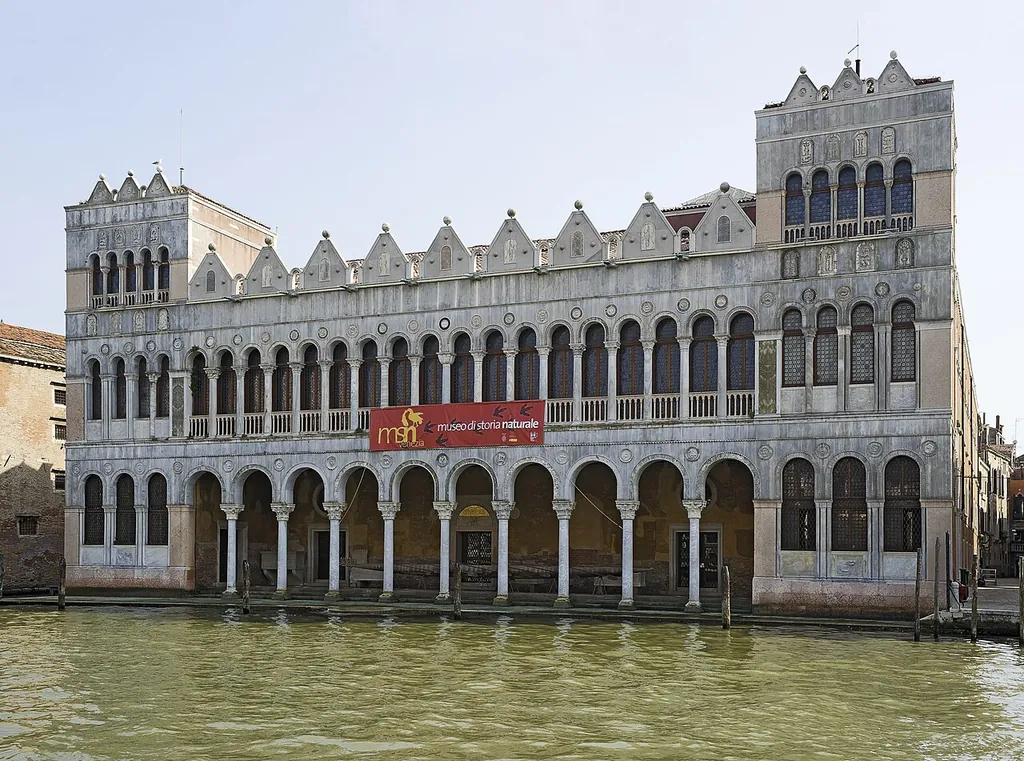
Museum in the Fontego dei Turchi on the Grand Canal, with whale skeletons, fossils and sections on life and scientific collecting.
Have only individual sections read aloud
About the museum
The Venice Natural History Museum has its roots in the Museo Civico e Raccolta Correr. In 1830 Teodoro Correr, a Venetian patrician, bequeathed his collections to the Comune on condition that they become a civic museum open to the public, which happened in 1836. The natural history collections grew through donations and purchases, until new spaces became necessary, and the Comune bought and restored the Fontego dei Turchi.
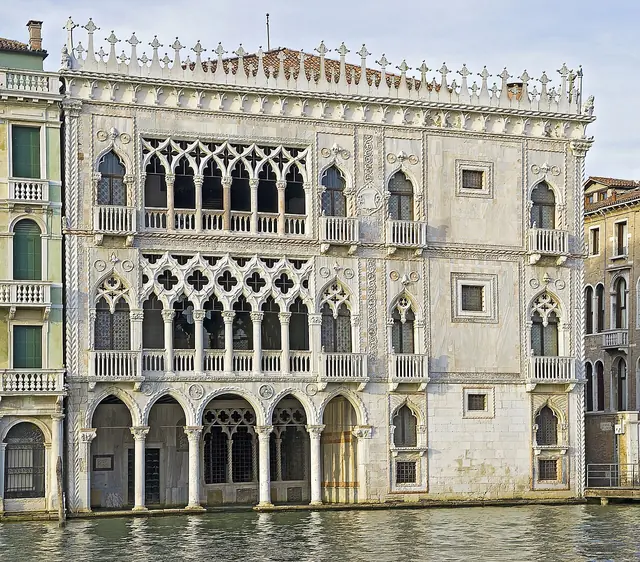
In 1920, with the transfer of the historical and artistic collections to St Mark's Square, the natural history and ethnographic collections were separated from them. The Fontego dei Turchi, a typical house-fondaco of the early medieval period built in the first half of the 13th century by the Pesaro family, became the seat of the natural history museum, which brought together the scientific collections present in the city; from 1923 the building has housed the museum.
The modern display offers multi-level communication, in which the visitor plays an active role. On the ground floor are the Galleria dei Cetacei (Cetacean Gallery) and the Fontego dei Turchi, an inclusive and multisensory area devoted to the history of the palace. The second floor houses three sections, each a museum within the museum, devoted to fossils, natural history collecting and the variety of living forms.
Highlights
- Galleria dei Cetacei with the skeleton of a fin whale almost 20 metres long
- Skeleton of a young sperm whale
- “Sulle tracce della vita” (On the Traces of Life) section on fossils
- “Le strategie della vita” (The Strategies of Life) on the variety of living forms
- Multisensory area on the history of the Fontego dei Turchi
- Audiopen included in the ticket
Permanent exhibitions
- Galleria dei Cetacei – On the ground floor are displayed the skeleton of a fin whale almost 20 metres long and that of a young sperm whale.
- Sulle tracce della vita – The second-floor section guides the visitor through fossils to understand the formation and history of life on Earth.
- Le strategie della vita – Presents the variety of living forms, with their differences, analogies, adaptations and specialisations.
- Founded
- 1923
- Operated by
- Fondazione Musei Civici di Venezia
- Visitors per year
- approx. 80,972
Admission & discounts
| Adults | €15 |
|---|---|
| Reduced | €7.50children aged 6 to 14, students aged 15 to 25, people over 65, Ministry of Culture staff, holders of the Rolling Venice card and ISIC |
| Children & teens | €7.50free up to age 5 · Children aged 6 to 14; free for ages 0 to 5 |
| Seniors | €7.50Over 65 |
| Visitors with disabilities | freecompanion free · Free admission for people with disabilities and a companion |
| Students & apprentices | €7.50Students aged 15 to 25 |
| Groups | –School offer: €4 per person for classes with teachers (admissions from 1 September to 15 March), extended to a maximum of 2 accompanying adults |
| Families | –Seniors + Junior offer: reduced ticket for all paying members of groups of two adults and at least one young person up to 16 years old |
| Museum Pass of the Musei Civici di Venezia, full price | €50Valid for 6 months, one admission per museum |
| Museum Pass, reduced | €25 |
Online only the reductions for children aged 6 to 14, students aged 15 to 25 and people over 65 are available; other reductions and free tickets are collected at the ticket office with a document. Free admission, among others, for residents and people born in the Comune di Venezia, children aged 0 to 5, licensed tour guides, ICOM members and holders of an AMACI card. The Audiopen is included in the ticket. With “Musei in Festa”, free admission for residents of the municipalities of the Metropolitan City of Venice on the days indicated.
Accessibility
- Wheelchair accessible
- Elevator
- Accessible restroom: no information
- Accessible parking: no information
- Service dogs welcome: no information
- Tactile models & exhibits: no information
- Sign language tours: no information
- Easy-to-read materials: no information
- Audio description: no information
The museum is declared fully accessible to people with disabilities and is part of the accessible routes of the Comune di Venezia. It is housed in a listed historic palace, so the floors may have slight slopes, raised thresholds or steps of uneven height.
Kids & families
| Kids’ admission | free up to age 5 |
|---|
- Family tours & workshops
MUVE Education activities for families with children and young people aged 5 to 14, booked online (average duration 1 hour and a half), including last-minute bookings. Family groups of 1 to 4 adults with young people.
Getting there & parking
By public transit
Riva de Biasio
Vaporetto (water bus): from Piazzale Roma and from Venezia Santa Lucia station, lines 1 and 5.2, Riva de Biasio stop; from the Lido, lines 1 and 5.1, Riva de Biasio stop.
Amenities & dining
- Museum shop
- Coat check
- Lockers
Information desk, ticket office, cloakroom, lockers with deposit, unattended umbrella storage, Museum Store and toilets. Trolleys and large luggage may not be taken in. Dog-sitting service bookable through Bauadvisor.
Events & venue rental
The museum hasn’t published any information on this.
Plan your visit
| Audio guide | yes (IT, EN, FR) |
|---|---|
| School programs | yes |
| Good to know | The Audiopen, an interactive audio guide, is included in the ticket and requires the deposit of an identity document. Guided routes and workshops for adults, families and schools are organised by MUVE Education. |