Museo diocesano Francesco Gonzaga
Diocesan museum in the former convent of Sant'Agnese, with Gonzaga goldwork, Parisian tapestries, armour and old paintings.
Have only individual sections read aloud
About the museum
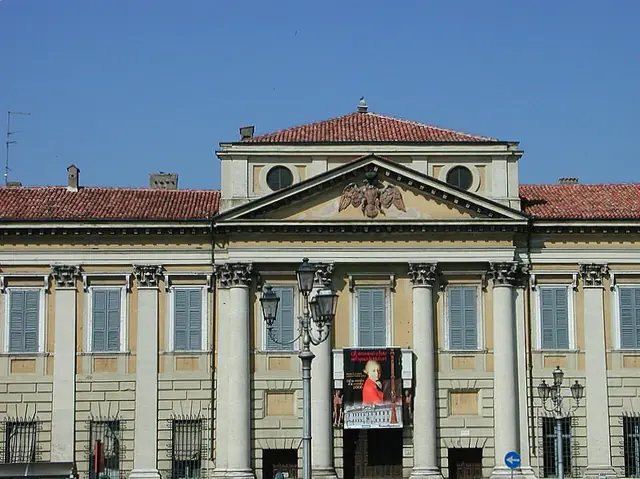
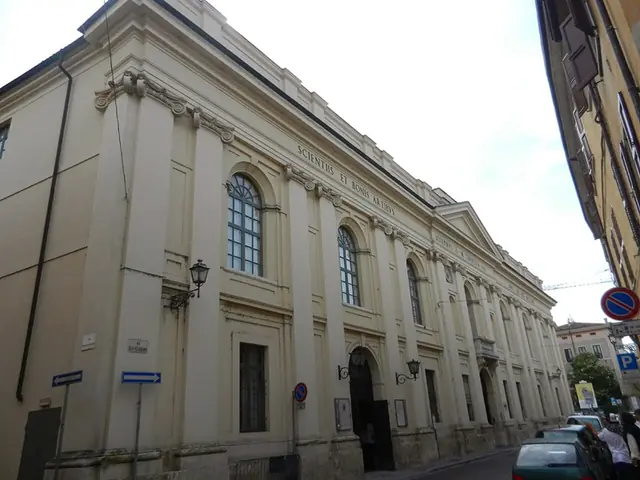
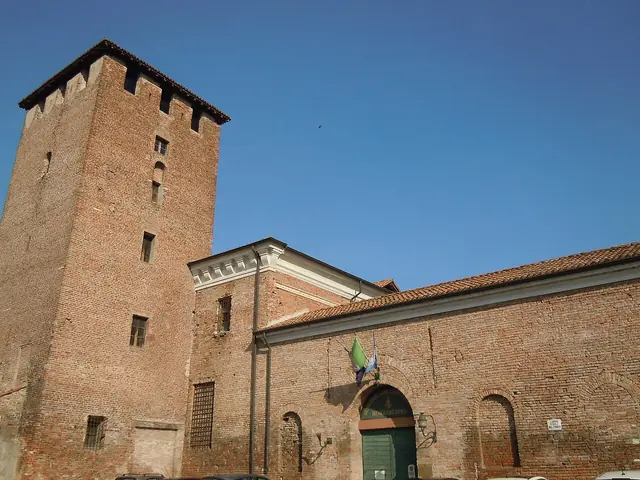
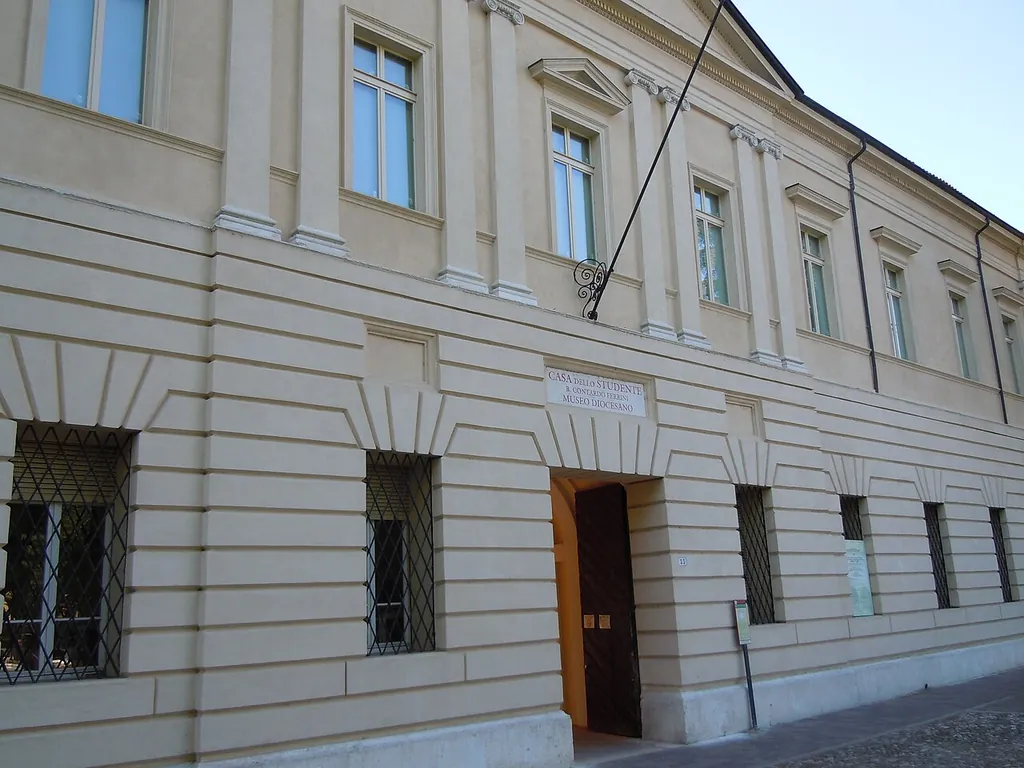
The museum is housed in the former Augustinian monastery of Sant'Agnese, a short distance from the cathedral and Palazzo Ducale, near Piazza Virgiliana. The monastery was founded in the 14th century by followers of the Blessed Giovanni Bono; after the suppressions of the 18th century the church was demolished and the buildings were put to civil use, until they were recovered by the diocese in the mid-20th century. The neoclassical façade onto Piazza Virgiliana is the work of Paolo Pozzo (1795).
The idea for the museum came from the success of the exhibition “Tesori d'arte nella terra dei Gonzaga”, staged in 1974 at Palazzo Ducale. The Museo diocesano d'arte sacra was inaugurated in 1983 with works from churches in the diocese, including paintings, sculptures, goldwork, textiles, illuminated books and ivories that were no longer used after the liturgical reform or were at risk in their original locations.
Today the whole building is dedicated to the museum, named after Francesco Gonzaga. The rooms house, among other things, enamels, ivories and coins; the two Gonzaga Rooms with precious goldwork donated by the rulers of Mantua to the Basilica of Santa Barbara and the cathedral; Parisian tapestries, armour and works by the 18th-century painter Giuseppe Bazzani.
Highlights
- Gonzaga Rooms with goldwork and reliquaries
- Roman Missal known as the Missal of Barbara of Brandenburg
- Parisian tapestries of the early 16th century
- Armour Room
- Works by Giuseppe Bazzani
- Tactile routes and a room with tactile reproductions
Permanent exhibitions
- Sale Gonzaga – Two rooms with goldwork, ivories, reliquaries and the Missal of Barbara of Brandenburg, witnesses to the splendor of the Gonzaga court.
- Arazzi di Parigi – Early 16th-century French tapestries held by the museum.
- Armature – Section devoted to armour, with the Armour Room fitted with a mezzanine.
- Founded
- 1983
- Operated by
- Diocesi di Mantova
- Visitors per year
- approx. 10,000
Admission & discounts
| Adults | €10 |
|---|---|
| Reduced | €6Over 65s, young people aged 14 to 18, university students with a student card, groups of at least 15 people, companions of people with disabilities, journalists, and members of the Touring Club and FAI |
| Children & teens | €6free up to age 13 · Free admission for primary and middle school pupils (aged 0–13); a €6 reduction for ages 14 to 18. |
| Seniors | €6Reduced rate for visitors over 65. |
| Visitors with disabilities | freeFree admission for people with disabilities; companion with a reduced ticket. |
| Students & apprentices | €6University students with a student card. |
| Groups (15+ people) | €6 per personReduced ticket for groups of more than 15 people. |
Free admission also for priests and religious, Mirabilia members, tour guides, military personnel, ICOM Card holders and diocesan employees. The Musei Lombardia e Piemonte pass, the Mantova e Sabbioneta Card, the Garda Ticket, and the combined ticket or supplement for the Cupola di Sant'Andrea are accepted.
Accessibility
- Partially wheelchair accessible
- Elevator
- Accessible restroom
- Accessible parking
- Service dogs welcome: no information
- Tactile models & exhibits
- Sign language tours: no information
- Easy-to-read materials: no information
- Audio description: no information
The main entrance has a large staircase; the second entrance has a lift and opens on request (buzzer or phone 0376 320602). The route is on a single level with small changes in level bridged by ramps; the mezzanine of the Armour Room can only be reached by stairs. Some display cases may make viewing difficult for wheelchair users and children. There is an accessible toilet on the first floor. Tactile maps, tactile routes for blind and partially sighted visitors and a room with tactile reproductions of works are available, with audio guides and guides in Braille. Reserved parking spaces in nearby car parks.
Kids & families
The museum hasn’t published any information on this.
Getting there & parking
By public transit
The museum can be reached from the railway station by APAM lines 4C, 4S, 4T, 6 and 12; all APAM buses have wheelchair lifts and voice announcements of stops on urban services.
By car
Parking available
There are several car parks nearby: two with a space reserved for holders of disabled parking badges (cobblestone surface) and one with two reserved spaces (asphalt).
- Accessible parking
The route from the second car park to the museum has numerous architectural barriers.
Get directionsAmenities & dining
The museum hasn’t published any information on this.
Events & venue rental
The museum hasn’t published any information on this.
Plan your visit
| Guided tours | yes |
|---|---|
| Audio guide | yes |
| Good to know | Guided tours by reservation. The tactile reproductions are accompanied by audio guides and guides in Braille. |