Museo dei Minerali Elbani «Alfeo Ricci»
Museum in Capoliveri with the mineral collection of the island of Elba gathered by Alfeo Ricci, especially from the eastern mining area.
Have only individual sections read aloud
About the museum
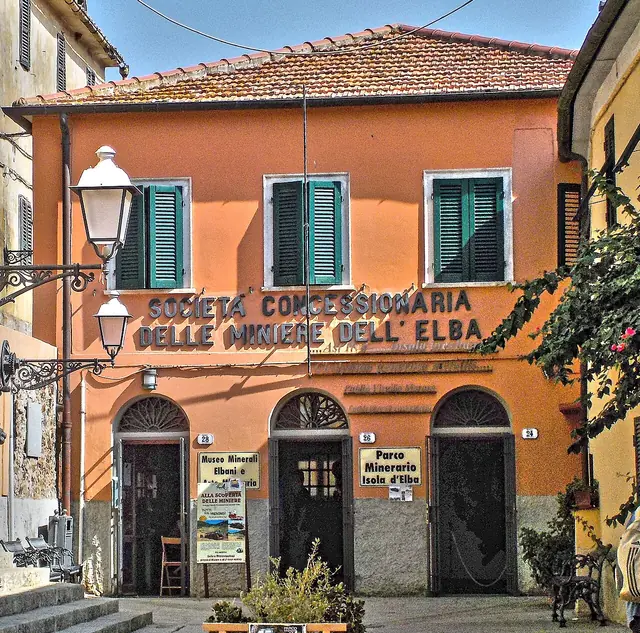
The museum holds the collection of minerals from the island of Elba that Alfeo Ricci, a self-taught collector and scholar, began to build in the 1930s of the 20th century. The heirs, in particular Gianfranco Ricci, have continued to curate and expand the collection and, together with the Municipality of Capoliveri, established the museum in 2002 in Via Palestro.
The collection is considered a complete sampling of Elban minerals and favours the eastern part of the island, where the iron mines are located. It includes very beautiful and rare specimens, some of scientific interest. Among the pieces noted are prasiolite (green quartz), first discovered on Elba by Alfeo Ricci, the rare polarised magnetite from the Calamita mine, and rosette calcite with epidote from the Ginevro mine.
The route also provides information on the geology of the island and on mining activity.
Highlights
- Collection of minerals from the island of Elba
- Prasiolite (green quartz) discovered by Alfeo Ricci
- Polarised magnetite from the Calamita mine
- Rosette calcite with epidote from the Ginevro mine
Permanent exhibition
- Collezione dei minerali elbani «Alfeo Ricci» – Minerals from the island of Elba, especially from the eastern part of the iron mines, with information on geology and mining activity.
- Founded
- 2002
- Operated by
- Famiglia Ricci e Comune di Capoliveri
Admission & discounts
| Adults | €2 |
|---|---|
| Reduced | €1 |
Prices according to the Musei online register (record of August 2023).
Accessibility
The museum hasn’t published any information on this.
Kids & families
The museum hasn’t published any information on this.
Getting there & parking
The museum hasn’t published any information on this.
Amenities & dining
The museum hasn’t published any information on this.
Events & venue rental
The museum hasn’t published any information on this.