Peltuinum
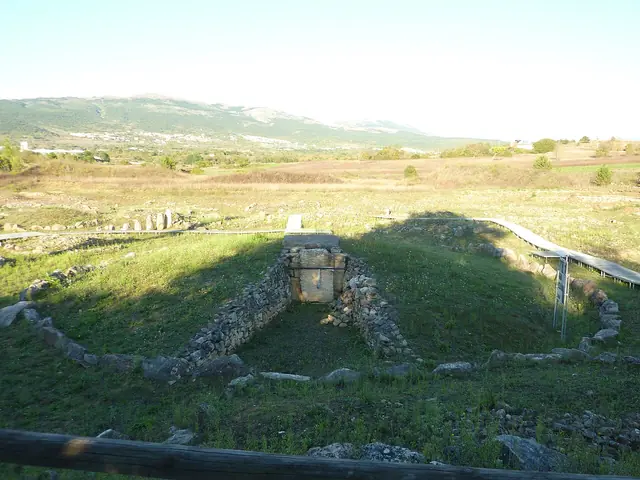
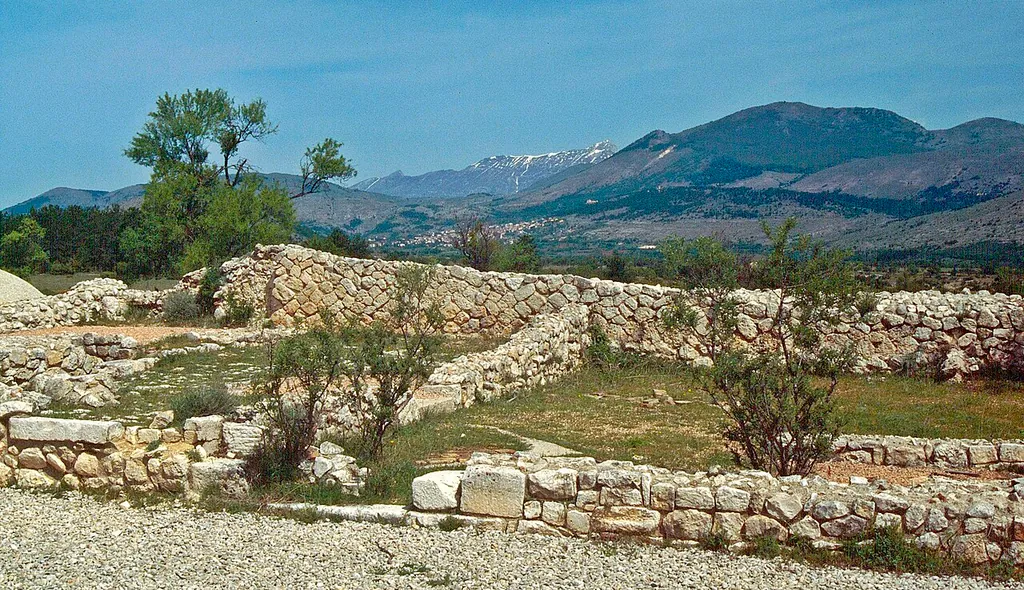
Open-air archaeological area of the Roman city of Peltuinum on a plateau along the tratturo (ancient drove road), with walls, a gate, temple, theatre and cisterns.
Have only individual sections read aloud
About the museum
Peltuinum was a Roman town in the ancient territory of the Vestini, set on a plateau about 100 metres above the Navelli Plain, at a point that was already strategic in pre-Roman times for the resting of flocks along the L’Aquila–Foggia tratturo. Under Emperor Claudius (AD 41–54) the Via Claudia Nova, which crossed the town from west to east and linked the great roads from Rome to the Adriatic, such as the Via Salaria and the Via Tiburtina Valeria, was reorganised. A cippus (stone marker) dedicated to the god Silvanus by the shepherds Agilis and Saturninus attests to the importance of transhumance still in the 3rd century AD.
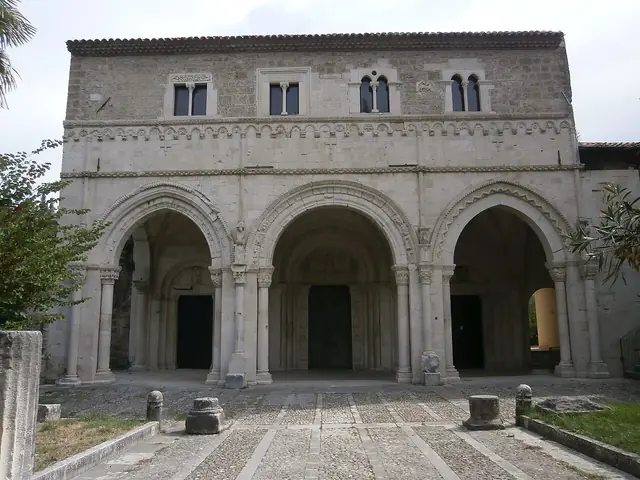
The town was enclosed by a wall encompassing about 25 hectares, with numerous towers especially on the north-west side, the most easily accessible. A stretch of the western walls with the double-arched gate, the temple with a three-sided portico, the theatre, the cisterns and a monumental tomb have survived; the houses, however, were covered over after excavation. In the 5th century a strong earthquake led to the gradual abandonment of the town, followed by the recovery of its materials for the churches and castles of the area. In the Middle Ages small Christian worship complexes arose on the plateau, the church of San Paolo and a small fortress built on the Roman walls of the theatre.
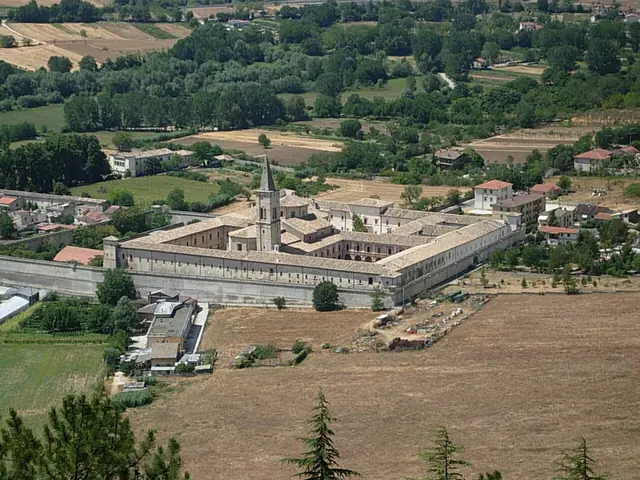
The first modern investigations were carried out between 1983 and 1985 by the University La Sapienza of Rome together with the Archaeological Superintendency of Abruzzo; between 1986 and 1996 the Superintendency completed the consolidation and enhancement of the structures. Since 2001 teaching excavation campaigns and research have been directed by Luisa Migliorati. The site extends across the municipal territories of Prata d’Ansidonia and San Pio delle Camere, divided by the strip of the tratturo.
Highlights
- Stretch of the western walls with double-arched gate and towers
- Temple with three-sided portico and theatre
- Roman cisterns and monumental tomb
- Church of San Paolo and medieval fortress
- L’Aquila–Foggia tratturo crossing the area
Permanent exhibition
- Area archeologica di Peltuinum – Open-air route among the walls with the west gate, forum, temple, theatre, cisterns and the church of San Paolo.
Admission & discounts
The museum hasn’t published any information on this.
Accessibility
The museum hasn’t published any information on this.
Kids & families
The museum hasn’t published any information on this.
Getting there & parking
From Rome (about 143 km), follow the A24 to the L’Aquila Est exit, then the SS17 and Via Principe Umberto in the direction of Prata d’Ansidonia.
Get directionsAmenities & dining
The museum hasn’t published any information on this.
Events & venue rental
The museum hasn’t published any information on this.
Plan your visit
| Guided tours | yes |
|---|---|
| Good to know | The route through the archaeological area comprises eleven points: monumental tomb, west gate, walls, monastic settlement, cisterns, domus, forum, temple, theatre and church of San Paolo. Information on guided tours at +39 348 474 7740 (number given for the evening event). The number +39 0862 931214 is that of the Municipality of Prata d’Ansidonia, a partner of the site. |