Liepāja okupāciju režīmos
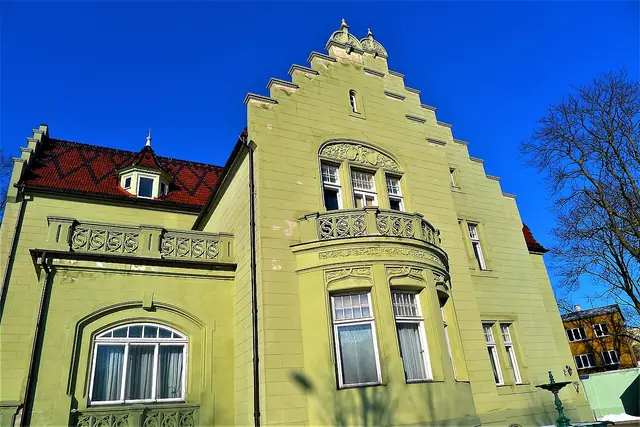
Branch of the Liepāja Museum in a building that was the seat of the Liepāja branch of the Popular Front during the National Awakening, with an exhibition on the occupation periods. Currently closed for renovation.
Have only individual sections read aloud
About the museum
The exhibition “Liepāja okupāciju režīmos” (Liepāja under the Occupation Regimes) opened in 2001. Its aim is to keep historical memory alive and to explain the history of the loss of statehood and the periods of occupation. The exhibition is in the house that during the National Awakening was the seat of the Liepāja branch of the Popular Front of Latvia (Latvijas Tautas frontes Liepājas nodaļa).
The exhibition covers the impact of the Molotov–Ribbentrop Pact of 1939 and the Soviet–Latvian mutual assistance treaty on the socio-political, economic and cultural life of the Liepāja region, the repatriation of Baltic Germans, the events of 1940 and 1941, Liepāja during the Second World War, the renewed Soviet occupation, the deportations of 1941 and 1949, the Gulag and the Third Awakening in 1991.
Key themes
- Exhibition on Liepāja under Nazi and Soviet occupation
- Stories about the deportations of 1941 and 1949
- Building that was the seat of the Liepāja branch of the Popular Front during the National Awakening
Permanent exhibition
- Liepāja okupāciju režīmos – Exhibition on the history of the Liepāja region under Soviet and Nazi occupation and the Third Awakening.
- Founded
- 2001
- Operated by
- Liepājas valstspilsētas pašvaldība
Admission & discounts
Admission is free.
| Adults | free |
|---|
Admission to the museum is free.
Accessibility
The museum hasn’t published any information on this.
Kids & families
The museum hasn’t published any information on this.
Getting there & parking
The museum hasn’t published any information on this.
Amenities & dining
The museum hasn’t published any information on this.
Events & venue rental
The museum hasn’t published any information on this.
Plan your visit
| Good to know | Regular thematic exhibitions, lectures and meetings with historians and eyewitnesses of recent Latvian history take place (after reopening). |
|---|