Žaņa Lipkes memoriāls
The memorial museum on Ķīpsala commemorates Žanis Lipke, who during the Second World War hid Jews from the Riga Ghetto in a bunker beneath a woodshed.
Have only individual sections read aloud
About the museum
The Žaņa Lipkes memoriāls (Žanis Lipke Memorial) is located on Ķīpsala, next to the Lipke family home on Mazais Balasta dambis. During the Second World War Žanis Lipke and his family rescued Jews from the Riga Ghetto. He first dug a hiding place beneath a woodshed in January 1942; later it was replaced by a better-equipped shelter in which 8 to 12 people could hide at the same time. The German authorities never found the bunker.
The idea of a memorial arose in 2000, after a memorial plaque was unveiled at the Lipke house; in 2005 an association was founded to raise funds. The memorial design was developed by the architect Zaiga Gaile. The museum opened in 2012.
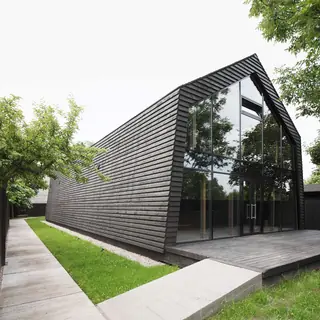
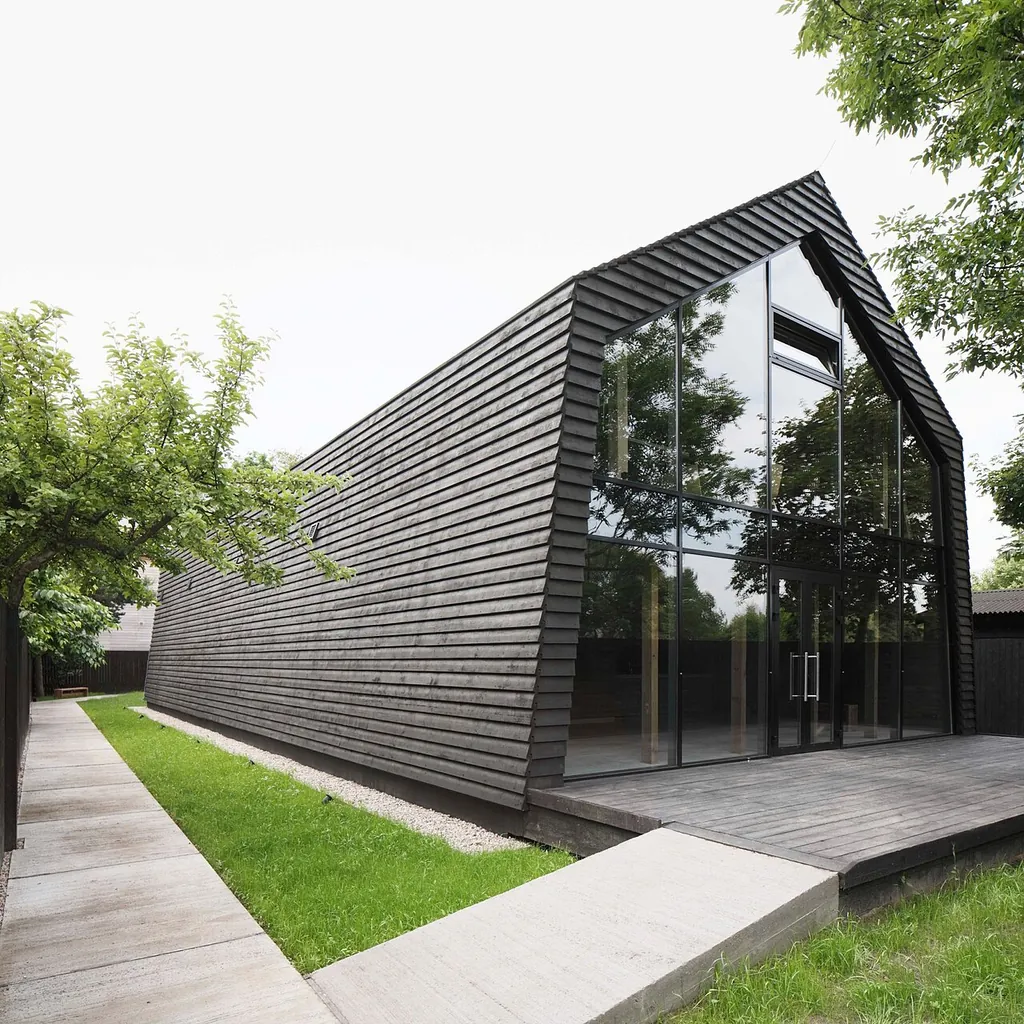
The building resembles a black tarred shed or a boat turned upside down, and its form is borrowed from the boat sheds of the fishermen and sailors of Ķīpsala. Through a dark labyrinth the visitor reaches the main exhibition hall in the attic, from which a hatch allows a view down into the bunker built in the basement, which corresponds to the size of the historical hiding place: 3 × 3 metres. Above the bunker, on the ground floor, is a sukkah – the symbolic temporary shelter of Jews.
The museum offers educational programmes for pupils.
Key themes
- Bunker replica, 3 × 3 metres, in the basement
- Architecture of the black shed (architect Zaiga Gaile)
- Sukkah – a symbolic temporary shelter
- Audio guides in five languages
- Entry by donation
Permanent exhibition
- Žaņa Lipkes memoriāla ekspozīcija – The exhibition in the attic hall and the bunker replica in the basement tell of Žanis Lipke's family and their rescue work during the Second World War.
- Founded
- 2012
- Operated by
- Biedrība „Žaņa Lipkes memoriāls”
Admission & discounts
Admission is free.
| Adults | free |
|---|---|
| Guided tour led by a guide or teacher (per person) | €3Must be booked in advance. |
Entry by donation. Individual visitors do not need to book a tour in advance.
Accessibility
- Wheelchair accessible: no information
- Elevator: no information
- Accessible restroom: no information
- Accessible parking: no information
- Service dogs welcome: no information
- Tactile models & exhibits: no information
- Sign language tours: no information
- Easy-to-read materials: no information
- Audio description: no information
The car park at Mazais Balasta dambis 6 is free of charge for people with mobility impairments, if the visit is arranged in advance.
Kids & families
Only partly suitable for kids
- Family tours & workshops
The museum offers educational programmes for pupils within the Skolas soma (School Bag) programme.
Getting there & parking
By public transit
Ķīpsala
From the centre of Riga: stop “Katedrāle/Esplanāde” – buses 37, 41, 53; from Valdemāra iela – trolleybuses 12, 25; from Old Riga or Central Station – trolleybus 9; get off at the stop “Ķīpsala”. From Pārdaugava – to the stop “Preses nams”: buses 13, 30, 37, 41, 53, 57; trolleybuses 5, 12, 25; minibuses 236, 237, 241.
By car
Free parking
Cars can be parked on Balasta dambis (zone D) or behind the Ķīpsala swimming pool, if spaces are free (free of charge). The car park at Mazais Balasta dambis 6 is intended for school group minibuses and people with mobility impairments.
By car: after the Vanšu bridge turn right into Ķīpsalas iela, take the first right into Āzenes iela down to the Daugava, then turn left onto Balasta dambis until the sign “Žaņa Lipkes memoriāls”. On a bicycle or on foot: after the Vanšu bridge turn right along the Daugava on Balasta dambis.
Get directionsAmenities & dining
- Museum shop
The museum shop is available.
Events & venue rental
The museum hasn’t published any information on this.
Plan your visit
| Guided tours | yes |
|---|---|
| Audio guide | yes (LV, RU, EN, DE, HE) |
| School programs | yes |
| Good to know | Individual visitors can use audio guides in five languages: Latvian, Russian, English, German and Hebrew. Visits with a guide or teacher (€3 per person) must be booked in advance on the museum's website. |