Bergenhus festningsmuseum
Defence history museum at Bergenhus Fortress on the resistance in the Bergen area 1940–1945, women's contribution to the armed forces and the history of the fortress.
Have only individual sections read aloud
About the museum
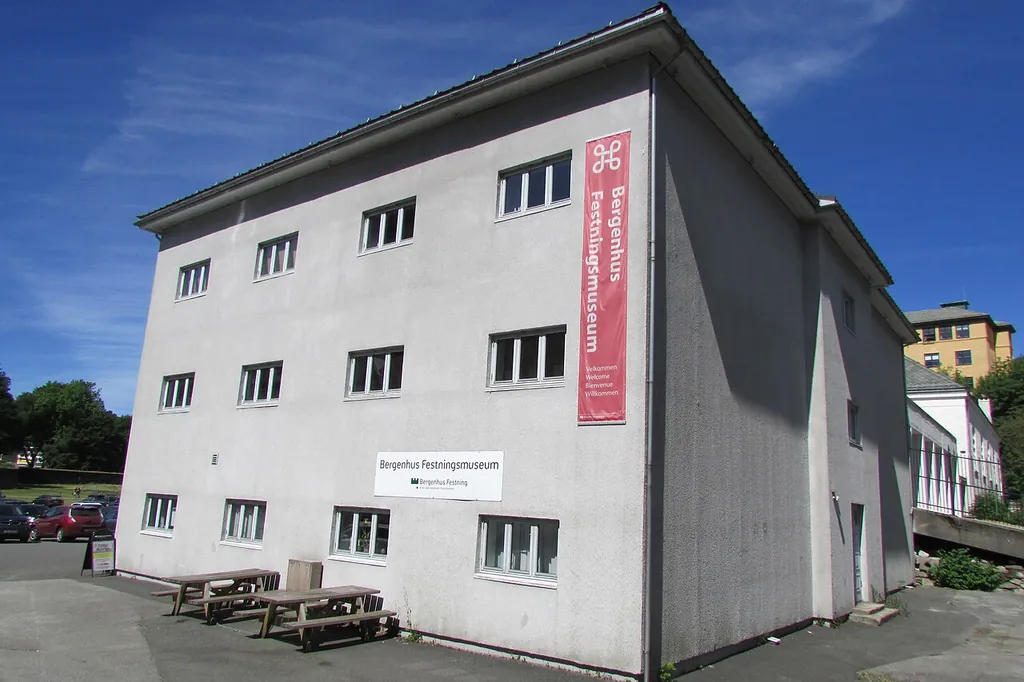
Bergenhus festningsmuseum is located on Koengen by Bergenhus Fortress, in a former depot building. Work on a museum about the resistance movement during the Second World War began shortly after the war, but many attempts failed. In 1996 the fortress commander made the old depot available for museum purposes. Bergens Forsvarsforening (Bergen Defence Association) got the Storting (Norwegian parliament) to allocate funds, and the museum opened on 9 April 2006 with three exhibitions.
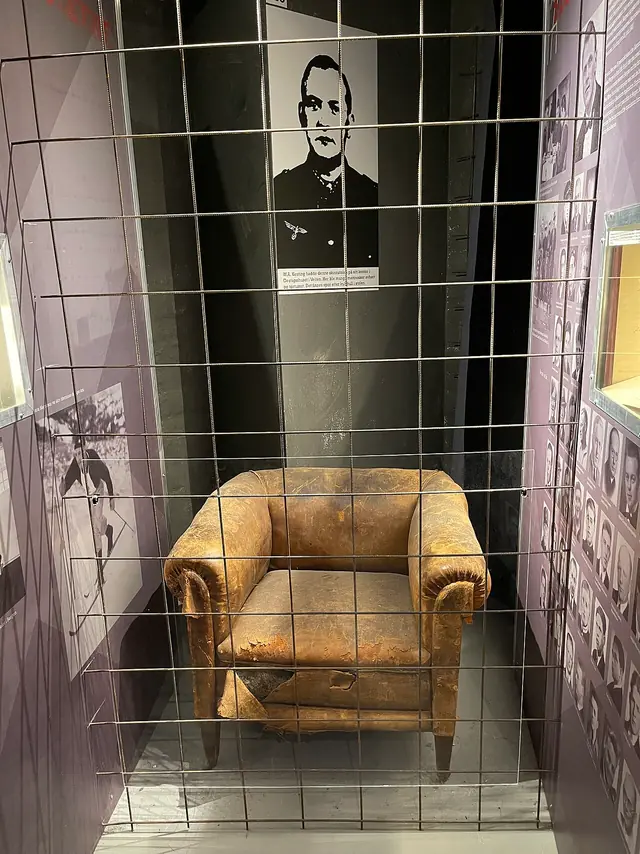
Today the museum has five permanent exhibitions. They deal with the resistance in the Bergen area 1940–1945, the censored and the illegal press during the occupation, the history of Bergenhus Fortress, women's contribution to the armed forces and Norwegian forces in international operations. The exhibitions are based on photographs, weapons, intelligence and sabotage equipment, film clips and interviews, and the texts are in Norwegian, English, French, Spanish and German.
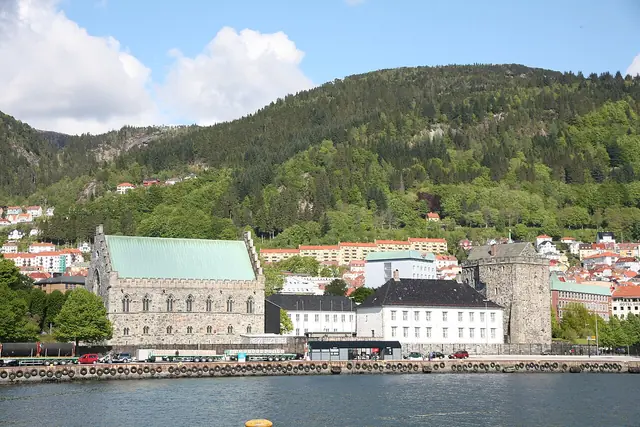
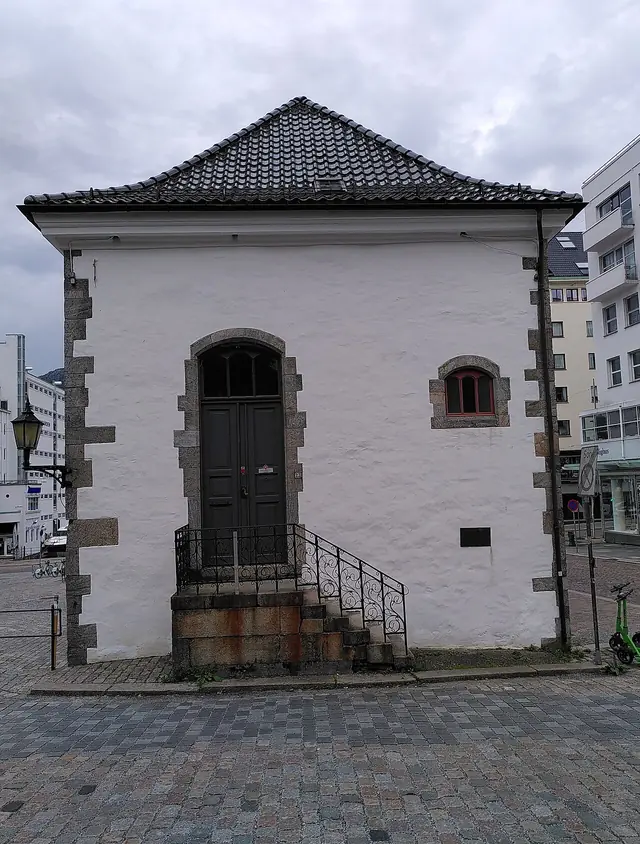
The fortress has roots going back to the 12th century, when the royal manor was located here. Towards the end of the 17th century the defences were greatly expanded, and in 1944 large parts were damaged in an explosion accident before the fortress was rebuilt. The museum is run by Forsvarshistorisk museum (the Museum of Military History).
Highlights
- The resistance in the Bergen area 1940–1945
- The censored and the illegal press 1940–1945
- The history of Bergenhus Fortress, from royal manor to fortress
- Women's contribution to the armed forces
- Exhibition texts in five languages
Permanent exhibitions
- Motstandskampen i Bergensområdet 1940–1945 – On civilian and military resistance during the occupation, with photographs, weapons, intelligence and sabotage equipment, film clips and interviews.
- Den sensurerte pressen og den illegale pressen 1940–1945 – On the newspapers of Bergen during the war and the illegal press.
- Bergenhus festnings historie – The history of the fortress from the royal manor on Holmen to today's complex, including the battle in Bergen harbour in 1665 and the explosion in 1944.
- Founded
- 2006
- Operated by
- Forsvarshistorisk museum
Admission & discounts
| Adults | NOK 130 |
|---|---|
| Reduced | NOK 65Seniors (honnør) and students |
| Children & teens | NOK 65free up to age 5 · Children aged 6–17. Children under 6 enter free. |
| Seniors | NOK 65Seniors (honnør). |
| Visitors with disabilities | –companion free · Companions enter free. |
| Students & apprentices | NOK 65 |
| Families | NOK 325Family ticket for 2 adults and 1–4 children. |
Free admission for children under 6, companions, defence personnel, veterans, members of friends' associations and holders of ICOM cards.
Accessibility
- Wheelchair accessible
- Elevator
- Accessible restroom
- Accessible parking: no information
- Service dogs welcome: no information
- Tactile models & exhibits: no information
- Sign language tours: no information
- Easy-to-read materials: no information
- Audio description: no information
The museum is accessible for people with reduced mobility, with a wheelchair ramp, lift and accessible toilet (handikaptoalett).
Kids & families
The museum hasn’t published any information on this.
Getting there & parking
By car
Parking available
Parking in Sandbrogaten.
The museum is in building 21 at Bergenhus Fortress on Koengen, centrally in Bergen. By car you come from the north or south on County Road 585. The entrance is behind Thon Hotell Bergen Brygge.
Get directionsAmenities & dining
The museum hasn’t published any information on this.
Events & venue rental
The museum hasn’t published any information on this.
Plan your visit
| Guided tours | yes |
|---|---|
| School programs | yes |
| Good to know | Guided tours and school visits can be booked. All information and all exhibition texts are in Norwegian, English, French, Spanish and German. |