Elvarheim Museum
Local nature and hunting museum in the centre of Åmli with stuffed predators, bear hunting, costume traditions and a separate beaver exhibition.
Have only individual sections read aloud
About the museum
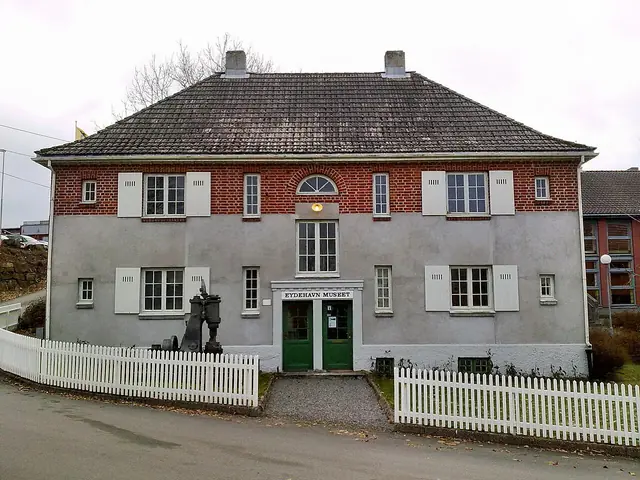
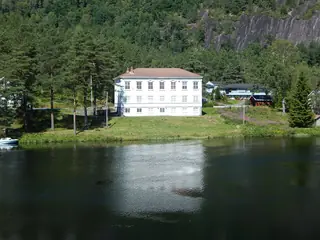
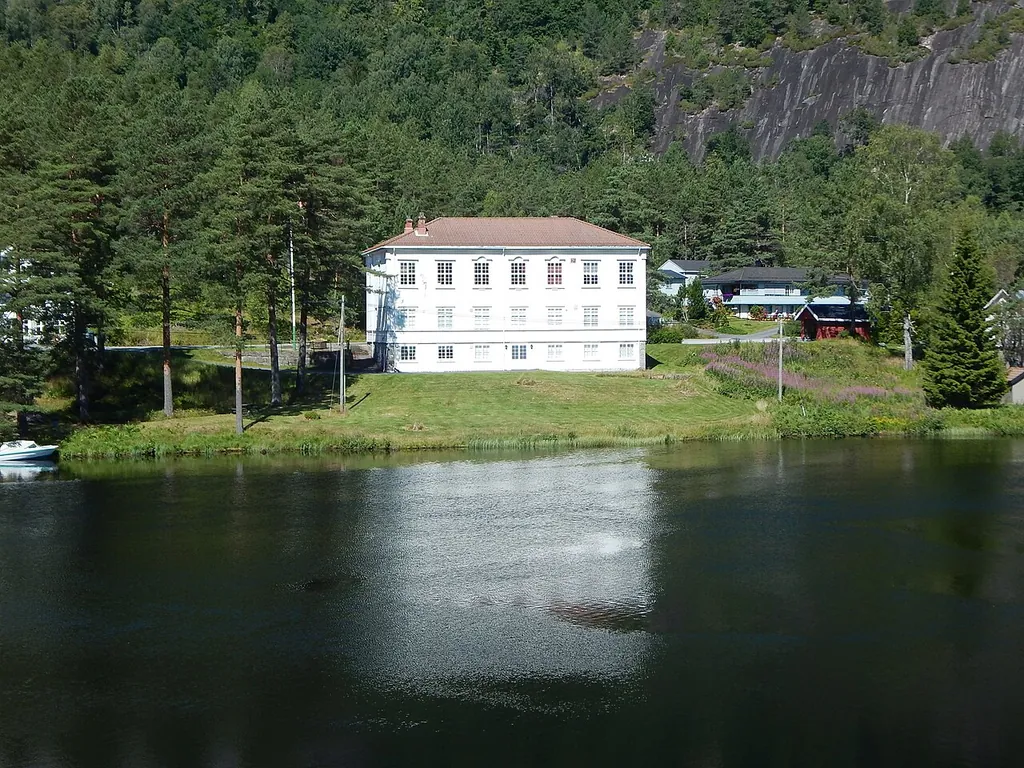
Elvarheim museum is housed in the old community hall from 1925 by the Nidelva river in the centre of Åmli. The museum opened in 1991 and is owned by Åmli municipality, while Aust-Agder museum and archive holds the professional responsibility in cooperation with a local museum manager and a museum board.
The core of the collection is the hunter Aslak Harstveit's collection of stuffed animals, hunting equipment and over 200 knives. The exhibitions show wild animals of the local fauna, including wolf, wolverine and lynx, and one room is dedicated to the bear hunter Olav Tverrstøyl, who helped to shoot nearly 100 bears in Agder and Telemark in the second half of the 19th century.
Åmli is called the beaver municipality. At the end of the 19th century the beaver population in the country had fallen to fewer than 100 animals, around Åmli, and today a large part of Europe's beavers come from here. This is the theme of the exhibition in the basement. The museum also shows birds with bird calls, berry picking as a source of income, the fiddle maker Sveinung Gjøvlands's workshop and the costume tradition in Åmli. Tourist information for Åmli is available at the museum in season.
Highlights
- Stuffed predators: bear, wolf, wolverine and lynx
- The beaver exhibition “Det vesle folket” (The Little Folk) in the basement
- The hunter Aslak Harstveit's collection with over 200 knives
- Bird room with bird calls and a room for nocturnal animals
- The exhibition “Mangfald og mote” (Diversity and Fashion) on costume customs in Åmli
- Tourist information for Åmli at the museum
Permanent exhibitions
- Fangstmannen Aslak Harstveit – The collection of stuffed animals, hunting equipment and over 200 knives, with the predators wolf, wolverine and lynx, a room for nocturnal animals and a bird room with bird calls.
- Det vesle folket – Exhibition in the basement on the beaver's life above and below water, and on why Åmli became the starting point for the spread of the beaver.
- Mangfald og mote – Exhibition on costume customs in Åmli from the 18th to the 20th centuries, from the oldest surviving folk costumes to bunad and dress fashion.
- Founded
- 1991
- Operated by
- Åmli kommune (faglig ansvar: Aust-Agder museum og arkiv)
Admission & discounts
| Adults | NOK 50 |
|---|---|
| Children & teens | freefree up to age 15 · Children up to 15 years enter free. |
| Groups | –A guided tour for groups costs NOK 200 in addition to the admission ticket during opening hours, and NOK 500 outside opening hours. |
| Group guided tour during opening hours (in addition to admission) | NOK 200 |
| Group guided tour outside opening hours (in addition to admission) | NOK 500 |
The museum does not accept cash, only Vipps and card.
Accessibility
The museum hasn’t published any information on this.
Kids & families
Great for kids & families
| Kids’ admission | free up to age 15 |
|---|
- Family tours & workshops
- Activity booklet, scavenger hunt or kids’ audio guide
- Hands-on stations
The beaver exhibition in the basement is especially suited to children, with a display case you can crawl into, animals you can pet and a beaver lodge you can smell. The bird calls and the wild animals are popular with children of all ages. Educational programmes for schools and kindergartens can be downloaded.
Getting there & parking
The museum is in the old community hall by the Nidelva river in the centre of Åmli.
Get directionsAmenities & dining
- Museum shop
Museum shop with local village books, maps and a hiking guide for Åmli. Payment by Vipps and card.
Events & venue rental
The museum hasn’t published any information on this.
Plan your visit
| Guided tours | yes |
|---|---|
| School programs | yes |
| Good to know | Tourist information for Åmli with brochures, hiking maps and a hiking guide follows the museum's opening hours. The fiddle makers' workshop on the first floor (2. etasje) is opened on request. Schools and kindergartens can visit the museum both during and outside opening hours, and educational programmes are available. |