Muzeum Zabawek i Zabawy w Kielcach
Museum in the former market halls, with historic and modern toys, an exhibition on the People’s Republic of Poland, models and characters from animated films.
Have only individual sections read aloud
About the museum
The museum was established on 1 December 1979 as the Museum of Toymaking at the National Union of Toymaking Cooperatives in Kielce (Krajowy Związek Spółdzielni Zabawkarskich), which brought together most Polish toy manufacturers. Initially it occupied a single room in the building of the National Museum, and in 1982 it received a seat in a historic granary at ul. Zamkowa, which was closed in 1985 because of its poor condition. In the following years the institution showed its collections in guest exhibitions and in small rooms at ul. Kościuszki.
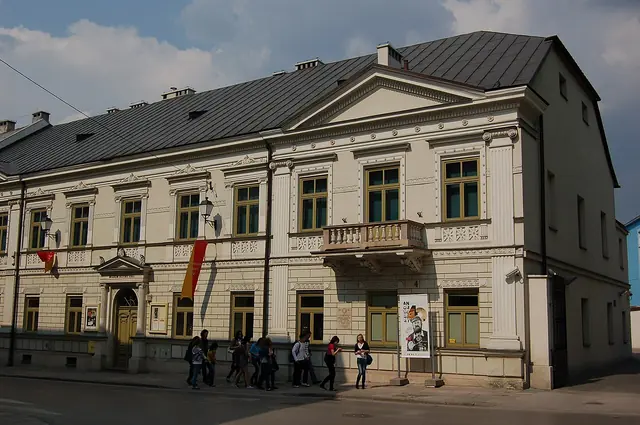
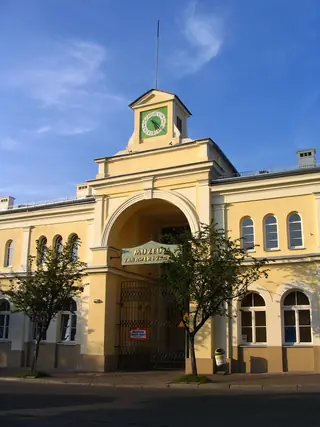
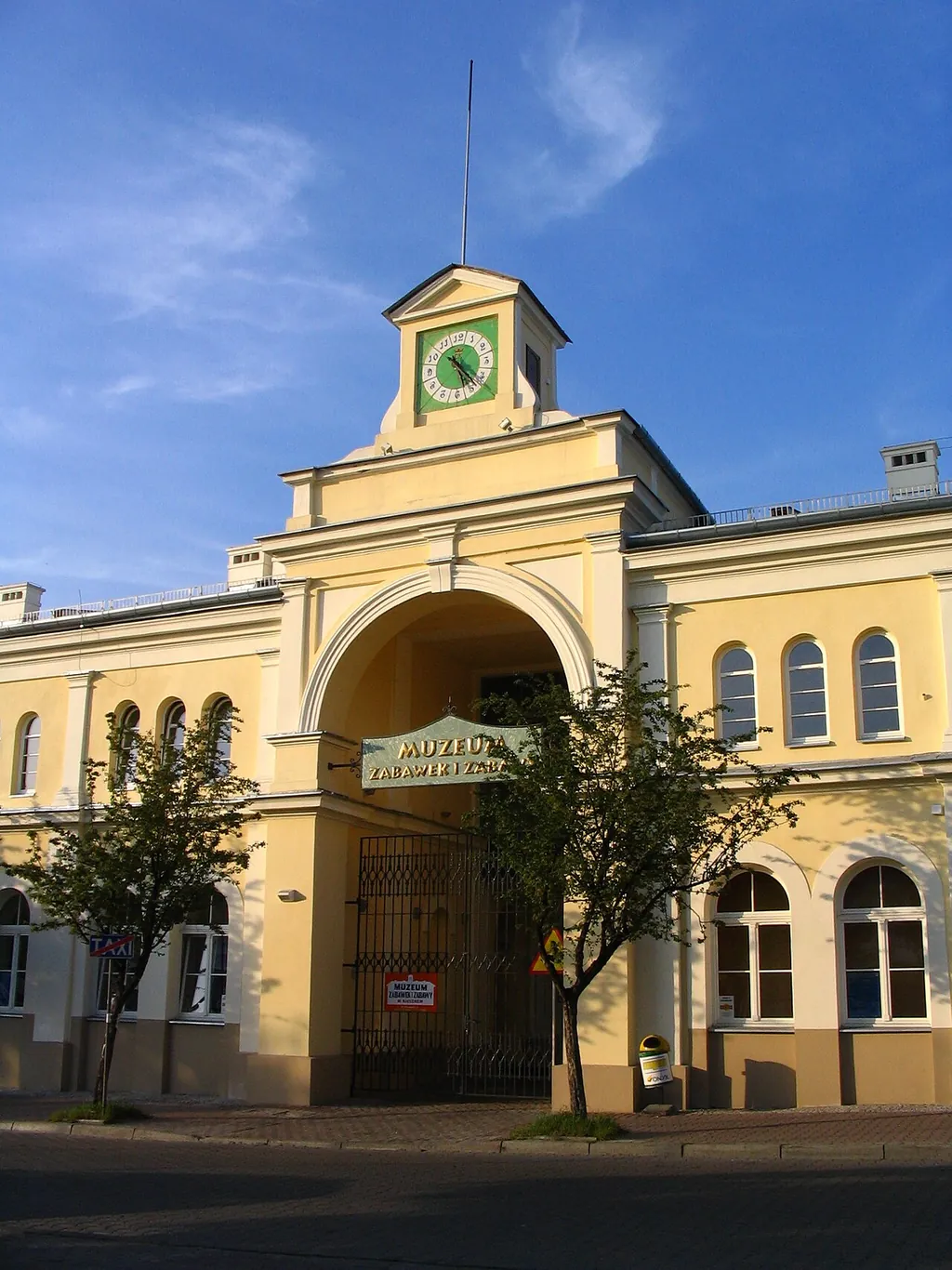
In 2004 the city handed the museum a historic nineteenth-century building, the former market halls at plac Wolności. After a general renovation completed in 2005, the City Council renamed the institution the Muzeum Zabawek i Zabawy (Museum of Toys and Play), and the new seat was opened on 1 June 2006. On that day, for the first time, the Świętokrzyska Witch on a broomstick appeared on the clock tower of the building.
The collections include historic toys up to 1945, toys from the People’s Republic of Poland, models and memorabilia connected with Polish animation. The permanent exhibitions show, among other things, porcelain and wax dolls, teddy bears and toys imitating adult life (“Miasto zabawek”, The Town of Toys), toys from the PRL era and childhood memories (“Zatkało kakao?”, Cocoa Took Your Breath Away?), around 140 models (“Świat modeli”, The World of Models), dolls from the films of the Se-Ma-For Studio and toys from fairy tales (“Bohaterowie filmów animowanych”, Animated Film Heroes), and folk toys (“Zabawajki”). The museum also runs classes at the Apteka Wyobraźni (Pharmacy of Imagination) at ul. Mickiewicza 1.
Highlights
- “Miasto zabawek” (The Town of Toys) – the oldest dolls and toys from the 18th to the early 20th century
- “Zatkało kakao?” (Cocoa Took Your Breath Away?) – childhood and toys in the PRL era
- “Bohaterowie filmów animowanych” (Animated Film Heroes) – dolls from the Se-Ma-For Studio
- “Świat modeli” (The World of Models) – around 140 models and the masterful work of a modeller
- “Zabawajki” (Folk Toys) – folk toys from four toy-making centres
- Apteka Wyobraźni (Pharmacy of Imagination) – creative classes at ul. Mickiewicza 1
Permanent exhibitions
- Miasto zabawek – The oldest and most valuable toys from the museum’s collections, arranged as a street lined with tenement houses: dolls, teddy bears, toys imitating adult life and vehicle models.
- Zatkało kakao? – Exhibition on childhood and the toy industry in the PRL era: around 400 toys, books, magazines and photographs.
- Bohaterowie filmów animowanych – Dolls and archival materials from Polish and foreign animated films, and toys created in the wave of popularity of cartoons.
- Founded
- 1979
- Director
- dr Ilona Daria Dyktyńska
Admission & discounts
| Adults | 25 zł |
|---|---|
| Reduced | 15 złpupils, students and doctoral students, pensioners and people receiving disability pensions, people with disabilities together with carers, teachers and educators, and those awarded honorary badges for culture and the protection of monuments |
| Children & teens | freefree up to age 3 · Children under 4 enter free of charge. |
| Seniors | 15 złReduced ticket for pensioners and people receiving disability pensions. |
| Visitors with disabilities | 15 złReduced ticket for people with disabilities and their carers. |
| Students & apprentices | 15 złReduced ticket for pupils, students and doctoral students. |
Free admission: On Saturdays visits are free of charge until 13:00.
The amounts given are the ticket prices for visiting the museum in May 2026 (ranging from PLN 15 to PLN 25). Free admission also applies, among others, to holders of the Karta Polaka (Polish Card), Świętokrzyskie guides, veterans, museum employees and members of ICOM and ICOMOS. Payment at the ticket office is in cash or by card; tickets can also be bought online.
Accessibility
- Wheelchair accessible
- Elevator
- Accessible restroom
- Accessible parking: no information
- Service dogs welcome
- Tactile models & exhibits: not available
- Sign language tours: no information
- Easy-to-read materials: no information
- Audio description: not available
The main entrance is at ground level (doors 100 cm wide, opened manually), and the exhibition is on the ground floor; the upper floor (offices, library, educational room) can be reached by lift (a vertical platform). Apart from the cobbled surface in the first exhibition room, there are no architectural barriers; the ground floor and the upper floor have toilets for people with disabilities with a baby changing table. Guide dogs and assistance dogs may enter the building. The museum has no Braille markings, induction loops or audio description. It is marked as a Blue Zone for people on the autism spectrum.
Kids & families
Great for kids & families
| Kids’ admission | free up to age 3 |
|---|
- Family tours & workshops
- Baby changing facilities
The museum runs museum lessons, family workshops at weekends and classes at the Apteka Wyobraźni; there is a baby changing table in the toilets, and on Saturdays until 13:00 admission is free.
Getting there & parking
The Apteka Wyobraźni (educational classes) is in a building 100 m from the museum, at ul. Mickiewicza 1.
Get directionsAmenities & dining
- Coat check
A free cloakroom operates in the lobby by the ticket office; large bags and backpacks may not be taken into the exhibition.
Events & venue rental
The museum hasn’t published any information on this.
Plan your visit
| Guided tours | yes |
|---|---|
| School programs | yes |
| Photography | Photographing the exhibitions is permitted free of charge, except for some temporary exhibitions where it is prohibited; professional photography requires the management’s permission. |
| Good to know | Group visits by prior booking (tel. +48 690 559 979, +48 41 343 37 06). Meals and drinks may not be consumed, and animals may not be brought into the exhibitions (except guide dogs). |