Convento de Cristo
Monumental complex in Tomar with the Templar castle, the Charola, the Manueline church and the Renaissance convent of the Order of Christ, a World Heritage Site.
Have only individual sections read aloud
About the museum
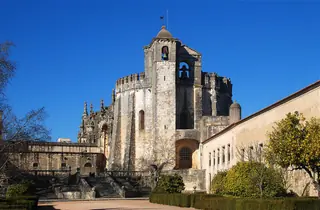
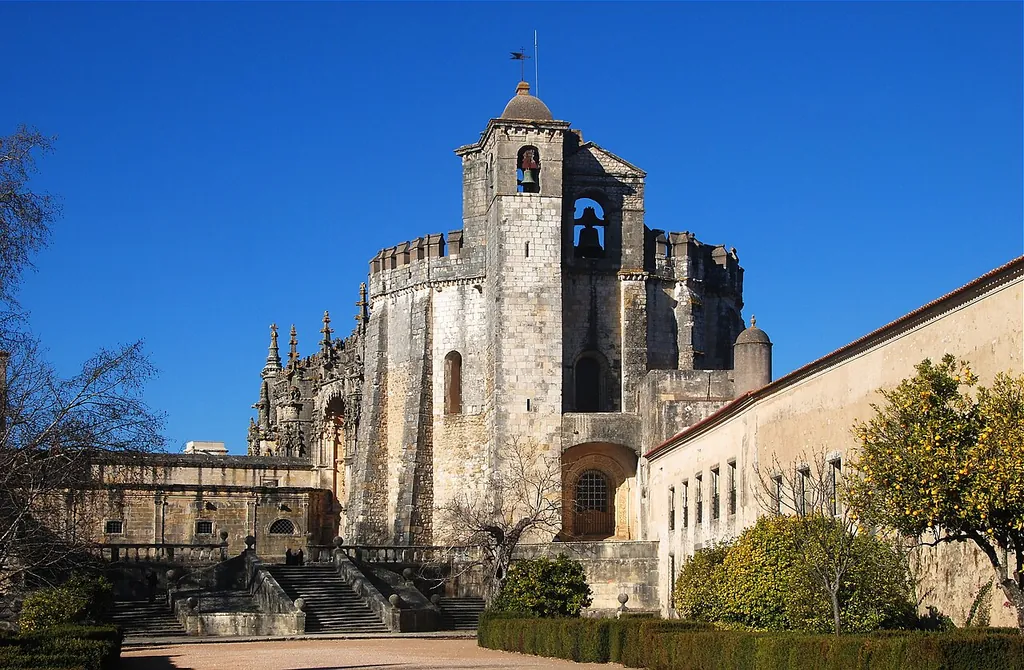
The Convento de Cristo is the name given to the complex formed by the Templar castle of Tomar, the convent of the Order of Christ, the former convent estate (today the Mata dos Sete Montes), the Ermida da Imaculada Conceição and the Aqueduto dos Pegões. Its origins go back to 1160, when the Templars, under the leadership of Gualdim Pais, founded Tomar and built there their Portuguese seat, with the Charola, a rare circular-plan temple inspired by the Basilica of the Holy Sepulchre in Jerusalem.
With the extinction of the Templars in 1312, the castle became the seat of the Order of Christ. During the administration of Infante D. Henrique the Gothic cloisters appeared, and D. Manuel I had the great Manueline nave added, which contains the famous Janela do Capítulo, a symbol of the Age of Discoveries. In the reign of D. João III a new Renaissance convent organised around five cloisters was built to the west, and in the Philippine period the Claustro Principal and the Aqueduto dos Pegões stood out.
The last major works, at the end of the 17th century, gave the north wing the infirmary and the apothecary. After the extinction of the religious orders, parts of the complex were sold, and only in the mid-1980s did the State regain full ownership of the monument. It was classified as a National Monument in 1910 and inscribed on UNESCO's World Heritage List in 1983. It is today managed by Museus e Monumentos de Portugal.
Highlights
- Templar Charola with circular plan, from the 12th century
- Manueline nave with the Janela do Capítulo
- Gothic and Renaissance cloisters, with five cloisters in the convent of D. João III
- Aqueduto dos Pegões and Mata dos Sete Montes
- UNESCO World Heritage Site since 1983
- Operated by
- Museus e Monumentos de Portugal, E.P.E.
Admission & discounts
| Adults | €15 |
|---|---|
| Reduced | €7.50People aged 65 or over, young people aged 13 to 24 and families with at least one adult and one child (50% discount on the standard ticket). |
| Children & teens | freefree up to age 12 · Free admission for children up to and including age 12. |
| Seniors | €7.5050% discount from age 65. |
| Visitors with disabilities | freecompanion free · Free admission for visitors with a disability and one companion. |
| Students & apprentices | –Young people aged 13 to 24 receive a 50% discount; teachers and students on a study visit requested in advance enter free of charge. |
| Families | –50% discount for families with at least one adult and one child. |
Free admission: Residents of Portugal have 52 days of free admission per year to the museums and monuments of Museus e Monumentos de Portugal (“Acesso 52” ticket, with Cartão de Cidadão, at the ticket office).
General tariffs of Museus e Monumentos de Portugal; the monument publishes a standard ticket price of €15.
Accessibility
- Wheelchair accessible: no information
- Elevator: no information
- Accessible restroom: no information
- Accessible parking: no information
- Service dogs welcome: no information
- Tactile models & exhibits: no information
- Sign language tours: no information
- Easy-to-read materials: no information
- Audio description: no information
Detailed information on accessibility is not published on the pages consulted.
Kids & families
| Kids’ admission | free up to age 12 |
|---|
Free admission up to age 12 and a 50% discount for families.
Getting there & parking
The convent overlooks the town of Tomar and is reached via the Estrada do Convento.
Get directionsAmenities & dining
- Museum shop
Monument shop and library.
Events & venue rental
- Spaces for rent
Rental of monument spaces, under the venue hire regulations of Museus e Monumentos de Portugal.
Plan your visit
| School programs | yes |
|---|---|
| Good to know | The monument has an educational service. Some spaces have limited access due to conservation and restoration work. |