Museu Municipal de Faro
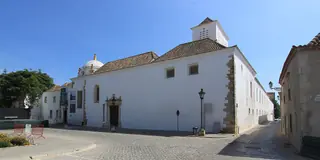
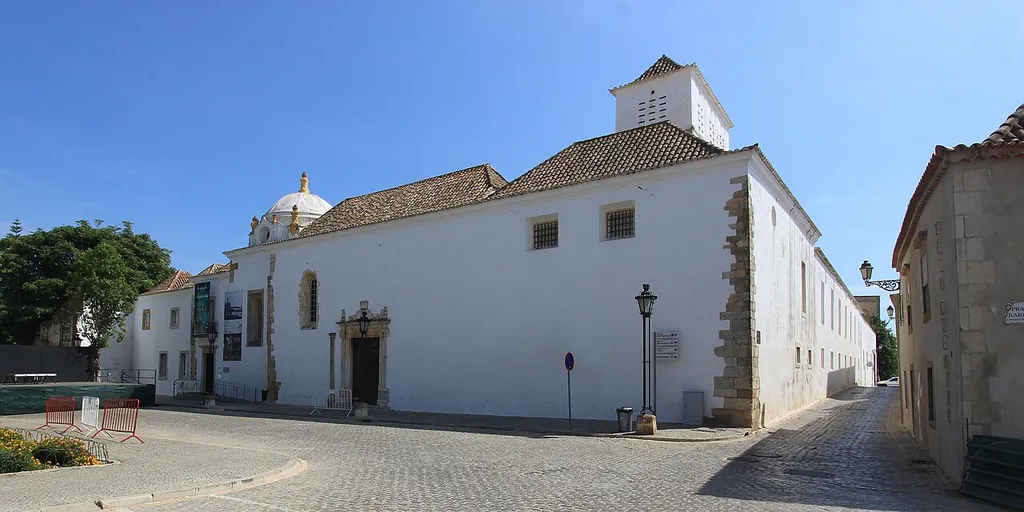
Museum of archaeology and old painting housed in the former Convent of Nossa Senhora da Assunção, in the Cidade Velha of Faro.
Have only individual sections read aloud
About the museum
The Câmara Municipal de Faro approved the creation of the museum on 2 February 1894, under the name Museu Arqueológico e Lapidar Infante D. Henrique, in honour of the 500th anniversary of the birth of Infante D. Henrique (Prince Henry the Navigator). It was the second museum created in the Algarve and opened to the public in October 1897. It then passed through the Paços do Concelho (town hall) and the former convent of Santo António dos Capuchos, before settling in 1973 in the former Convent of Nossa Senhora da Assunção.
The building began to be constructed in 1519, on the site of the former Jewish quarter of Faro, and the cloister was completed in 1548 with financial support from Queen D. Catarina. It housed nuns from important Algarve families until 1836, was sold to private owners in 1860 and served as a cork factory before being acquired by the municipality. It has been classified as a National Monument since 1948 and is an example of 16th-century monastic architecture, with a cloister in a proto-Renaissance style.
The archaeology collection is the most important and covers prehistory, the Roman period and the Middle Ages. A set of paintings from the 16th to the 19th century, mostly religious and coming from Algarve churches, also stands out. Among the best-known pieces are the mosaic of the god Oceanus, from the 2nd–3rd centuries, and the Roman busts of Hadrian and Agrippina the Younger. The museum has been part of the Portuguese Museum Network since 2002.
Highlights
- Mosaic of the god Oceanus, from the 2nd–3rd centuries
- Roman busts of Hadrian and Agrippina the Younger
- Roman inscriptions from the ancient city of Ossonoba
- Islamic house with objects from the city of Santa Maria, 10th–13th centuries
- Collection of old paintings with 63 works from the 16th to 19th centuries
- Renaissance cloister of the 16th century
Permanent exhibitions
- Os Caminhos do Algarve Romano – Inscriptions carved in stone by the Roman inhabitants of Ossonoba, from personal messages to official dedications to the emperors.
- Os Rostos de Oceanus – Display centred on the mosaic of the god Oceanus, from the 2nd–3rd centuries, which shows the commercial vitality of Ossonoba in the 3rd century.
- A Casa Islâmica – Objects from the Islamic city of Santa Maria (Faro), 10th–13th centuries, presented in a reconstructed Islamic house.
- Founded
- 1894
- Operated by
- Câmara Municipal de Faro
Admission & discounts
| Adults | €4 |
|---|---|
| Reduced | €2Teachers, students, pensioners and young people aged 13 to 26 |
| Children & teens | €1Children aged 3 to 12 pay €1; children up to the age of 3 enter free. |
| Seniors | €2Pensioners pay the reduced ticket. |
| Students & apprentices | €2Students and young people aged 13 to 26 pay the reduced ticket. |
| Families | €10Family ticket for 2 adults and 2 children. |
| Combined ticket Municipal Museum and Regional Museum | €5 |
Fees for temporary exhibitions, guided tours and groups are set out in the municipal fee regulation; exemptions are set out in the same regulation.
Accessibility
- Partially wheelchair accessible
- Elevator: no information
- Accessible restroom: no information
- Accessible parking: no information
- Service dogs welcome: no information
- Tactile models & exhibits
- Sign language tours: no information
- Easy-to-read materials: no information
- Audio description: no information
The building is adapted for visitors with reduced mobility on the ground floor. Braille captions, route signage and plans for blind visitors are available at reception.
Kids & families
The museum hasn’t published any information on this.
Getting there & parking
The museum hasn’t published any information on this.
Amenities & dining
The museum hasn’t published any information on this.
Events & venue rental
- Spaces for rent
Events can be held at the museum upon written request, which is reviewed by the technical services.
Plan your visit
| Guided tours | yes |
|---|---|
| School programs | yes |
| Photography | Permitted; flash is prohibited in the painting rooms. |
| Good to know | Guided tours are by prior booking by e-mail. There is a virtual visit on the museum's website. |