Mufomi - Museo de Fósiles y Minerales de Elgoibar
Palaeontology and mineralogy museum in Elgoibar with more than 5,100 pieces, a fluorescence chamber and a room on the evolution of technology.
Have only individual sections read aloud
About the museum
The Mufomi grew out of a passion for caving. In 1983 a group of friends founded the Leizarpe group and, while exploring caves and quarries, began gathering mammal bones, invertebrate fossils and minerals. Their first exhibition was held in 1990 at the cultural house of Mendaro, followed by travelling exhibitions in Mendaro, Mutriku, Deba, Urretxu and Elgoibar that enlarged the collection.
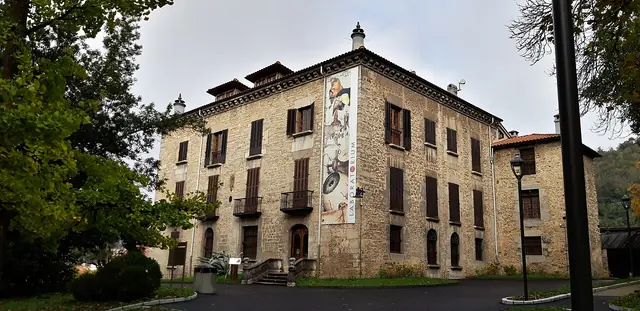
At the end of 1992 they obtained premises in the former nursery classrooms of the Pedro Muguruza school, thanks to the collaboration of the Herri Eskola and Elgoibar Town Council. After the premises were fitted out and the specimens sorted and catalogued, the museum opened on 14 May 1994. A year later it separated from the caving group and has operated regularly ever since; today it is based in the former schools of Artetxe.
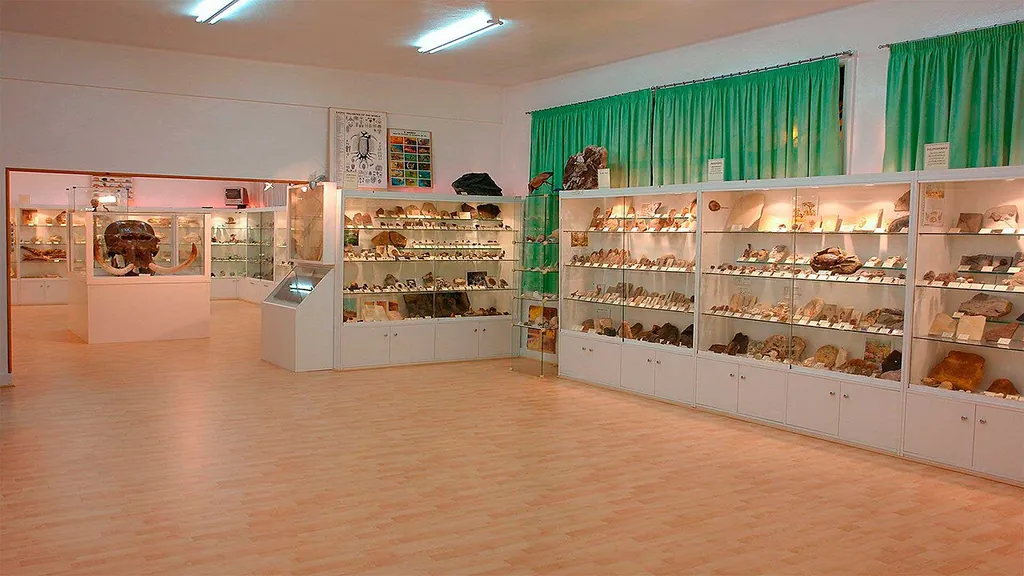
The collection, initially focused on fossils from Euskal Herria, was expanded with pieces from other places, as well as minerals and rocks. It currently displays 5,136 pieces, including around 3,500 fossils and around 1,000 minerals, spread across four main rooms, a fluorescence chamber and a basement fitted out as a cave with speleothems, cave fauna and reproductions of rock paintings. The museum attaches great importance to its educational and outreach work.
Highlights
- More than 5,100 pieces on display: fossils, minerals, shells and archaeological objects
- Fluorescence chamber with ultraviolet light
- Basement fitted out as a cave, with speleothems and reproductions of rock paintings
- Room on the evolution of technology from prehistory to Rome
- Free admission by appointment
Permanent exhibitions
- Sala de vertebrados y minerales – More than 900 pieces: about 400 fossils of fish, mammals, birds and reptiles in eight display cases, and five display cases of minerals arranged by class.
- Sala de invertebrados – Twelve large wall-mounted display cases: ten of invertebrate fossils, one of fossil flora and one of carbonate minerals.
- Cámara de fluorescencias – Small room where fossils and minerals change colour under ultraviolet light; it usually closes the guided tour.
- Founded
- 1994
Admission & discounts
Admission is free.
Free admission by appointment.
Accessibility
The museum hasn’t published any information on this.
Kids & families
Great for kids & families
The museum directs much of its work at children and young people; the fluorescence chamber is one of the rooms most liked by young visitors.
Getting there & parking
The museum hasn’t published any information on this.
Amenities & dining
The museum hasn’t published any information on this.
Events & venue rental
The museum hasn’t published any information on this.
Plan your visit
| Guided tours | yes · approx. 60 min |
|---|---|
| School programs | yes |
| Good to know | Organised groups (schools, ikastolas, universities, training centres, associations) receive a guided visit of about one hour. The museum also offers educational resources and a virtual visit on its website. |