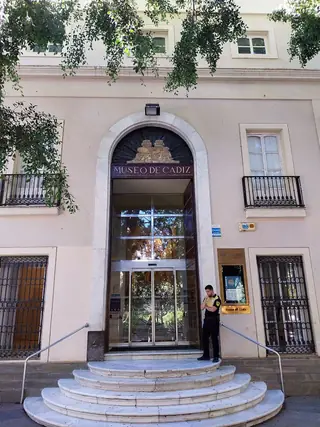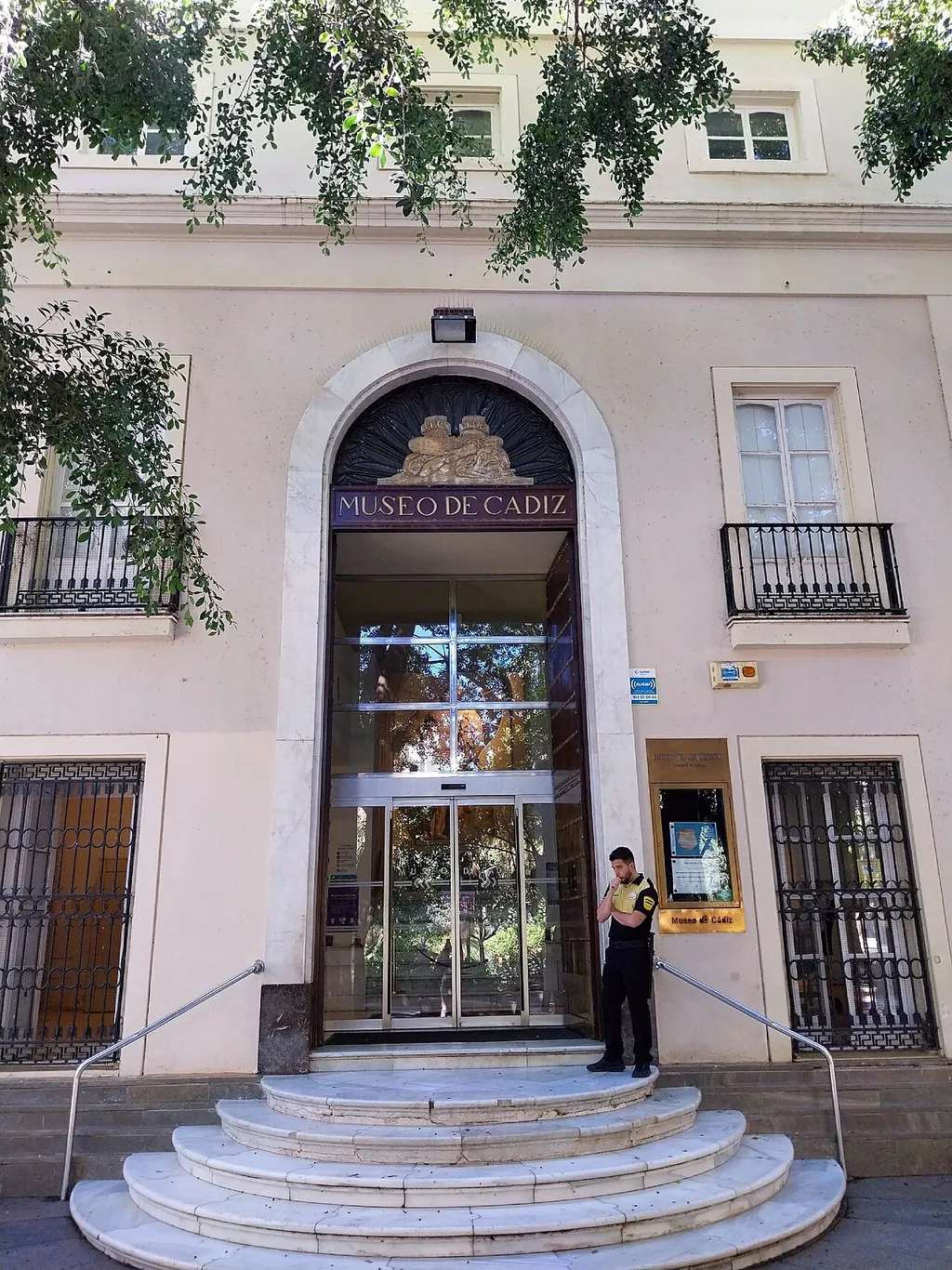
Museo de Cádiz
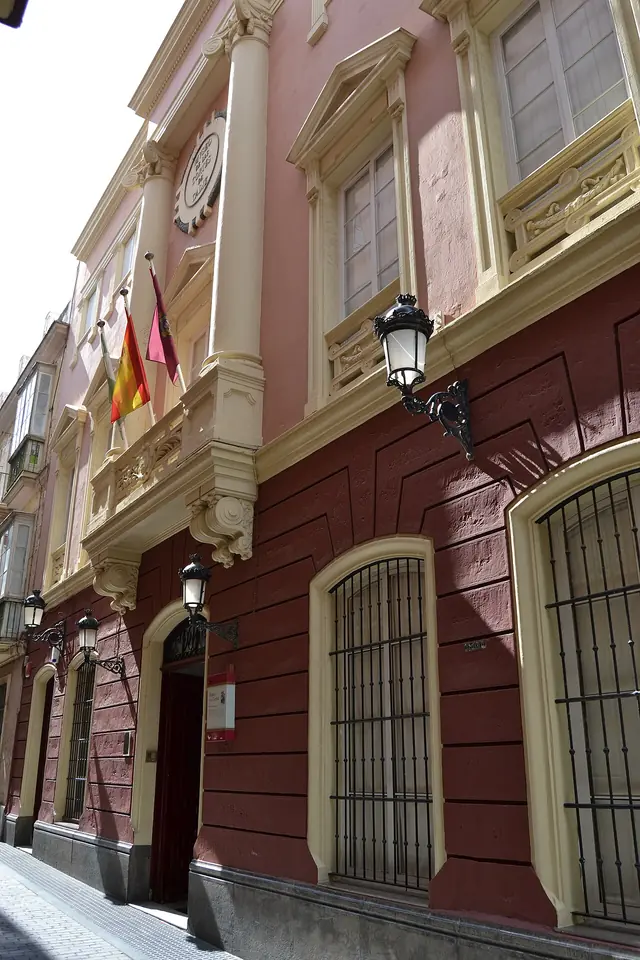
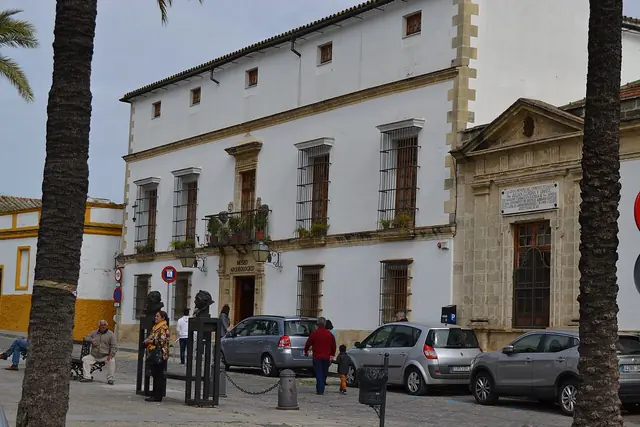
Museum of Cádiz with collections of Phoenician and Roman archaeology, fine arts (Zurbarán, Murillo) and ethnography, on the Plaza de Mina.
Have only individual sections read aloud
About the museum
The museum arose from the Mendizábal disentailment of 1835, when several paintings from suppressed convents were deposited at the Academy of Fine Arts of Cádiz, including Zurbarán's series from the Cartuja de Jerez de la Frontera. Around the Academy a core of works of the Cádiz school of painting gathered during the 19th century. The chance discovery in 1887, on the shipyard grounds, of the male Phoenician anthropoid sarcophagus gave rise to the archaeological collection and justified the creation of an archaeology museum in the city.
After moving through several seats, since 1935 it has occupied the building on the Plaza de Mina, then only on the ground floor and shared with the Academy. The Archaeology and Fine Arts museums operated separately until 1970, when they merged into the present Museo de Cádiz and an Ethnography section was added. From 1980 a thorough refurbishment of the building was undertaken by the architect Javier Feduchi, of which two phases have been carried out.
The Archaeology section covers the prehistory, antiquity and Middle Ages of the province in eight rooms, with particular attention to the Phoenician and Roman periods. The Fine Arts section brings together painting from the 16th to the 20th centuries in eight rooms, with works by Zurbarán, Murillo and Alonso Cano, 19th-century history and genre painting, and contemporary art. The collection of puppets of the Tía Norica also forms part of the holdings.
Highlights
- Male and female Phoenician anthropoid sarcophagi
- Statuette of the Hercules Gaditanus and sculpture of Trajan from Baelo Claudia
- Zurbarán series from the Cartuja de Jerez and “Apoteosis de San Bruno”
- Cádiz painting of the 19th and 20th centuries and contemporary art
- Tía Norica puppet collection
Permanent exhibitions
- Sección de Arqueología – Eight rooms on the prehistory, antiquity and Middle Ages of the province of Cádiz, with unique collections from the Phoenician and Roman periods.
- Sección de Bellas Artes – Eight painting rooms from the 16th to the 20th centuries, with Zurbarán, Murillo and Alonso Cano, 19th-century history and genre painting, and contemporary art.
- Founded
- 1835
- Operated by
- Junta de Andalucía – Consejería de Cultura y Deporte
Admission & discounts
| Adults | €1.50 |
|---|---|
| Groups (10+ people) | –Prior booking is required for groups of more than 10 people; individual visitors and groups of fewer than 10 do not need to book. |
Free admission for citizens and residents of the European Union; €1.50 for other nationalities.
Accessibility
- Wheelchair accessible: no information
- Elevator: no information
- Accessible restroom: no information
- Accessible parking: no information
- Service dogs welcome: no information
- Tactile models & exhibits: no information
- Sign language tours: no information
- Easy-to-read materials: no information
- Audio description: no information
The museum's website does not publish information on the accessibility of the building.
Kids & families
The museum hasn’t published any information on this.
Getting there & parking
By public transit
City buses 1, 2, 3, 5 and 7. Cádiz train station on the Plaza de Sevilla; bus station on Avenida de Astilleros, 302.
By car
Nearest public car park: Plaza de San Antonio. Taxi ranks on the Plaza de San Antonio and the Plaza de las Tortugas.
Amenities & dining
The library is for researchers only.
Events & venue rental
The museum hasn’t published any information on this.
Plan your visit
| Guided tours | yes |
|---|---|
| Good to know | The museum has volunteer guides who are senior citizens. There are visit leaflets in Spanish, English, French, German, Japanese and Arabic. |