Museo Geominero
Museum of Spain's Geological and Mining Institute, with minerals, rocks, fossils and meteorites in a historic building in Chamberí; free admission.
Have only individual sections read aloud
About the museum
The collections of the Museo Geominero date back to 1849, when a decree of Isabel II created the Commission for the Geological Map of Madrid and of the Kingdom, the origin of today's Instituto Geológico y Minero de España. The holdings passed through several Madrid premises, including the palace of the Duke of San Pedro and the convent of La Trinidad, before reaching the present building.
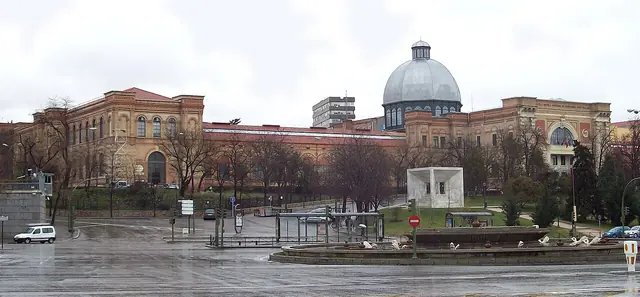
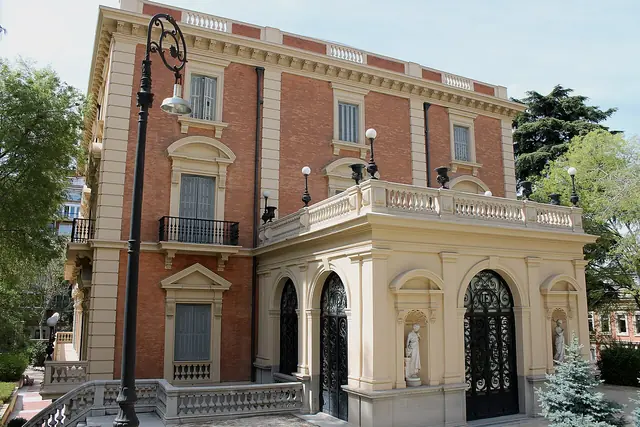
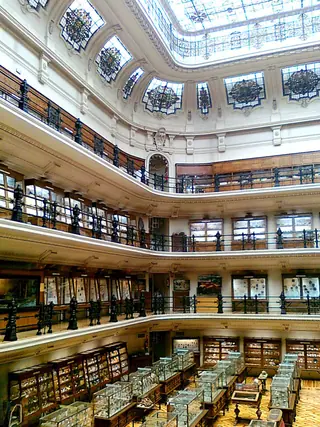
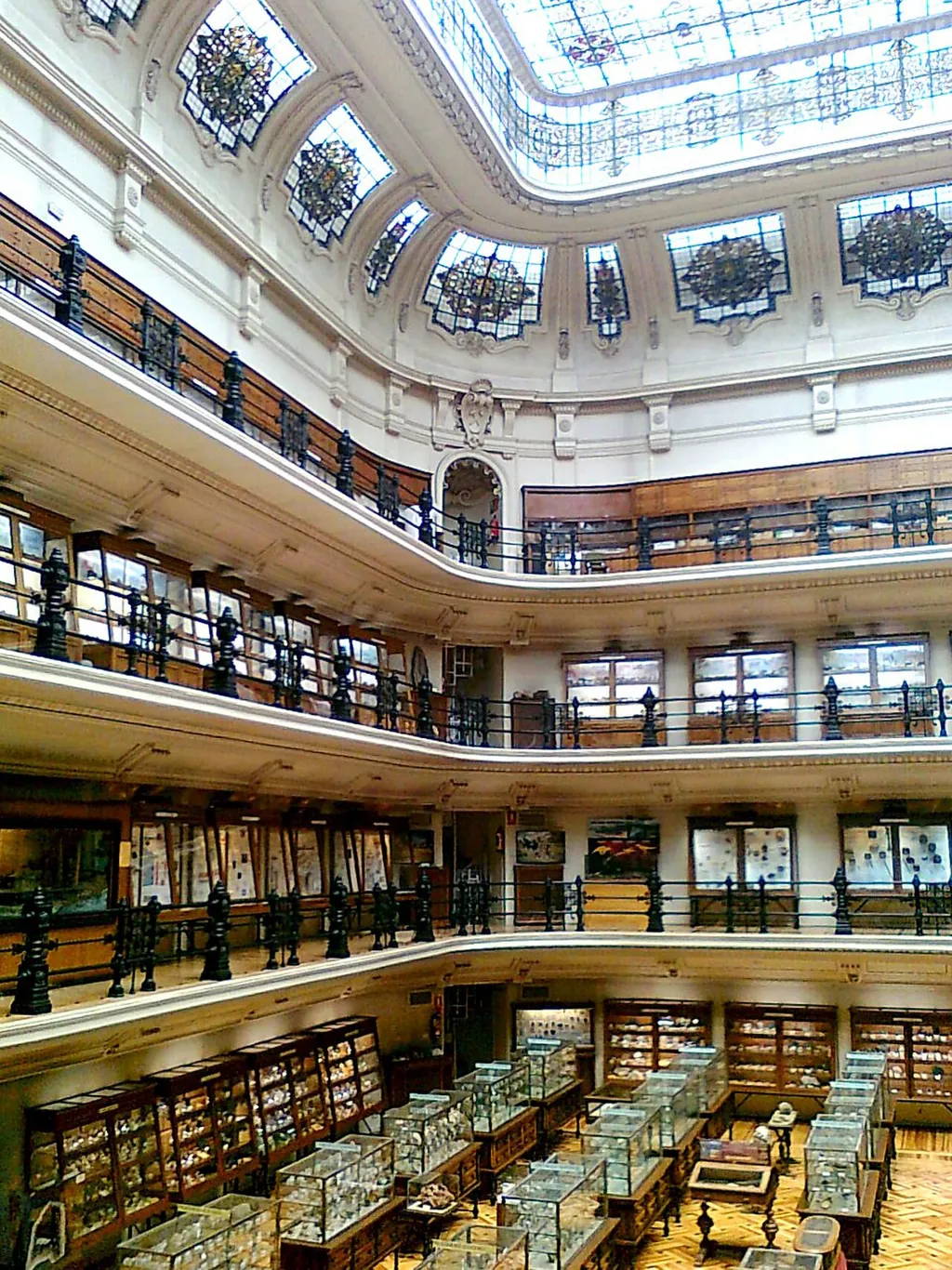
Construction of the headquarters on calle de Ríos Rosas began in 1921 and continued until the mid-1940s. The great hall was inaugurated in 1926, on the occasion of the 14th International Geological Congress, and the collections were installed permanently in 1927. For years it was known as the Museo Nacional de Geología. After a renovation begun in 1980, which included restoring the building, updating the collections and a general inventory, King Juan Carlos I reopened it on 2 March 1989 as the Museo Geominero.
The collection exceeds 108,000 specimens, of which around 19,000 are permanently on display. The route covers several floors with exhibitions on mineralogy, petrology and palaeontology and a gem room, and includes meteorites, historic rocks and fossils from Spain and other countries. The museum also offers guided visits for groups and school workshops.
Highlights
- More than 108,000 specimens, around 19,000 on permanent display
- Rooms on mineralogy, petrology and palaeontology, and a gem room
- Meteorites, impactites and natural glasses
- Fossils from Spain and other countries, from the Precambrian to the present
- Historic 1920s building with a large central hall
- Free admission every day
Permanent exhibitions
- Exposición permanente de mineralogía y petrología – Mineral cases arranged by systematics, by autonomous community and by resource, sedimentary, metamorphic and igneous rocks, meteorites and a gem room.
- Exposición permanente de paleontología – Fossils of invertebrates, vertebrates and plants from Spain and other countries, from the Precambrian to the present, with highlights such as Jurassic cephalopods and Eocene fish.
- Founded
- 1926
- Operated by
- Instituto Geológico y Minero de España (IGME-CSIC)
- Director
- Isabel Rábano Gutiérrez del Arroyo
Admission & discounts
Admission is free.
| Groups | –Guided visits for groups are free. |
|---|
Free admission.
Accessibility
- Partially wheelchair accessible
- Elevator: no information
- Accessible restroom: no information
- Accessible parking: no information
- Service dogs welcome: no information
- Tactile models & exhibits
- Sign language tours: no information
- Easy-to-read materials: no information
- Audio description: no information
Wheelchair users enter by a ramp at the side of the main door; staff at the entrance should be asked for help. The museum states that it continues to improve accessibility. There is an accessible route for visually impaired visitors, with pieces outside cases, labels, a guide and a Braille plan, and personal induction loops; both are requested from the room staff.
Kids & families
- Family tours & workshops
Workshops for primary school pupils (“Aprendiz de paleontólogo” and “Aprendiz de geólogo”) and workshops for identifying fossils, minerals and rocks for children and adults, usually scheduled on some weekends and during school holidays.
Getting there & parking
By public transit
Ríos Rosas
Metro: Gregorio Marañón (lines 7 and 10), Nuevos Ministerios (lines 6, 8 and 10) and Ríos Rosas (line 1). EMT bus: lines 3, 5, 12, 37, 45, 149 and N23. Cercanías: Nuevos Ministerios station. BiciMAD: stations on calle de Santa Engracia, 129 and on plaza de San Juan de la Cruz, 10.
Amenities & dining
The museum hasn’t published any information on this.
Events & venue rental
The museum hasn’t published any information on this.
Plan your visit
| Guided tours | yes · approx. 1.5 hrs |
|---|---|
| School programs | yes |
| Good to know | Guided visits are for groups of 10 to 20 people (or one class) only, are free of charge and take place at 10:00 and 11:30; they are booked by telephone Monday to Friday, 9:00–14:00. Free visits can be made during the museum's opening hours. |