Museu de la Catedral de Barcelona
Museum in the Sala Capitular (chapter house) of Barcelona Cathedral, with Bermejo’s “Pietat” and works by Jaume Huguet, within the cultural and tourist visit.
Have only individual sections read aloud
About the museum
The Gothic cathedral of Barcelona was begun on 1 May 1298, under Bishop Bernat Pelegrí and King Jaume II of Aragon, after a Romanesque cathedral consecrated in 1058; by the mid-15th century the building was practically finished, and the cloister was completed in 1448. The main façade was funded in the late 19th century by Manuel Girona i Agrafel, to a design by Josep Oriol Mestres, and the crossing dome (cimborrio) was completed in 1913.
The museum occupies the Sala Capitular, a former chapter house located in the same cloister gallery as the chapel of Santa Llúcia, where the refectory for the poor was originally located. It is visited with the admission to the cathedral's cultural and tourist visit, which covers several visitable spaces.
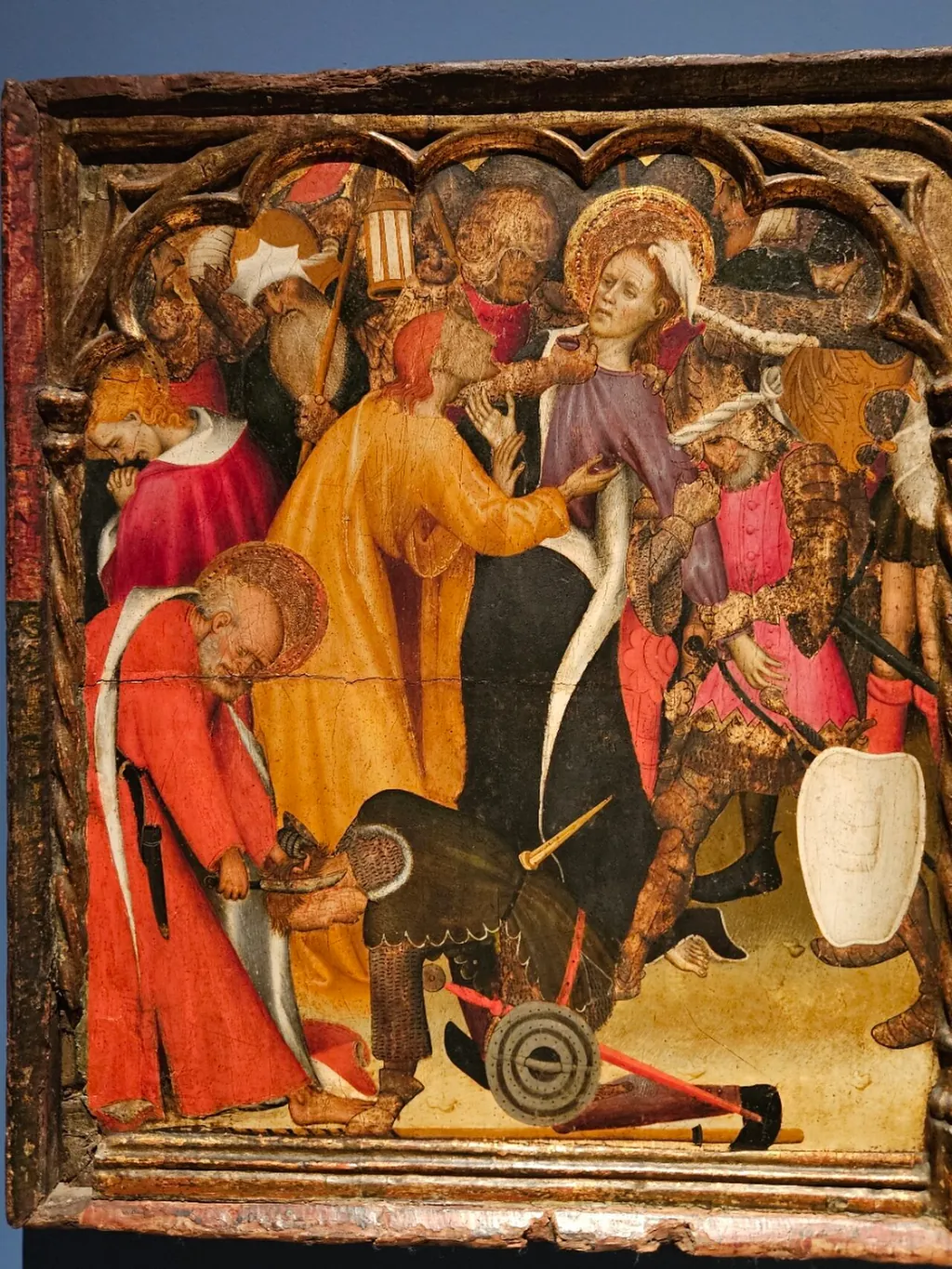
Among the works on display are a trilobed baptismal font from the 11th century, from the Romanesque cathedral; a terracotta statue of Saint Eulalia by Giuliano di Nofri, from the tympanum of the Santa Eulàlia door; the altarpiece of Saint Bernardino and the guardian angel by Jaume Huguet (1465–1470); the “Pietat” by Bartolomé Bermejo of 1490, known as the Pietat del canónigo Desplà; and a monstrance from the late 14th century made from the campaign throne of King Martín el Humano.
The full visit also includes the church and cloister, the roof terraces, the choir with the stalls of the Order of the Golden Fleece, the cathedral's Jewish memorial and the chapel of the Holy Christ of Lepanto.
Highlights
- “Pietat” by Bartolomé Bermejo (1490), known as the Pietat del canónigo Desplà
- Altarpiece of Saint Bernardino and guardian angel by Jaume Huguet
- 11th-century baptismal font from the Romanesque cathedral
- 14th-century monstrance made from the campaign throne of Martín el Humano
- Visit including the cloister, roof terraces and the choir stalls of the Order of the Golden Fleece
Permanent exhibition
- Museu de la Sala Capitular – Former chapter house with an 11th-century Romanesque baptismal font, Bermejo’s “Pietat” (1490), an altarpiece by Jaume Huguet and a 14th-century monstrance made from the campaign throne of Martín el Humano.
Admission & discounts
| Adults | €16 |
|---|---|
| Reduced | €14Students up to 25 years old, large families and single-parent families (with documentary proof at the ticket office) |
| Visitors with disabilities | freeFree admission for people with a disability of 33% or more. |
| Students & apprentices | €14Students up to 25 years old. |
| Groups | €8 per personPrice per person for groups. |
| Families | €14Large families and single-parent families. |
Prices are exempt from VAT (IVA). Free admission also for members of ICOM. Enquiries about other discounts should be sent to reserves@catedralbcn.org. Admission to the cultural and tourist visit gives access to the visitable spaces of the cathedral, including the Sala Capitular museum.
Accessibility
- Wheelchair accessible: no information
- Elevator
- Accessible restroom: no information
- Accessible parking: no information
- Service dogs welcome: no information
- Tactile models & exhibits: no information
- Sign language tours: no information
- Easy-to-read materials: no information
- Audio description: no information
The Santa Eulàlia entrance, on Carrer del Bisbe, is the one accessible to people with reduced mobility. The roof terraces are reached by lift through the chapel of the Holy Innocents, next to the Sant Iu door.
Kids & families
The museum hasn’t published any information on this.
Getting there & parking
The main entrance is on Pla de la Seu; the Santa Eulàlia entrance, on Carrer del Bisbe, is the one accessible to people with reduced mobility.
Get directionsAmenities & dining
The museum hasn’t published any information on this.
Events & venue rental
The museum hasn’t published any information on this.
Plan your visit
| Photography | Photography is not permitted in the chapel of the Holy Christ of Lepanto. |
|---|---|
| Good to know | Tickets are available online. Enquiries about groups or discounts should be sent to reserves@catedralbcn.org. The cathedral has three entrances: Pla de la Seu (main), Santa Eulàlia (Carrer del Bisbe, accessible) and Sant Iu. |