Museu Municipal de Llívia
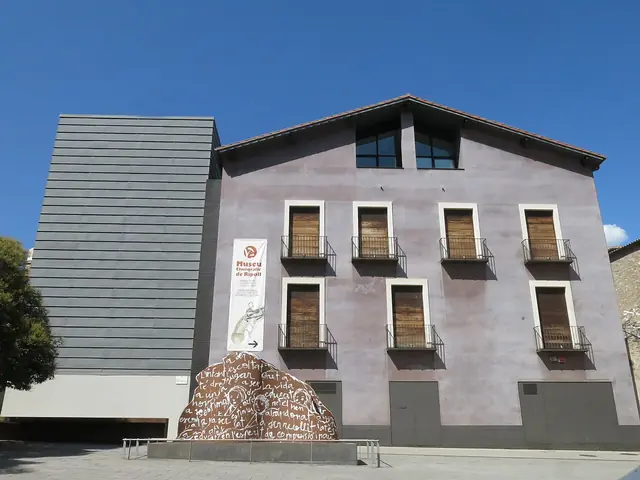
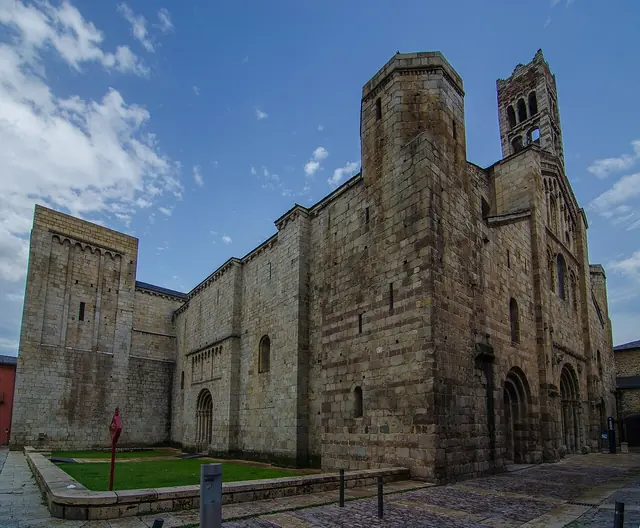
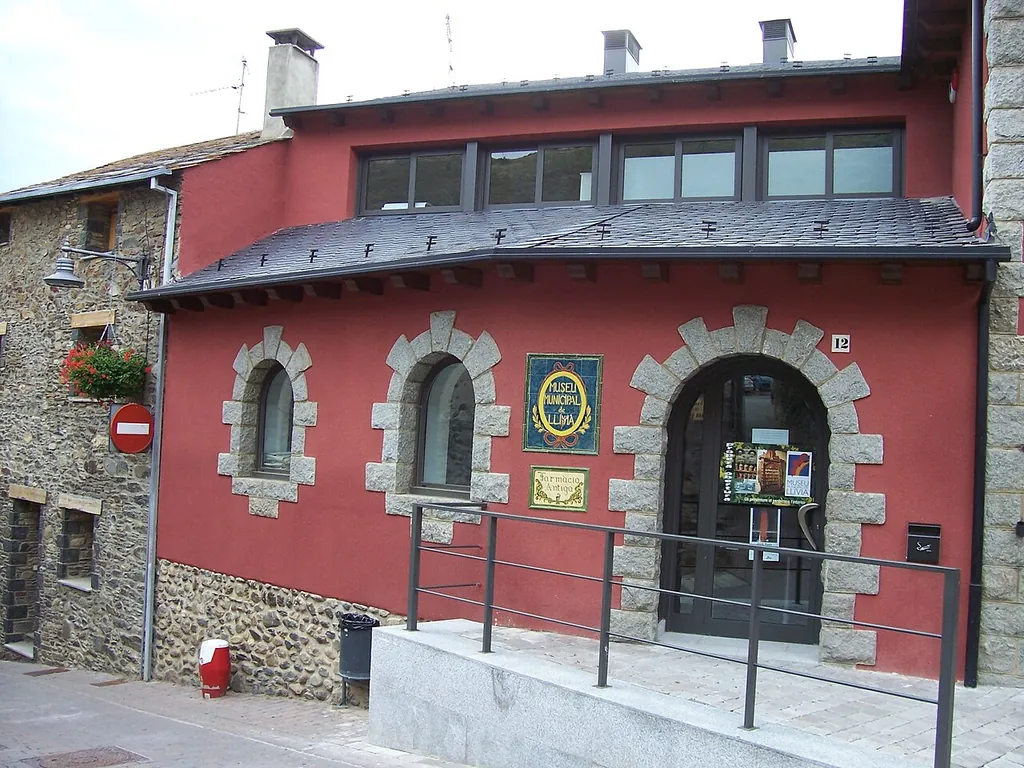
Municipal museum beside the church of Llívia, with the furnishings of the historic Esteva pharmacy and rooms on the history and archaeology of the enclave.
Have only individual sections read aloud
About the museum
The Museu Municipal de Llívia was created in 1980 with the constitution of its board of trustees, although the Esteva pharmacy had already been receiving visitors in 1922. Its origins lie in the purchase, in 1965, of the former pharmacy from the Esteva family by the Diputació de Girona, on condition that it remain in Llívia. In 1973 a first museum opened on the ground floor of the Torre Bernat de So, and in 1980–1981 it moved to the ground floor of the town hall.
Between 2006 and 2012 the building was remodelled and extended, and in 2012 it opened with a new museum project. Since 1995 it has been registered as number 53 in the Catalan Register of Museums. The Esteva pharmacy had been operating in Llívia since at least 1704 and closed in 1926, although the family continued with another apothecary's shop in Puigcerdà; its original space disappeared when the building on calle Raval was demolished in the 1950s, and only the furniture survived.
The permanent exhibition has three rooms: the history of Llívia, the history of the pharmacy, and the history of the Esteva pharmacy with its movable assets, among them a Baroque cordialero (cabinet for medicinal drinks), cobalt-blue albarelos (drug jars) and a set of polychrome boxes with figures of saints and sages of Antiquity. The visit is complemented by an audio guide that continues through the church, the Roman forum and the castle of Llívia.
Highlights
- Original furniture and utensils of the Esteva pharmacy (17th–20th centuries)
- Baroque cordialero and cobalt-blue albarelos
- Polychrome boxes with figures of saints and sages of Antiquity
- Rooms on the history and archaeology of Llívia
- Llivart audio guide that continues through the church, the Roman forum and the castle
Permanent exhibitions
- Farmacia Esteva – Original furniture and materials of the former Esteva pharmacy, with a Baroque cordialero, cobalt-blue albarelos, polychrome boxes and the rebotica (dispensary back room), accompanied by an audiovisual.
- Historia y arqueología de Llívia – History and archaeology rooms that place the heritage of the town and its enclave in context.
- Founded
- 1980
- Operated by
- Ajuntament de Llívia
Admission & discounts
| Adults | €4 |
|---|---|
| Reduced | €2.50Young people aged 13 to 30, retired people, people over 65 and teachers (€3); Carnet Jove holders and people with a disability below 33 % (€2.50). |
| Children & teens | €1Ages 6 to 12, €1; ages 13 to 30, €3. |
| Seniors | €3Retired people and people over 65. |
| Visitors with disabilities | €2.50Disability below 33 %; with a disability of 33 % or more, admission is free. |
| Groups (11+ people) | €3 per personGroups of more than 10 people (one payer); €3.50 with guided visit. Primary school pupils, €1 per pupil; secondary, €2 per pupil. |
| “Pyrenees passion” pass card (carta-pas) | €2.70 |
| Carnet Jove | €2.50 |
Free admission for people with a disability of 33 % or more and with total visual and hearing impairment, residents registered in Llívia, members of ICOM and of the Associació de Museòlegs, professional tourist guides, group companions and pupils of the Jaume I school in Llívia. Tickets can be bought online.
Accessibility
- Wheelchair accessible
- Elevator
- Accessible restroom
- Accessible parking: no information
- Service dogs welcome
- Tactile models & exhibits: no information
- Sign language tours: no information
- Easy-to-read materials: no information
- Audio description: no information
The entrance and all spaces are wheelchair accessible; a lift with handrails connects the ground floor with the basement. There is an accessible toilet on floor 1, rest points along the route and a counter with a section 74 cm high. The lift buttons have visual numbering, braille and high relief. Guide dogs and assistance dogs are admitted. Admission is free, or reduced with a companion, for people with a disability who prove it. Some areas are dimly lit for conservation reasons.
Kids & families
Great for kids & families
- Family tours & workshops
- Activity booklet, scavenger hunt or kids’ audio guide
- Baby changing facilities
A discovery game for children aged 6 to 12 is included in the admission: puzzles are solved with the curator. There are also archaeology workshops and visits around the surroundings. Adapted services include a baby-changing table.
Getting there & parking
By public transit
Train to Puigcerdà; ALSA buses La Seu d'Urgell–Puigcerdà–Llívia and Barcelona–Puigcerdà–Llívia, and TEISA buses Girona–Puigcerdà–Llívia.
By car
Free parking
Free car park behind the church, near the museum. Alternative: the Troc car park, from which you walk to the centre of the town, although access to the museum is less convenient.
The museum is in the centre of Llívia; the website describes the route by car from the N-154.
Get directionsAmenities & dining
- Museum shop
- Wi-Fi
Wi-Fi and a shop with publications and gifts. There is bicycle parking in front of the museum.
Events & venue rental
The museum hasn’t published any information on this.
Plan your visit
| Guided tours | yes · approx. 45 min |
|---|---|
| Audio guide | yes |
| School programs | yes |
| Photography | Photography without flash is allowed in the exhibition rooms. |
| Good to know | Llivart audio guide: a card with a QR code lets you listen to the tracks on your phone without downloading any app; it is bought at the museum and continues in the church, the Roman forum and the castle. Guided visits are offered mainly in Catalan and Spanish, and in English and French depending on availability. The guided visit of the museum lasts 45 minutes, and there are longer routes through the town's heritage. Groups of at least 10 people must book. |