Etnografiska museet
World culture museum in the Museiparken with collections from Asia, Oceania, the Americas and Africa, including Japan, the Northwest Coast and the family exhibition Sagovärldar (Storyworlds).
Have only individual sections read aloud
About the museum
The collections of the Etnografiska museet (Museum of Ethnography) originate in natural history cabinets of the 18th century. During the 19th century ethnographic objects were displayed in small premises in Stockholm, and in 1900 an ethnographic department was formed within the Naturhistoriska riksmuseet, with Hjalmar Stolpe as its first head. From 1930 the collections were housed in former military buildings at Ladugårdsgärdet, and in 1935 the operation became an independent agency.
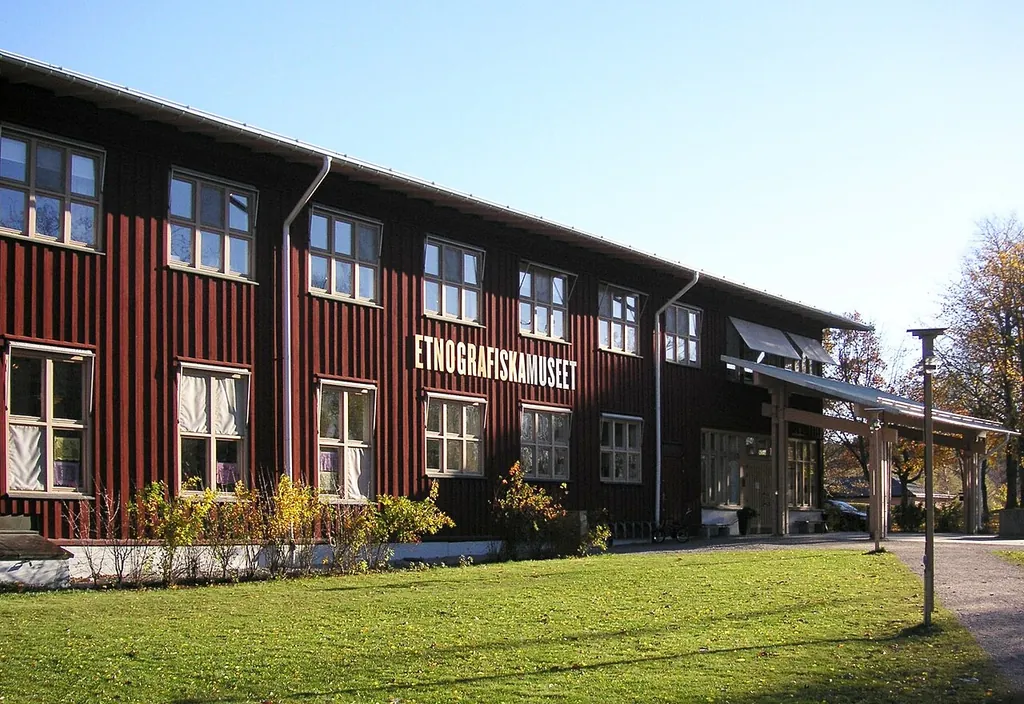
The museum's present building in the Museiparken, designed by the architects Jan Gezelius and Gunnar Mattsson, was built in 1976–1978 and opened to the public in 1980. In 1981 the building was awarded the Kasper Salin Prize. The grounds also contain the teahouse Zui-Ki-Tei, built in 1990 to drawings by Masao Nakamura, which according to the museum is the only Japanese teahouse in the Nordic region.
Since 1999 the museum has been part of the Statens museer för världskultur, now the Världskulturmuseerna (World Culture Museums), together with the Medelhavsmuseet, the Världskulturmuseet and the Östasiatiska museet. The collections comprise about 200,000 objects, with emphasis on China, Japan, Korea, Southeast Asia, Oceania, the Americas and Africa. In the open storage area a large number of objects are shown to visitors, and the museum also works on research, education and the return of objects and human remains.
Highlights
- The exhibition Japan – Image and Self-Image, with samurai armour, swords and masks
- The Northwest Coast, with masks and ceremonial objects from Indigenous peoples
- The family exhibition Sagovärldar, with stories from the world's continents
- The Japanese teahouse Zui-Ki-Tei in the Museiparken
- Free admission for everyone under 19
Permanent exhibitions
- Sagovärldar – Family exhibition with myths, legends and tales from the world's inhabited continents, told through projections, interactive stations and objects from the collections.
- Nordvästkusten – About the social life, crafts and worldview of the Indigenous peoples of the west coast of North America, with masks, totem poles and ceremonial objects.
- Japan – Bild och självbild – Traditional Japan from the 17th century to the late 19th century, with samurai armour, swords, masks and a Japanese teahouse, as well as objects from the Ainu.
- Founded
- 1900
- Operated by
- Statens museer för världskultur (Världskulturmuseerna)
- Visitors per year
- approx. 131,556 (2019)
Admission & discounts
| Adults | SEK 160 |
|---|---|
| Reduced | SEK 140Seniors |
| Children & teens | freefree up to age 18 · Free admission for everyone under 19. |
| Seniors | SEK 140 |
| Groups | –Group tours are booked separately and cost extra on top of the admission. |
| Annual pass (365 days, also valid at Medelhavsmuseet and Östasiatiska museet) | SEK 200 |
Free admission: 2-for-1 Friday: on the last Friday of every month, two people who visit the museum together pay for one ticket.
The day ticket is bought at the reception. Free admission also for asylum seekers with a valid LMA or UT card and for members of ICOM or Sveriges museer with a valid card.
Accessibility
- Wheelchair accessible
- Elevator
- Accessible restroom
- Accessible parking
- Service dogs welcome
- Tactile models & exhibits: no information
- Sign language tours: no information
- Easy-to-read materials: no information
- Audio description: no information
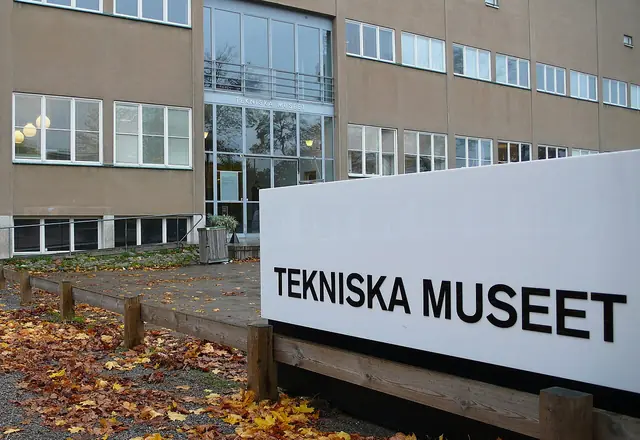
The entrance is at ground level, without thresholds, and has automatic door openers. All exhibitions can be reached by wheelchair, and a wheelchair is available to borrow. There are two visitor lifts (115 × 110 cm) without automatic door openers; if they are too small, a museum host can help with a larger staff lift. A staircase leads to the Japan exhibition, where a lifting platform can be used with the help of a host. Accessible toilets with an RWC alarm are at the entrance and in the library, and changing tables are in all toilets. The lecture hall has an induction loop. Two disabled parking spaces are in front of the visitor entrance, two in front of the Tekniska museet and one in the ordinary visitor car park. Lighting is dimmed in some exhibitions. Adapted tours can be ordered via visning.stockholm@varldskulturmuseerna.se.
Kids & families
Great for kids & families
| Kids’ admission | free up to age 18 |
|---|
- Family tours & workshops
- Hands-on stations
- Stroller-friendly
- Baby changing facilities
The exhibition Sagovärldar is aimed at children together with adults and has projections and interactive stations. In the Ateljén children can draw, paint and build. Prams may be brought into the museum but not into the restaurant or the Sagovärldar exhibition; pram parking is outside Matmekka. Changing tables are in all toilets.
Getting there & parking
By public transit
Museiparken
Bus 69 from Sergels torg to the Museiparken stop. The nearest metro station is Karlaplan, and the tram stop Djurgårdsbron is about a 20-minute walk away.
By car
Paid parking
Paid visitor parking at the museum and in the area; the car parks are run by different parking companies. About 50 spaces in the Museiparken.
- Accessible parking
Amenities & dining
- Restaurant
- Museum shop
- Lockers
- Wi-Fi
Restaurant Matmekka serves Asian food; you may not eat your own food in the museum. Coin-free lockers at the entrance for rucksacks, larger bags and umbrellas (the largest locker measures 87 × 35 × 45 cm). Free Wi-Fi; login details are available at the reception.
Events & venue rental
- Spaces for rent
- Corporate events
Up to 150 guests.
The Hjalmar Stolpesalen lecture hall seats up to 150 and the Studio Ida Trotzig has 30 seats. Enquiries via the booking form or to konferens.stockholm@varldskulturmuseerna.se.
Inquiries & detailsPlan your visit
| Guided tours | yes · approx. 60 min |
|---|---|
| School programs | yes |
| Photography | Photography without flash, tripods and selfie sticks is permitted; commercial photography must be registered with the reception. |
| Good to know | Group tours are booked via the museum's website. The tours take about 60 minutes. School classes book via the School page. |